Prado Museum Review
European Master Painting · Madrid, Spain A Museum of Sovereign Painting The Prado Museum does not attempt to be encyclopedic. It does not stretch across.
European Master Painting · Madrid, Spain A Museum of Sovereign Painting The Prado Museum does not attempt to be encyclopedic. It does not stretch across.
Best forMasterpieces, architecture, cultural history
Review focusCollection highlights, building, visitor flow
European Master Painting · Madrid, Spain
A Museum of Sovereign Painting
The Prado Museum does not attempt to be encyclopedic. It does not stretch across continents or disciplines. Instead, it commits itself to mastery — specifically, the mastery of European painting from the Renaissance through the nineteenth century.
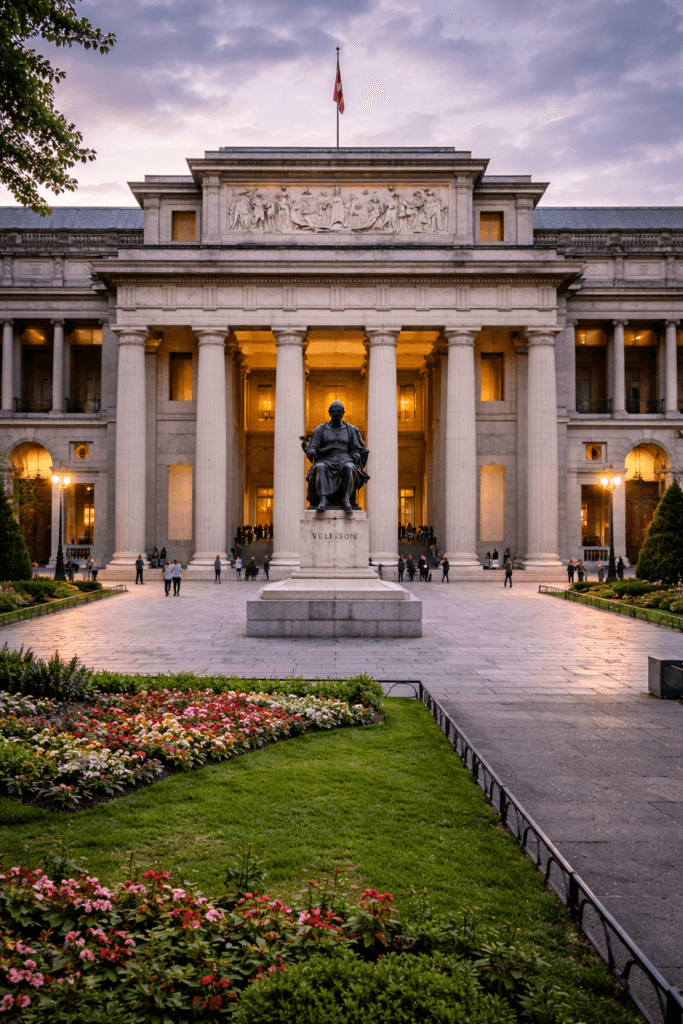
Located along Madrid’s Paseo del Prado, the museum’s neoclassical façade reflects dignity rather than spectacle. This restraint mirrors the institution’s curatorial identity: disciplined, focused, and rooted in tradition.
Architecture & Spatial Clarity
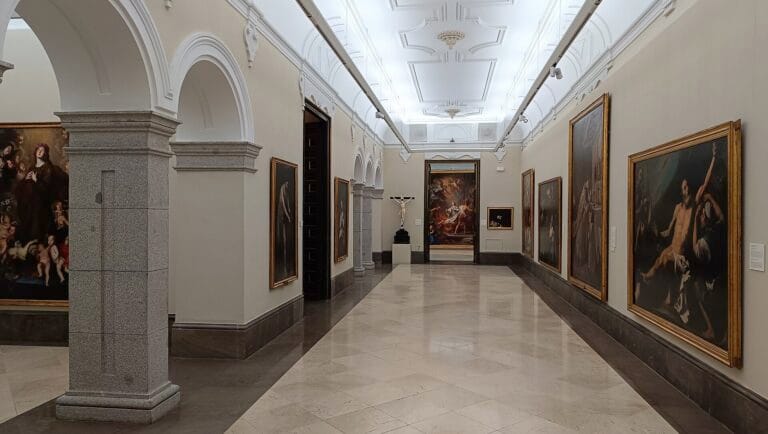
The building unfolds in long, axial galleries that reinforce chronological movement. Unlike labyrinthine museum complexes, the Prado’s structure encourages steady progression. The central nave serves as orientation spine, from which rooms branch into focused clusters by national school and period.
Lighting is carefully controlled to preserve tonal richness, particularly in darker Spanish Baroque works. Walls in muted red and grey tones provide depth without distraction.
The architecture does not compete with the collection. It frames it with quiet authority.
The Collection: Spanish Depth, European Dialogue
The Prado’s strength lies first in Spanish painting. Diego Velázquez commands particular attention. *Las Meninas* anchors one of the museum’s most compelling rooms — not merely as a masterpiece, but as an intellectual puzzle of perspective and power.
Francisco Goya’s presence spans emotional extremes, from courtly portraiture to the haunting intensity of the Black Paintings. These works shift the tone from refinement to psychological confrontation.
Beyond Spain, the museum’s holdings of Italian and Flemish masters broaden its scope. Titian, Rubens, Bosch, and Raphael create a dialogue between Spanish royal patronage and wider European movements. Hieronymus Bosch’s *The Garden of Earthly Delights* draws consistent crowds, yet its placement within broader Renaissance context reinforces continuity rather than isolation.
The Prado does not scatter its masterpieces. It layers them within historical progression, allowing visitors to trace stylistic evolution across centuries.
Visitor Experience & Rhythm
The museum’s layout supports focused exploration. Attempting to see everything in one visit is possible but rarely ideal. A strategic approach — Spanish Golden Age paired with selected Italian or Flemish rooms — yields greater depth.
Morning visits offer the calmest atmosphere. By midday, density increases around major works, particularly *Las Meninas* and Bosch’s triptych. Moving into adjacent galleries often restores composure.
Three to four hours allow for meaningful engagement. Seating throughout the museum encourages slower viewing.
Atmosphere & Intellectual Tone
The Prado feels serious. Its tone is scholarly without being inaccessible. Explanatory labels provide context but do not overwhelm.
Unlike museums that foreground modern experimentation, the Prado reinforces continuity and technical excellence. Brushwork, composition, and chiaroscuro become central themes.
The emotional register varies by gallery — from regal restraint in court portraits to existential darkness in Goya’s later works. The museum carries both elegance and intensity.
Collection and Exhibitions
The Prado Museum in Madrid is one of the most important art museums in the world and is especially known for its collection of European paintings from the 12th to the early 20th century. The museum was created from the Spanish royal collection, and many of the works were originally owned by the kings of Spain. Because of this history, the collection has a strong focus on Spanish artists but also includes major works from Italy, Flanders, France, and other parts of Europe.
Among the most famous painters represented in the museum are Velázquez, Goya, El Greco, Rubens, Titian, and Bosch. The Prado holds one of the largest collections of Spanish painting anywhere, and several of the museum’s works are considered among the most important artworks in Western art history. Only part of the collection can be displayed at one time, so exhibitions are often rotated to show different paintings and themes.
Temporary exhibitions are organized throughout the year and usually focus on specific artists, periods, or styles. These exhibitions allow the museum to present works that are not normally on display and give visitors a deeper understanding of European art history. Because the collection is so large, even repeat visits can offer a different experience.
Architecture and Visitor Experience
The main Prado building was designed in the eighteenth century by architect Juan de Villanueva and was originally planned for scientific purposes before being turned into a museum. The building later became the Royal Museum of Paintings and Sculptures and opened to the public in 1819. Over time the museum has been expanded, but the original structure is still the center of the complex.
Inside the museum, the galleries are arranged in long halls that allow visitors to follow the development of European painting through different periods. The layout is simple and traditional, which makes it easier to move between rooms compared to many modern museums. Because the Prado is very large, visitors often choose to focus on a few sections instead of trying to see everything in one visit.
The visitor experience can vary depending on the time of day, as the museum is one of the most popular attractions in Madrid. Early mornings and late afternoons are usually quieter, while weekends can be crowded. Audio guides and guided tours are available, and they are useful for understanding the history behind the artworks, especially for visitors who are not familiar with European painting.
Despite its size, the Prado keeps a traditional museum atmosphere, with the focus on the artworks themselves rather than digital displays. This makes the visit feel more like a classical art gallery and allows visitors to spend time studying individual paintings in detail.
Practical Information
The Prado Museum is located in central Madrid and is easy to reach by public transport, including metro and bus connections. Because it is one of the most visited museums in Spain, it is recommended to plan the visit in advance, especially during weekends and holiday periods. Tickets can be purchased online, which helps avoid long queues at the entrance.
The museum is large, and a full visit can take several hours. Many visitors choose to focus on specific galleries, such as Spanish painting or Italian masters, instead of trying to see the entire collection in one day. Maps are available at the entrance, and audio guides provide explanations about the most important works in the museum.
Facilities at the museum include a café, bookshop, and rest areas where visitors can take breaks between exhibitions. Photography rules may vary depending on the exhibition, and some rooms do not allow photos in order to protect the artworks. Visitors are encouraged to check the official museum information before arrival to see current opening hours and exhibition schedules.
Who Will Appreciate It Most
The Prado Museum is ideal for:
• Visitors seeking depth in Spanish Golden Age painting
• Those interested in Renaissance and Baroque mastery
• Travellers who value chronological clarity
• Visitors prepared for sustained visual engagement
It may feel less varied to those