Museo Nacional de las Culturas del Mundo Review
Mexico City, Mexico. The Museo Nacional de las Culturas del Mundo, located in Mexico City, sits at the confluence of cultural awareness and global ethnographic exploration within the country’s rich museum landscape. Established in 1965, this institution…
Mexico City, Mexico. The Museo Nacional de las Culturas del Mundo, located in Mexico City, sits at the confluence of cultural awareness and global ethnographic exploration within the country’s rich museum landscape. Established in 1965, this institution…
Best forMuseum lovers, culture travelers, first-time visitors
Review focusCollections, visitor experience, and practical planning
Historical Context
The Museo Nacional de las Culturas del Mundo, located in Mexico City, sits at the confluence of cultural awareness and global ethnographic exploration within the country’s rich museum landscape. Established in 1965, this institution was conceived with the goal of creating a comprehensive forum on world cultures beyond the predominant regional focus typical of Mexican museums. Its foundation responded to a growing interest in presenting an anthropological and cultural narrative that transcends national borders, helping situate Mexico’s diverse historical identity within a wider human context.
Housed in a repurposed colonial-era building—the Casa de los Azulejos—this museum carries layers of history not only through its collection but through its very architecture and location in the historic center of the capital. Over time, the institution has expanded its scope and collection, but it has maintained a consistent emphasis on the material and symbolic cultures of various regions across the globe. Its collection reflects a mid-20th-century museological approach that aligns ethnology with artistic and historical perspectives. While the museum’s focus is broad, it continues to highlight inter-cultural connections through objects, archaeological finds, textiles, ceramics, and ritual artifacts from Asia, Africa, Oceania, Europe, and indigenous cultures outside of Mexico.
This positioning makes the Museo Nacional de las Culturas del Mundo a notable example of how Mexican institutions situate global cultural heritage within a local framework, aiming for both education and cultural dialogue. Its role in the museum ecosystem is distinct from the large archaeological or pre-Columbian collections dominating Mexico City’s offerings, providing an outward-looking complement to national narratives.
What You See on Arrival
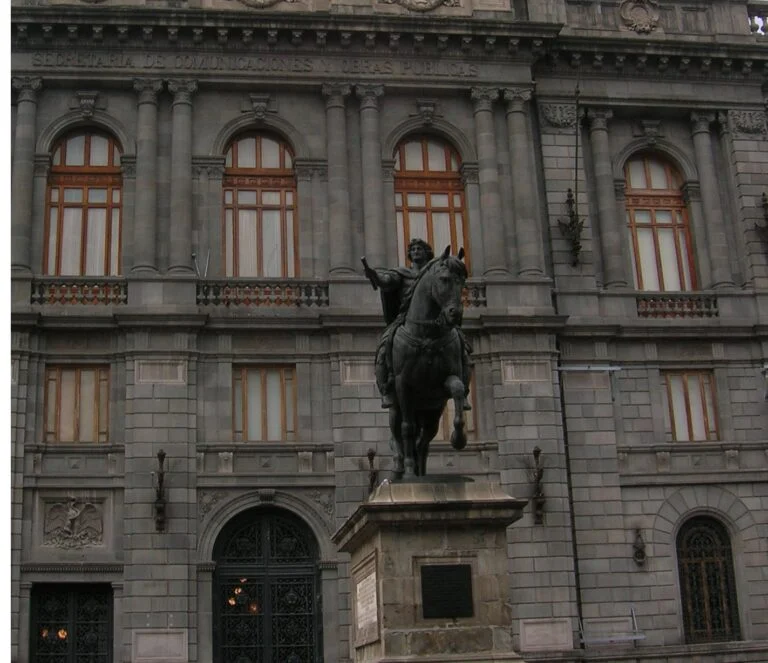
Approaching the Museo Nacional de las Culturas del Mundo, visitors first encounter the telltale façade of the Casa de los Azulejos, a 16th-century aristocratic residence notable for its ornamental blue-and-white tilework, from which the building derives its name. The decorative façade itself announces a layering of historical periods, mate rial cultures, and colonial legacies worth appreciating before entering the exhibition spaces. The museum communicates its dual identity from the outset: a colonial architectural space reused to preserve and showcase cultural objects from a wide array of regions.
Inside, the museum frames itself around a mission of promoting intercultural understanding through presentation of material culture from many world societies. The lobby and entrance areas usually set the scene both historically and thematically, preparing visitors for the globe-spanning collections ahead. While the building’s original baroque interior may impose some constraints on exhibit design and flow, it offers an atmosphere uncommon in museums purpose-built for ethnography or anthropology.
Visitors are likely to be met with straightforward signage and introductory panels that offer context on the institution’s founding, its collection priorities, and the broader anthropological approach informing displays. The settings might feel compact compared to larger institutions focused solely on foreign cultures, but the layout intends to create a cohesive domestic environment where global cultural diversity can be appreciated in direct dialogue. This framing invites visitors to look beyond local histories and appreciate commonalities and contrasts among world cultures.
Highlights and Key Exhibitions
The Museo Nacional de las Culturas del Mundo is structured primarily around its permanent collection, which includes artifacts, traditional attire, ceramics, utensils, weapons, religious icons, and ritual objects spanning many continents. The emphasis is on cultural diversity illustrated through material culture, with items sometimes grouped by region or theme to emphasize cultural practices and technological developments as well as symbolic meanings.
One of the core pillars of the collection is its representation of indigenous cultures outside the Americas, including significant holdings from Africa, Asia, and Oceania. African collection highlights include masks, textiles, and ceremonial objects reflecting the variety of sociocultural traditions across the continent, such as pieces related to ritual dances and initiation ceremonies. These objects indicate the museum’s intent to showcase cultural depth beyond colonial narratives and commodity objects. The Asia section features objects from South and Southeast Asia, including religious art connected to Buddhism and Hinduism, as well as everyday artifacts from China and Japan, which communicate the diversity of belief systems and life ways across this vast region.
The museum’s Oceanic collections focus on cultures of the Pacific Islands, with carved wooden statues, tools, and elaborate featherwork pointing to the spiritual and societal significance of these objects in their cultural contexts. European artifacts offer an ordered, historical contrast centered on decorative arts and historical crafts, rather than grand historical narratives. These exhibits often discuss the diffusion of styles and symbolic uses of material culture.
Material culture from the Americas outside Mexico, such as Andean textiles and Amazonian ritual statuettes, further contribute to the museum’s global scope. Unlike larger archaeological museums in Mexico City that emphasize pre-Hispanic Mexican cultures, this museum’s pan-ethnic global approach encourages visitors to compare cross-cultural themes like ritual symbolism, social hierarchy, and craft traditions.
Interpretive panels tend toward an anthropological perspective, describing the social functions, cultural meanings, and production techniques of objects rather than focusing solely on their aesthetic qualities or provenance. This approach advances a deeper understanding of objects as active participants in cultural systems rather than mere artifacts or art pieces.
The permanent displays are generally organized to invite a non-linear exploration but might be arranged around thematic strands such as religion and ritual, social identity and status, or material and technical innovation. The museum’s strength lies in the breadth of its collection, which brings together a wide range of cultural expressions, allowing visitors to situate themselves in relation to other societies through tangible cultural heritage.
That said, the museum does not attempt a comprehensive or fully systematic global ethnographic coverage; some regions and cultures receive less attention than others, and the interpretation framework may sometimes reflect dated museological conventions. Visitors with specialized knowledge or high expectations of comprehensive global ethnography may find some gaps or want more critical engagement with issues like cultural appropriation or the musealization of indigenous artifacts.
Visitor Experience
The Museo Nacional de las Culturas del Mundo suits a wide range of visitors, from students and educators seeking visual and material complements to world history and anthropology curricula to general audiences interested in cultural diversity. The museum is laid out in a way that allows a leisurely pace, encouraging visitors to examine objects closely and contemplate their cultural significance.
The relatively compact scale of the museum means visitors will find the experience manageable without feeling rushed. The colonial architecture fosters a reflective mood, but it also imposes limits on exhibition space and natural light. This can affect visibility and the display conditions of certain delicate textiles or artifacts.
Interpretive materials—typically wall labels, panels, and occasional multimedia elements—provide essential context, though some visitors may find the level of explanation uneven depending on the exhibit. While the museum aims at accessibility, academic or specialized terminology may appear in some sections, which could challenge casual visitors unfamiliar with ethnographic vocabularies. Conversely, those with some background in the field will appreciate seeing objects placed within cultural contexts rather than being presented solely as curiosities or fine art.
The flow between rooms is generally straightforward, but the building’s original design means some spaces are irregularly shaped, requiring visitors to navigate slightly uneven layouts. This is rarely a detriment, but it suggests that visitors should be prepared for a somewhat intimate and contained visit rather than a grand sequential journey through space.
Because the museum focuses on comparative cultural experiences rather than national pride or specific historical narratives, it provides an important educational space for reflecting on human cultural expression at large. However, the lack of interactive or participatory elements may be a limitation for families or younger audiences accustomed to more hands-on experiences.
Tickets, Access, and Planning
Visitors wishing to explore the Museo Nacional de las Culturas del Mundo should consult the museum’s official website or contact the institution directly for current information on entrance fees, opening hours, accessibility features, booking requirements, and any available tours or educational programs. Given the museum’s central location in Mexico City’s historical center, it is generally accessible by public transport, but specifics on parking and access for visitors with mobility impairments are best confirmed with the museum itself.
The museum does not widely advertise additional amenities such as cafés or shops prominently, suggesting that visitors should plan to make ancillary arrangements independently. Given its urban location, nearby dining and shopping options exist outside the institution.
Visitors interested primarily in large-scale archaeological collections or pre-Hispanic Mexican heritage might want to consider whether this museum matches their goals, as its focus is distinct and broader in scope. Conversely, those with interests in global ethnography, comparative culture, or cross-cultural material history will find this museum’s profile directly relevant.
Final Verdict
The Museo Nacional de las Culturas del Mundo in Mexico City offers a solid and thoughtful presentation of global cultures through a material lens, housed in a historical building that enriches the experience. Its collection provides a wide-ranging but selective overview of world cultural expressions, with strengths particularly in African, Asian, Pacific, and non-Mexican American artifacts.
This museum is best suited to visitors seeking a measured, anthropological perspective on cultural artifacts in a setting that invites contemplation more than spectacle. It avoids sensory overload or thematic saturation by concentrating on quality over quantity, but this approach may feel limited to those expecting comprehensive global surveys or very interactive encounters.
Interpretive materials generally succeed in guiding visitors through complex cultural narratives, though they sometimes veer toward academic tone, potentially narrowing accessibility for all demographics. The architectural constraints of the historic building add character but also limit exhibition scale and display conditions, which may affect the viewing experience of certain objects.
Planning a visit should involve checking the museum’s official resources to confirm practical details, as the institution’s focus and location make for a quieter, intellectually stimulating alternative to the busier archaeological museums in the capital. While not a museum for every traveler, it occupies an important niche in Mexico City’s cultural scene, supporting intercultural dialogue through tangible world heritage collections.
In conclusion, the Museo Nacional de las Culturas del Mundo serves an educational and cultural function that complements more nationally focused institutions. It may not provide a comprehensive global ethnographic encyclopedia, but within its scope, it succeeds in presenting diverse cultures through their material traditions with clarity and respect. Visitors interested in global anthropology and cultural materiality will find it a worthwhile stop, provided their expectations align with the museum’s particular approach and scale.