Prado Museum
About: Goya + Velázquez are the core. If you only have 90 minutes, follow the ‘masterpieces’ route and save the rest for a second visit.What to see.

Best forMasterpieces, architecture, cultural history
Setting / nearbyEurope
Overview
The Prado Museum in Madrid is one of the most important art museums in Europe and one of the clearest places to understand the strength of the Spanish painting tradition within a wider European context. Unlike museums that aim to cover every medium or every historical period with equal emphasis, the Prado has a more concentrated identity. It is above all a painting museum, and that focus gives it unusual coherence. Visitors do not come here for breadth in the encyclopedic sense. They come for depth, quality, and one of the strongest collections of European painting anywhere in the world.
What makes the Prado especially rewarding is the seriousness of its collection. This is not a museum carried only by one or two world-famous works. It is a museum in which room after room contains paintings of real weight, many by artists who define entire periods of European art. Velázquez, Goya, El Greco, Titian, Rubens, Bosch, and many others are all represented at a level that makes the museum feel consistently strong rather than dependent on isolated highlights. That density is one of the Prado’s greatest advantages. Even visitors who arrive with a simple “masterpieces” list often leave with a stronger impression of the museum as a whole than of any single object.
The Prado also works well because its collection reflects Spain’s historical position within Europe. It is not only a museum of Spanish painting, though Spanish art is naturally central. It also contains major holdings of Italian, Flemish, and other European works that help explain the artistic networks, patronage structures, and court culture that shaped painting over centuries. This wider context gives the museum more depth than a purely national collection would have. Visitors can see not just the greatness of individual Spanish artists, but how Spain’s history of empire, monarchy, religion, and collecting connected it to broader European developments.
For many visitors, the Prado is the most satisfying major museum in Madrid because it combines exceptional quality with a relatively clear curatorial identity. It can still be physically demanding, and the collection is strong enough that the visit can become visually intense, but it rarely feels shapeless. There is a clear sense of what the museum is for. If the Louvre can feel like an immense world of many traditions, the Prado often feels more focused and more concentrated, which for some visitors makes it the more rewarding museum experience.
Collection Highlights
The strongest core of the Prado is found in its Spanish masters, especially Velázquez and Goya. For many visitors, these two artists define the emotional and intellectual centre of the museum. Velázquez’s paintings are among the museum’s greatest treasures and reveal why he remains one of the most admired painters in European art. His works reward close, patient viewing because their force lies not only in composition or subject but in the extraordinary intelligence of their handling. The subtlety of observation, atmosphere, and paint surface is more evident in person than in reproduction, and the Prado is one of the best places in the world to understand that.
Goya is equally central, though in a very different way. His works bring a darker, more unstable, and more psychologically charged presence into the museum. Through Goya, the Prado becomes more than a museum of courtly grandeur and religious painting. It becomes a museum where modernity begins to feel visible in the tensions, anxieties, and intensity of the works. This is one reason the Prado remains so compelling. It allows visitors to move from the high confidence of earlier court and religious painting into something more fractured and searching.
The museum’s holdings of El Greco also deserve real attention. These paintings often feel distinct in mood and visual language from the rest of the collection, and that difference gives them special force. El Greco introduces a tension of form, spirituality, and elongated intensity that can reset the eye after the more structured balance of other galleries. His rooms are often among the most memorable for visitors who want something emotionally sharper and less ceremonially composed.
The Flemish collection is another major strength, especially the works by Rubens and Bosch. The Prado’s Bosch is particularly important and often among the most sought-after parts of the museum. His work adds an entirely different imaginative and moral world to the visit, one that broadens the museum beyond dynastic portraiture and court painting. Rubens, by contrast, reinforces the grandeur and vitality of Baroque painting at a level that makes the Prado feel rich far beyond its Spanish core.
Italian painting is also essential to the museum’s identity, particularly Titian. These galleries help explain the long relationships between Spanish royal collecting and the wider traditions of European painting. They are not secondary additions but part of the structure that makes the Prado so strong. Visitors interested in tracing artistic influence, court taste, and the movement of ideas across Europe will find these rooms particularly rewarding.
Building and Setting
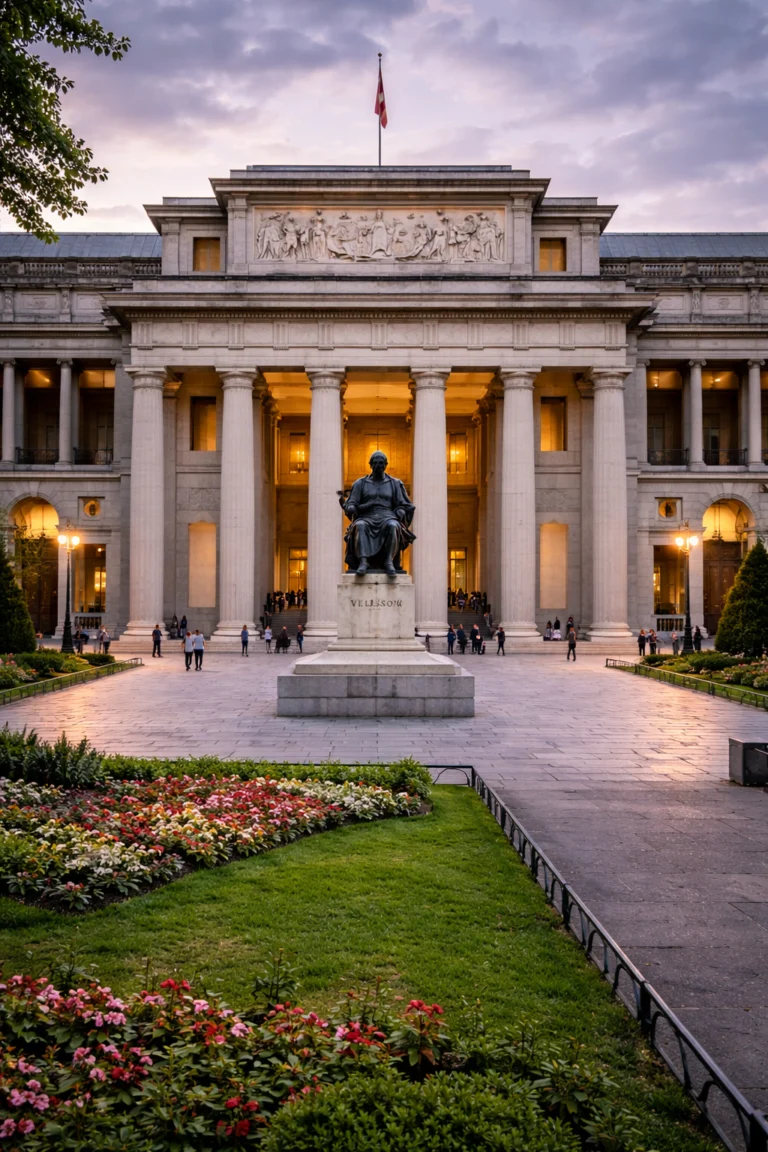
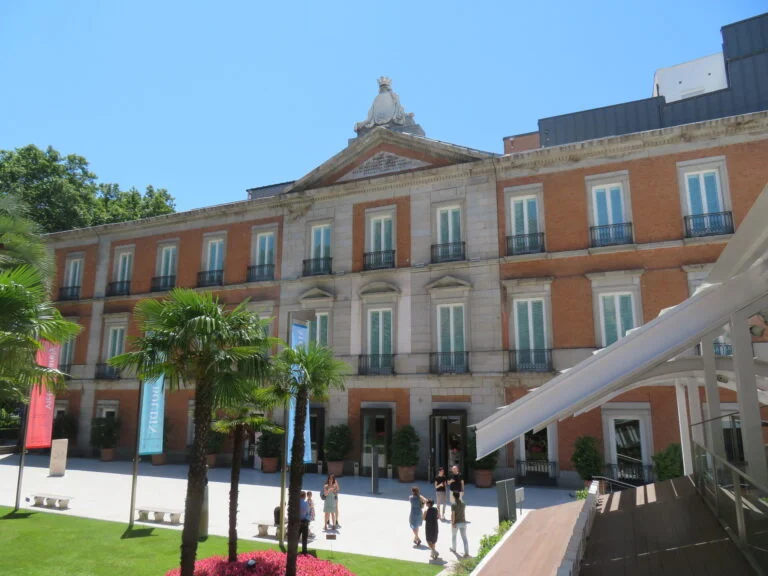
The Prado’s building gives the museum dignity without overwhelming the collection. It feels formal, monumental, and fully suited to a museum of national and European importance, yet it does not distract from the paintings themselves. This is one of its virtues. The architecture supports the seriousness of the institution while still allowing the collection to remain the central experience.
Inside, the galleries are arranged in a way that generally encourages steady concentration. The museum can feel dense, especially once one begins moving through the strongest sequences of painting, but it is rarely chaotic in identity. The rhythm of the rooms helps the visitor understand the collection as something structured rather than simply vast. That matters, because the Prado’s strength lies partly in its cumulative force. One room prepares the eye for the next, and the museum often feels like a long and sustained conversation in paint.
Its setting in Madrid also contributes to the experience. The Prado forms part of one of the city’s major cultural areas and sits naturally within a broader museum and civic landscape. This gives it both practical convenience and symbolic weight. It feels like an essential part of the city’s cultural life rather than an isolated destination. For many visitors to Madrid, the museum is not just one stop among many. It is one of the principal reasons the city matters as a European cultural capital.
Practical Information
The Prado is best visited with a plan. The collection is too strong to rush through casually, and visitors often get more from the museum by deciding early whether they want a shorter highlights-focused visit or a slower, more selective route. If time is limited, following a masterpieces route is sensible, especially for first-time visitors. In that case, Velázquez and Goya should be treated as the core, with additional attention given to one or two other sections rather than trying to cover everything.
If you have more time, the museum becomes much more rewarding when you move beyond the obvious highlights and choose a quieter section to explore in depth. This may mean spending longer with the Flemish rooms, the Italian galleries, or a less crowded sequence of Spanish works. The Prado often improves when the visitor slows down. It is not a museum that rewards constant rushing from famous painting to famous painting.
Breaks are important. The rooms are visually dense, and the quality of the collection can make concentration surprisingly tiring. This is a place to absorb rather than to conquer. A shorter, more attentive visit is usually better than an overlong one that leaves the later galleries blurred together.
Why Visit
The Prado Museum is best for European art lovers, first-time visitors to Madrid, and anyone planning a city itinerary around major cultural institutions. It is especially rewarding for visitors who want to understand painting at a high level of quality and continuity rather than simply collect famous names. Its greatest strength is the sustained excellence of the collection. This is not a museum where one or two masterpieces carry an otherwise uneven visit. It is one of the rare museums where the standard remains high across room after room.
What makes the Prado worth prioritising is the combination of focus, depth, and artistic seriousness. It gives visitors access not only to some of the greatest paintings in Europe, but to the broader traditions and histories that made those works possible. For many people, it is the most satisfying major museum in Madrid because it knows exactly what it is and presents that identity with confidence. If you want a museum that rewards slow looking, repeated visits, and real attention to painting, the Prado is one of the strongest choices anywhere in Europe.