Newcastle Museum Review
Museums · Newcastle, Australia. Newcastle Museum is located in the city of Newcastle, New South Wales, Australia. The institution sits within the context of a post-industrial city with a history deeply entwined to coal mining, steel production, and…
Museums · Newcastle, Australia. Newcastle Museum is located in the city of Newcastle, New South Wales, Australia. The institution sits within the context of a post-industrial city with a history deeply entwined to coal mining, steel production, and…
Best forMuseum lovers, culture travelers, first-time visitors
Review focusCollections, visitor experience, and practical planning
Historical Context
Newcastle Museum is located in the city of Newcastle, New South Wales, Australia. The institution sits within the context of a post-industrial city with a history deeply entwined to coal mining, steel production, and maritime trade. Established to serve the local community, Newcastle Museum seeks to tell the story of this region as it evolved from its indigenous roots through European settlement and into the present day. This narrative is grounded in an acknowledgment of the Awabakal and Worimi people, the traditional custodians of the land. The museum itself reflects a broader cultural shift in Newcastle and similar cities aiming to preserve industrial heritage while also grappling with economic restructuring and urban renewal.
The museum opened its current facility in 2008, located in a former railway building adjacent to a redeveloped urban precinct. Its development coincided with Newcastle’s growing emphasis on cultural tourism and education. It is neither a large metropolitan museum nor a minor local collection but something that occupies a middle ground, focusing on local history and innovation but also housing science and technology exhibits. The historical frame of Newcastle Museum is significant because it embodies a deliberate effort to showcase the city’s industrial past as a foundation for future cultural identity. It serves both residents who seek a connection with their surroundings and visitors interested in understanding Newcastle’s role within Australia’s industrial landscape.
What You See on Arrival
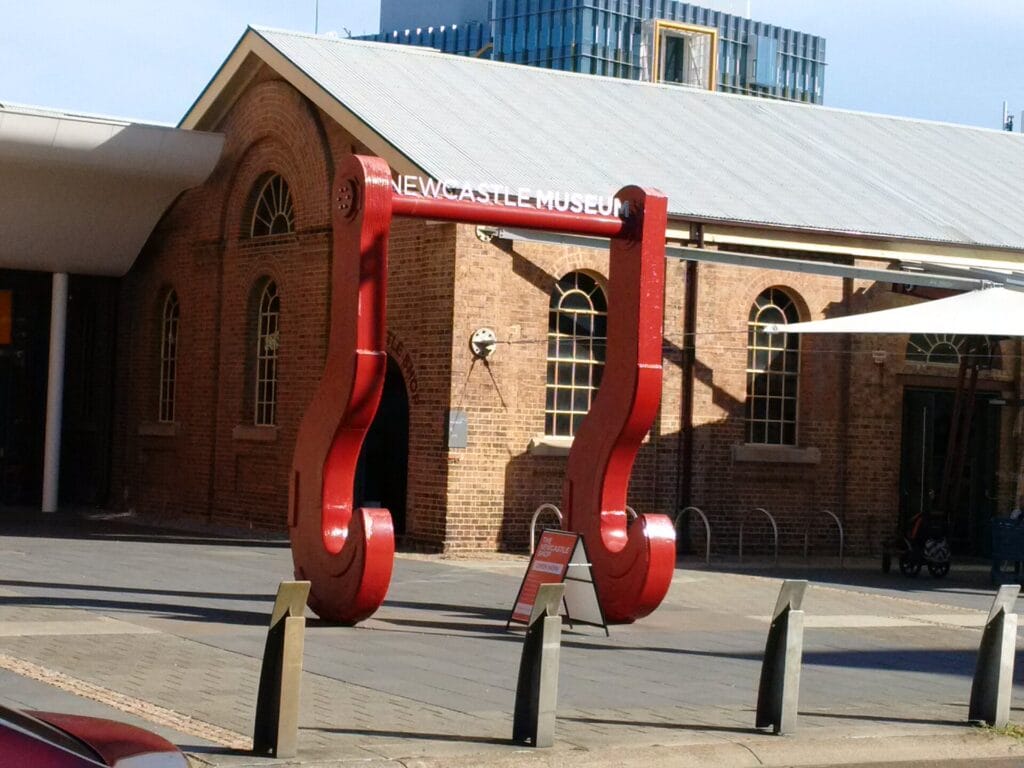
Upon approaching Newcastle Museum, visitors encounter an unassuming yet solid brick and glass structure that reflects both its industrial origins and contemporary adaptation. The building itself, converted from a former rail workshop, offers a visual reminder of Newcastle’s past while being repurposed for 21st-century cultural use. This architectural presentation situates the museum within the urban fabric and hints at its narrative focus: a layered, realistic depiction of the city’s evolution rather than a glossy, highly stylized display.
The museum’s exterior signage and entrance area frame the institution as a place that invites exploration into local history and innovation. Although the facade is modest, it suggests an accessibility aimed at a broad demographic, including families, school groups, and tourists. The entrance space leads into a lobby designed for clarity and ease of circulation, with key signage and information points readily visible. There is a visible commitment to balancing an inviting atmosphere without sacrificing the industrial character consistent with the original building.
Visitors can expect the museum's identity to emphasize Newcastle’s dual heritage: as a working-class industrial hub and a contemporary city embracing science, technology, and cultural change. This positioning is evident in how the museum frames its collections and thematic focus right from the moment of arrival, offering a transparent and grounded starting point for understanding the exhibitions to come.
Highlights and Key Exhibitions
The core strength of Newcastle Museum lies in its dual approach to local history and science, providing a varied but coherent visitor experience. The historical galleries focus strongly on Newcastle’s industrial and social heritage. These include detailed presentations of coal mining, steelworks, and maritime industries that defined the city for much of the 19th and 20th centuries. Exhibits often use authentic artefacts, multimedia displays, and interactive elements to demonstrate the hard labor and technological developments connected with these industries. Personal stories and archival materials complement the technical data, offering insight into the lives of workers and their communities.
One notable section covers the development of the steel industry, which was central to Newcastle’s identity and economy for decades. Here, the exhibition conveys the scale and impact of steel manufacturing on the local population and the environment. This theme is underpinned by a mixture of machinery, photographs, oral histories, and interpretive panels, giving visitors multiple entry points into understanding the industry’s complexities. The steelworks narrative also extends to discussions of industrial decline and regeneration, reflecting the city’s ongoing transition.
The museum also devotes space to Newcastle’s indigenous heritage, offering context on the Awabakal and Worimi peoples. These displays respectfully address pre-European history and contemporary indigenous culture, situating it as an integral part of the region’s identity. The indigenous sections incorporate artefacts, traditional artworks, and interpretive content that foreground indigenous perspectives. While concise compared to the extensive industrial sections, these exhibits serve an important representational role.
In addition to the local history, Newcastle Museum hosts significant science and technology exhibitions that cater to a different but related audience. The science galleries explore themes such as energy production, environmental science, and technological innovation relevant to both past and present Newcastle. These sections use hands-on interactive components designed to engage younger visitors and encourage informal learning. This linkage between past and present science helps visitors comprehend the ongoing relationship between Newcastle’s heritage and contemporary challenges, such as sustainability and energy use.
Another noteworthy exhibition focuses on early transportation in Newcastle, including railway history. This complements the building’s former use and reinforces the theme of industrial infrastructure. There are displays of locomotives and railway artifacts, positioned to celebrate the technological achievements tied to the city’s development while offering tangible connections to the building’s origins.
While the museum does not aim to offer the exhaustive coverage of a large metropolitan institution, its multipurpose approach allows it to satisfy diverse interests. It is not limited to local history enthusiasts; the science displays broaden its appeal. However, some visitors may find the range of material dispersed unevenly, with certain industries or time periods receiving more detailed attention than others. This selectivity reflects both practical constraints and curatorial choices.
Visitor Experience
Newcastle Museum’s layout encourages a degree of self-directed exploration balanced with clear thematic zones. Visitors can move from the industrial heritage sections to the science galleries in sequence or follow their particular interests. Wayfinding is generally straightforward, aided by signage and explanatory texts that avoid overly technical language without sacrificing accuracy. The museum’s tone and presentation style aim to balance engagement with education, employing multimedia where effective but relying primarily on careful object curation and narrative panels.
The pace of a visit is naturally shaped by the variety of exhibition types. Those with a particular interest in industrial history will find ample detail that rewards attentive reading and inspection. Meanwhile, families and those more casually engaged can interact with science exhibits that offer hands-on experiences without extensive background knowledge. This makes Newcastle Museum suitable for a wide cross-section of visitors, including school groups, local residents, and incoming tourists.
Interpretation throughout is broadly accessible but stays focused on presenting complex histories with nuance. The inclusion of worker stories, community impacts, and indigenous narratives offers a balanced picture, although some might wish for deeper coverage of non-industrial aspects of Newcastle’s cultural history. The scientific content is presented with a focus on practicality and local relevance rather than abstract theory, which can be a strength for some visitors and a limitation for those seeking more advanced or generalist science displays.
In terms of visitor flow, the museum’s size and spatial arrangement avoid overcrowding under normal conditions. The open-plan galleries and ease of movement contribute to a comfortable experience, though very large groups might find some areas less suited to congestion. Seating is available periodically, supporting visitors who require breaks or want to spend more time engaging with exhibits.
A potential limitation lies in the relative scale of the museum. While offering a concentrated and well-curated experience, it does not rival major state or national museums in scope or breadth. Visitors expecting comprehensive Australian industrial or scientific collections may find its focus somewhat regional and even selective. However, this narrower concentration is also its strength, allowing more depth on Newcastle’s specific story.
Tickets, Access, and Planning
Current practical details regarding admission, opening hours, accessibility, and available services such as guided tours or audio aids should be confirmed directly via the Newcastle Museum’s official website. The museum’s urban location within Newcastle’s civic precinct means it is generally well-served by public transport and accessible from the city center. However, prospective visitors should verify up-to-date information on utilities such as parking or accessibility provisions to accommodate particular needs.
Because the museum combines historical and scientific content, it suits a broad demographic. It is often visited by families, students, and local residents interested in regional heritage. Planning a visit may involve consideration of your own interest level in either industry-focused history or local science education. The museum’s exhibit design supports both focused and casual engagements, but it is worth noting that some thematic sections may require more time to fully appreciate.
For visitors coming as part of a group or with educational intentions, pre-arrangement or consultation with museum staff can clarify available programs or access conditions. Likewise, individual travelers hoping for particular services should seek the latest details on amenities and assistance options.
Final Verdict
Newcastle Museum presents a thoughtful and well-curated overview of the city’s industrial, indigenous, and scientific heritage within a facility that respects and reinterprets its own architectural past. It offers a reasonably dense but accessible experience that caters to an audience seeking to understand Newcastle’s transformation from an industrial powerhouse to a city with a more diversified cultural identity.
The museum excels in highlighting Newcastle’s coal, steel, and maritime history through engaging exhibits that balance narrative detail with interpretive clarity. Its inclusion of indigenous perspectives, while limited in scale, is a positive element that signals a commitment to representing the full spectrum of local history. The science and technology galleries complement the historical content, adding an interactive dimension that broadens appeal and underscores contemporary relevance.
Limitations stem primarily from the museum’s regional focus and moderate size. It does not offer exhaustive coverage of broader Australian industrial or scientific histories, nor does it delve deeply into other cultural themes such as arts or social movements unrelated to industry. Visitors with a particular interest in those areas might need supplementary visits to other institutions. Moreover, some thematic unevenness is evident, with certain periods and industries more highlighted than others.
Overall, Newcastle Museum is a solid, informative institution that balances history and science in a setting that honors local identity. It functions well as a civic resource for Newcastle and an accessible cultural destination for visitors. Its strengths lie in coherence of theme, quality of interpretation, and blending of educational focus with genuine local relevance. For those planning a visit, advance consultation of official resources is advisable to confirm practical arrangements and optimize the museum experience.