National Museum and Art Gallery Review
Intro The National Museum and Art Gallery in Port Moresby is one of the most important cultural institutions in the Pacific because it attempts something.
Intro The National Museum and Art Gallery in Port Moresby is one of the most important cultural institutions in the Pacific because it attempts something.
Best forMasterpieces, architecture, cultural history
Review focusCollection highlights, building, visitor flow
Historical Context
The National Museum and Art Gallery in Port Moresby was established as part of Papua New Guinea’s broader effort to preserve and present its cultural heritage, particularly in the years surrounding independence in 1975. In a country with more than 800 languages and a vast range of regional traditions, the museum plays a central role in bringing together material from across different communities into a single national framework. Its collections reflect societies shaped by geography, ritual, and deeply rooted systems of belief, where art is rarely separate from daily or ceremonial life.
Historically, many of these objects were not created as “art” in the Western sense, but as functional or spiritual items used in ceremonies, initiation rites, and social structures. The museum therefore acts as both archive and translator, preserving objects that might otherwise remain within specific regions while presenting them to a broader audience. Its importance lies not only in what it displays, but in its role as a cultural anchor within a modern nation still negotiating how to represent its diversity in a unified way.
What You See on Arrival
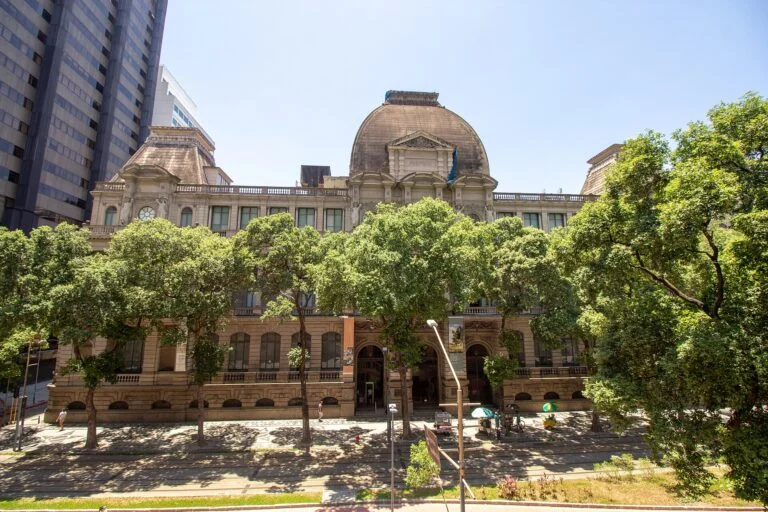
Arrival at the museum is defined by a sense of calm rather than spectacle. The building itself immediately stands out through its architectural identity, featuring a distinctive roofline and decorative elements that draw on local forms. Unlike many large international museums, it does not aim to impress through scale, but through presence and cultural grounding.
The surrounding area is open and relatively quiet, allowing the building to be approached without the pressure of crowds or dense urban surroundings. This creates a slower transition into the museum experience. There is a sense of entering a civic space rather than a major tourist attraction.
Inside, the layout is simple and accessible. The entrance leads directly into the main galleries, with no complex navigation required. The atmosphere is understated, with functional lighting and straightforward display cases. The mood is quiet and slightly informal, encouraging visitors to move at their own pace rather than follow a strict route.
The first impression is not one of polished design, but of authenticity. The museum feels grounded in its purpose, allowing the objects to take priority over the environment that surrounds them.
Highlights and Key Exhibitions
The most compelling aspect of the museum is its ethnographic collection, which forms the core of the experience. Masks, carved figures, shields, and ceremonial objects dominate the galleries, each connected to specific regions and cultural practices across Papua New Guinea. These objects are not simply decorative—they represent systems of belief, identity, and social structure.
The masks are among the strongest highlights. Often bold in form and symbolic in design, they reflect spiritual traditions and ceremonial roles that vary widely between communities. Their visual impact is immediate, even without extensive contextual explanation. Similarly, carved figures and ritual objects demonstrate a high level of craftsmanship and carry a strong physical presence that communicates their importance.
Decorated shields and body ornaments add further depth, showing how artistic expression extends into protection, status, and identity. These pieces often feature intricate patterns and materials that reflect both local resources and cultural meaning.
Textiles and smaller objects provide additional insight into everyday life and ceremonial practice. While these may not have the immediate visual impact of larger carvings, they contribute to a broader understanding of how art is integrated into all aspects of life.
The museum also includes a smaller selection of contemporary works, offering a glimpse into how modern artists engage with traditional themes. However, this section is limited compared to the ethnographic displays, which remain the museum’s primary strength.
Visitor Experience
The visitor experience is shaped by the museum’s modest scale and low visitor numbers. Unlike major international institutions, it is rarely crowded, allowing for a relaxed and unhurried visit. This creates an environment where visitors can spend time observing individual objects without feeling rushed.
Navigation is straightforward, and the museum can be explored in a single visit without difficulty. Most visitors will find that one to two hours is sufficient, though those with a strong interest in ethnographic material may choose to stay longer.
Signage provides basic information, but interpretation is limited. This can be both a strength and a weakness. On one hand, it allows the objects to speak for themselves. On the other, it may leave visitors with questions, particularly in a cultural context that is unfamiliar or complex.
The atmosphere is quiet and reflective. There is no pressure to follow a specific route or engage with interactive displays. Instead, the experience is more observational, encouraging visitors to look closely and consider what they see.
Facilities are simple, and the museum does not offer the same level of visitor services as larger institutions. However, this simplicity contributes to the overall sense of authenticity, reinforcing the idea that the museum is focused on preservation rather than presentation.
Tickets, Access, and Planning
The museum is located in Port Moresby and is accessible by car or taxi. Visitors should check opening hours locally, as schedules may vary. Entry procedures are generally straightforward, but it is advisable to confirm ticket prices and any specific requirements before visiting.
Because the museum is not large, planning is relatively simple. It can be visited as part of a broader itinerary in the city, rather than requiring a full day. Allowing one to two hours is usually sufficient for a complete visit.
Photography policies may vary between galleries, so visitors should follow any guidance provided on-site. Facilities such as cafés or extended visitor services are limited, so it is best to plan accordingly.
Comfortable pacing is recommended, as the experience benefits from slower observation rather than quick movement through the galleries.
Final Verdict
The National Museum and Art Gallery in Port Moresby is not a museum that competes with global institutions in terms of scale or modern presentation. Its value lies in its content and its role as a cultural repository. It offers access to a body of material that is deeply connected to identity, tradition, and community in one of the most diverse regions in the world.
Who should visit? Visitors with an interest in anthropology, traditional art, and cultural history will find it particularly rewarding. It is also valuable for those seeking a deeper understanding of Papua New Guinea beyond surface impressions.
Why visit? Because it provides a direct and meaningful encounter with cultural traditions that remain active and relevant. The museum may be modest, but the significance of its collection is substantial. For those willing to engage with it on its own terms, it offers an experience that is both informative and quietly powerful.