Museu Nacional de Belas Artes Review
Art Museums · Rio de Janeiro, Brazil. The Museu Nacional de Belas Artes presents itself as a comprehensive archive of Brazil’s artistic output from the nineteenth century to contemporary times, emphasizing the evolution of national identity through art. This focus makes…
Art Museums · Rio de Janeiro, Brazil. The Museu Nacional de Belas Artes presents itself as a comprehensive archive of Brazil’s artistic output from the nineteenth century to contemporary times, emphasizing the evolution of national identity through art. This focus makes…
Best forArt lovers, visual culture, architecture
Review focusCollections, curatorial focus, and visitor planning
A Dense, Tradition-Rooted Chronicle of Brazilian Art
The Museu Nacional de Belas Artes presents itself as a comprehensive archive of Brazil’s artistic output from the nineteenth century to contemporary times, emphasizing the evolution of national identity through art. This focus makes it singular among Rio’s museums by concentrating so thoroughly on historical narratives articulated by Brazilian painters, sculptors, and artisans. The collection places strong weight on academic art of the 1800s and the modernist moves that shaped Brazil’s break with European norms. This clear curatorial intent shapes the visitor’s experience into a linear historical investigation of Brazil’s artistic tradition that rarely wavers into international comparisons or avant-garde experimentation.
This approach provides a rich, sustained look at how national history, politics, and aesthetics intertwined in artworks by figures like Victor Meirelles and Pedro Américo, whose historical paintings reflect 19th-century ideals and state aspirations. The presence of modernists such as Anita Malfatti and Tarsila do Amaral extends that narrative into the twentieth century’s cultural shifts. Far from a diffuse or thematic museum, the Nacional de Belas Artes stakes its value on this historical continuity. Readers seeking a contextual map showing Brazilian art as it evolved under academic and modernist influences will find its concentrated scope useful—but those hoping for a broader international dialogue or experimental contemporary art are less likely to find it here.
Art as a National Storytelling Medium
The museum’s collection offers more than isolated works; it documents Brazil as a nation grappling with its cultural identity through visual representation. Meirelles’s “Primeira Missa no Brasil” embodies the academic style’s role in shaping national mythologies by depicting colonial encounters with deliberate narrative clarity and heroic gestures. Similarly, Pedro Américo’s dramatic canvases reinforce patriotic narratives through carefully constructed compositions aimed at building collective memory.
The museum extends this narrative with modernist pieces that demonstrate the rupture from European academicism. Malfatti’s expressionist strokes and Amaral’s colorful tableaux mark the cultural self-reflection and experimentation that challenged established art forms. By positioning these works alongside earlier academic paintings, the museum allows visitors to trace Brazil’s evolving vision of itself through multiple artistic languages. This presentation highlights the museum’s intention: to show art as both a historical document and an active participant in national identity formation rather than solely as aesthetic objects.
The Palace of the Fine Arts as a Historical Context
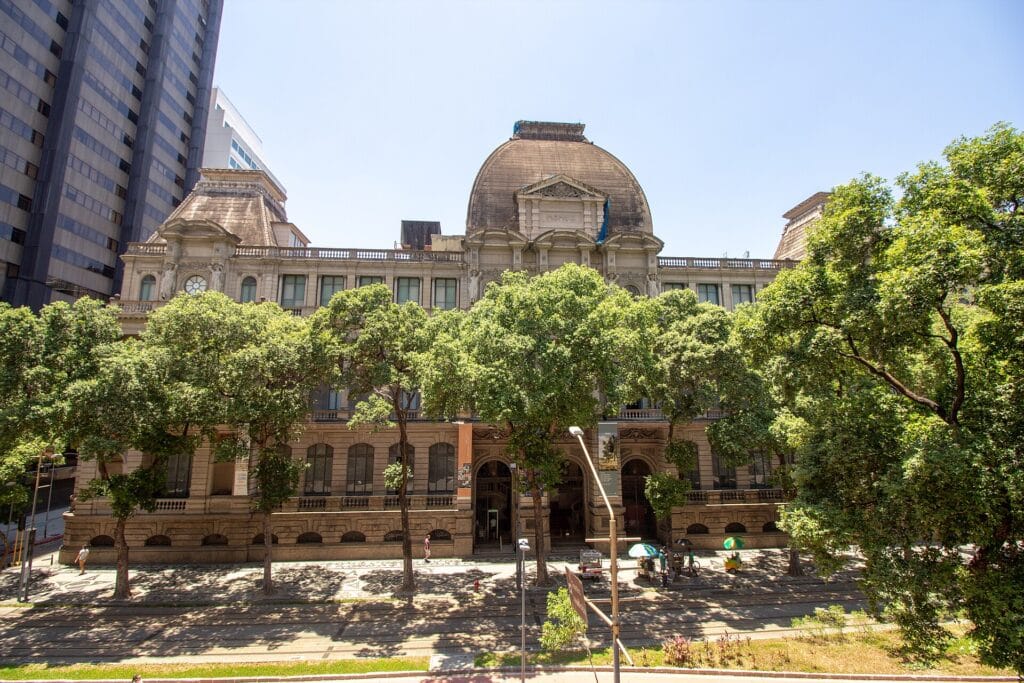
The museum inhabits the Palace of the Fine Arts, a building whose neoclassical architecture and origins between 1908 and 1937 underscore Brazil’s own artistic ambitions at the time. The building’s design was deliberately modeled to convey stability, refinement, and cultural authority—qualities aligned with the academic art inside. This setting situates the art within the socio-political aspirations of early twentieth-century Brazil, rendering the visit a layered spatial and historical experience.
While the building’s grandeur affirms the weight of Brazil’s art history, it comes with the trade-off of older museum infrastructure. The palace’s layout and facilities may challenge contemporary expectations for visitor flow and accessibility, particularly for those with mobility issues. Potential visitors should verify current access arrangements before deciding to visit. The building’s proximity to Rio’s Centro cultural hub allows logical pairing with surrounding historical sites, enriching an understanding of the city’s urban and cultural development in parallel to the art exhibited.
Concentrated yet Demanding for Visitors
Navigating the extensive collection requires some preparation. The museum’s strength lies in the depth of its holdings, but that depth can prove tiring or overwhelming without a thematic or chronological approach to one’s visit. Those primarily interested in nineteenth-century academic art will find the first-floor galleries well organized for that purpose, while visitors focused on modernism should target the upper levels.
Because the collection is large and densely arranged, visitors without prior knowledge or a focused agenda may struggle to feel oriented. The museum’s straightforward presentation style provides limited interpretive aids or interactive elements. While this respects the artworks by not diluting their presence with overly didactic explanation, it places a burden on visitors to be somewhat informed or at least ready to engage actively. The Museu Nacional de Belas Artes best suits those ready to invest time examining context, form, and historical significance rather than quick viewing.
Beyond Paintings—The Importance of Graphic and Decorative Arts
Although painting dominates the museum’s holdings, the inclusion of sculpture, prints, drawings, and decorative arts widens the scope of Brazil’s artistic history beyond two-dimensional works. The print and graphic arts selections, in particular, provide valuable insight into technical developments and the visual culture accompanying the narrative art. These collections reveal lesser-known but important facets of artistic production and allow visitors to perceive the breadth of Brazilian craftsmanship and innovation.
Decorative arts highlight the local responses to European influences and shed light on artisanship techniques often overlooked in painting-focused institutions. This assortment of media enriches the museum’s story by underscoring the complexity of visual culture, providing layers to Brazil’s material and artistic histories. For specialists and enthusiasts intent on a comprehensive understanding, these auxiliary sections offer critical context, though casual visitors may find their connections to the main narrative less immediately clear.
Clear Target Audience and Practical Considerations
The Museu Nacional de Belas Artes calls for an audience willing to engage with an art historical narrative embedded in Brazilian cultural and political history. Visitors with prior knowledge or strong curiosity about Brazil’s art history will benefit most. Its approach rewards patience and focus rather than casual browsing. Conversely, those uncomfortably overwhelmed by large, densely packed collections or who expect thematic or interactive presentations may find it less accessible.
The museum’s historical building also suggests the need for practical planning, particularly for those with mobility concerns. Access details and current operational information should be verified on the official site before visiting, as facilities may not meet all contemporary standards without modification. Its central location in Rio’s Centro district makes it a logical inclusion for culturally minded trips focusing on this historically rich neighborhood.
Comparing the Museu Nacional de Belas Artes Within Rio’s Museum Scene
Within the context of Rio de Janeiro’s multiple art institutions, the Nacional de Belas Artes contrasts with venues like the Museum of Modern Art and the Museu de Arte do Rio. Its collection refuses to drift toward contemporary or international art trends, instead grounding visitors in a classical-to-modernist Brazilian art progression. Where those other museums engage with newer forms, social themes, or international dialogues, the Nacional offers a focused archive, serving as a foundational reference point for understanding Brazil’s artistic lineage.
This makes it less suited to visitors seeking experimental exhibitions or thematic explorations of global art but ideal for those who require a chronological framework and the canonical artists of Brazil’s nineteenth and early twentieth centuries. It effectively anchors Brazil’s visual culture within its historical evolution rather than presenting art as isolated or solely expressive.
The Editorial Decision
The Museu Nacional de Belas Artes delivers a concentrated and thorough account of Brazil’s art history, centering on academic and modernist legacies within a historically significant building. Its value lies in preserving and explaining Brazil’s artistic self-definition across time, offering those interested in this particular cultural trajectory a deep reservoir of works and contexts rarely matched elsewhere. However, its focus narrows the appeal, making it less welcoming to casual visitors or those expecting a broader or more experimental art experience.
For readers purposefully exploring Brazilian art history or pursuing scholarly interest in the nation’s academic and modernist production, this museum stands as an essential point of reference. Practical limitations in display and visitor facilities, as well as its traditional museological approach, should inform the decision to visit. Checking the latest visitor information in advance is advisable, given the museum’s location and building constraints.
This museum merits a visit when historical depth and focused content outweigh interactive convenience or international scope in your priorities. It rewards deliberate engagement with Brazil’s art but demands that visitors share its serious commitment to national artistic legacy.