Museum of Byzantine Culture Review
Intro The Museum of Byzantine Culture in Thessaloniki is one of the most carefully organized history museums in Greece and one of the strongest museums.
Intro The Museum of Byzantine Culture in Thessaloniki is one of the most carefully organized history museums in Greece and one of the strongest museums.
Best forMasterpieces, architecture, cultural history
Review focusCollection highlights, building, visitor flow
Intro
The Museum of Byzantine Culture in Thessaloniki is one of the most carefully organized history museums in Greece and one of the strongest museums anywhere for understanding Byzantine civilization through material evidence. It does not rely on monumental claims or theatrical presentation. Instead, it builds its authority through order, context, and the steady accumulation of objects that explain how a long medieval society functioned. Thessaloniki is an especially appropriate location for such a museum because the city itself was one of the major centers of the Byzantine world. The museum therefore works both as a destination in its own right and as an interpretive key to the monuments that remain across the city.
This review considers how the museum is structured, how effectively it presents its collections, and what kind of visit it offers to readers interested in archaeology, religious history, urban culture, and the historical experience of the eastern Mediterranean.
How the Site Works
The museum is arranged in a clear sequence that favors historical comprehension over density. Visitors move through galleries that address the transition from late antiquity to Byzantium, the consolidation of Christian culture, funerary practice, art, worship, and everyday life. The logic of the layout is one of the museum’s greatest strengths. The exhibitions are not crowded with disconnected material, and the visitor is rarely left guessing why a particular object is in a particular room.
Interpretive texts support the displays without overwhelming them. The museum uses labels, maps, reconstructions, and thematic panels to connect local finds from Macedonia with wider developments in the Byzantine world. This means that even visitors with limited prior knowledge can build a framework as they proceed. Those already familiar with Byzantine chronology will appreciate that the museum does not reduce the subject to a sequence of dynasties or military events. Instead, it explains social, religious, and visual culture in a way that feels durable and well considered.
Circulation through the building is generally smooth. The architectural design supports a measured pace, and the galleries encourage sustained attention rather than quick movement. The museum feels structured for reading and looking, which is exactly what the subject requires.
Exhibitions and Collection
The permanent collection is impressive not because it depends on a single universally famous object, but because it sustains a high level of significance across many categories of material. Stone sculpture, mosaics, icons, ceramics, coins, jewelry, architectural fragments, and funerary material are all used to show how Byzantine life was organized. The museum is especially effective in displaying church-related objects alongside evidence of domestic and civic life. This prevents the common mistake of presenting Byzantium only as theology and ornament.
Several galleries stand out for the way they balance beauty with explanation. Funerary displays are used to examine status, memory, and ritual. Architectural fragments from churches help explain how sacred spaces were built and experienced. Everyday items such as pottery, glass, and metal objects anchor the larger imperial narrative in ordinary practice. The icon displays are strong, but they are not isolated from their liturgical or devotional context. This helps the museum maintain historical depth rather than turning the material into a simple survey of style.
The collection also benefits from Thessaloniki’s regional importance. Material from Macedonia and northern Greece gives the museum a local foundation, while the broader interpretation shows how these finds connect to the larger Byzantine sphere. The result is a collection that feels rooted in place without becoming provincial. Visitors come away with a stronger sense not only of Byzantium in general, but of why this city mattered within it.
Architecture / Space
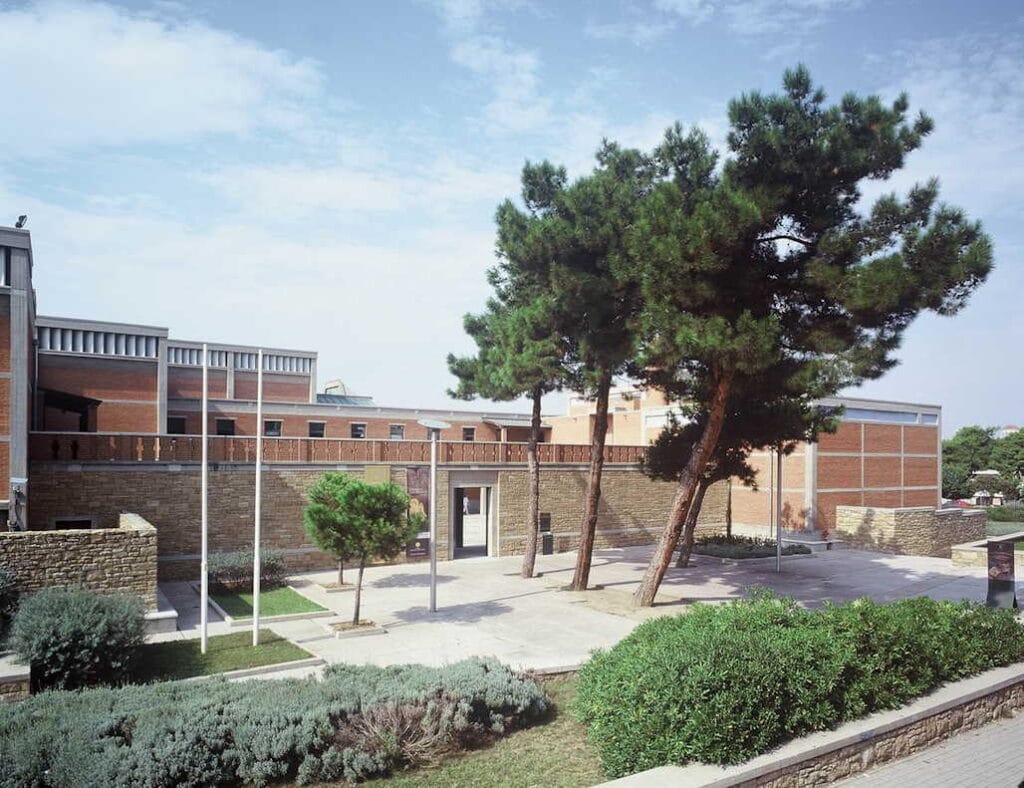
The building is modern, disciplined, and well suited to archaeological display. It does not compete with the collection for attention, which is an advantage in a museum devoted to sculpture, architectural fragments, and devotional objects that require visual space. Galleries are proportioned to allow both close study and broader sightlines. Lighting is generally controlled and supports the material well, especially where stone, metal, and painted surfaces need different conditions.
The museum’s spatial rhythm is one of its quiet achievements. Large objects are given enough room to register as architectural or civic fragments rather than decorative debris. Smaller objects are grouped in ways that support comparison. The design encourages concentration, and the galleries maintain an atmosphere that is calm without becoming austere. That matters because Byzantine material can lose force when displayed either too theatrically or too clinically. Here, the balance is better judged than in many museums handling comparable collections.
The location within Thessaloniki adds another layer to the spatial experience. After leaving the museum, visitors can see churches, walls, and urban traces that reinforce what they have just encountered inside. Few museums benefit so directly from their surrounding city.
Visitor Experience
The overall visitor experience is serious, orderly, and rewarding. This is not a museum built around spectacle, interactive entertainment, or rapid consumption. It asks for time and attention, and it generally rewards both. Readers interested in historical method will notice the care taken in classification and interpretation. General visitors will benefit from the clarity of the display sequence and the high quality of the explanatory material.
Crowding is often less intense here than in many major European museums, which makes it easier to spend time with the objects. That in turn improves the experience because the collection is most effective when viewed slowly. There is a strong sense of editorial discipline in the way the museum presents itself. Objects are not included merely because they are decorative or impressive. They are there because they contribute to the wider account the museum is building.
The museum also succeeds in maintaining accessibility without reducing complexity. A visitor unfamiliar with Byzantine history can still understand the main themes, while specialists or repeat visitors can appreciate the depth of the material and the confidence of the interpretation. That dual success is not easy to achieve, and it is one reason the museum stands above many mid-sized archaeological institutions.
Historical Context
Byzantium is often simplified in public history into either a late Roman afterlife or a purely religious civilization. The Museum of Byzantine Culture does a better job than most institutions of resisting those simplifications. It presents Byzantium as a living society with administration, trade, craft, urban culture, and changing forms of identity. Christianity is central, but it is shown as part of a wider social and material world rather than as an isolated subject.
Thessaloniki gives the museum unusual historical credibility. The city was one of the principal urban centers of the Byzantine Empire and a major link between the Balkans, Constantinople, and the Mediterranean. The museum’s collections therefore emerge from a region that was not peripheral to the story. They belong to one of its central environments. This is reflected in the strength of the architectural material, ecclesiastical objects, and funerary evidence presented in the galleries.
The museum also helps visitors understand continuity and change. It shows how the late Roman world evolved into Byzantine forms, how artistic traditions were adapted over time, and how political and religious structures were expressed through material culture. In doing so, it provides a richer account of medieval eastern Europe than many larger institutions manage.
Practical Information
The museum is located in Thessaloniki and can usually be reached without difficulty from central areas of the city. Because practical arrangements can change, visitors should confirm current opening times, ticket information, and any temporary closures before visiting. The museum is well suited to combination with other sites, particularly Thessaloniki’s Byzantine churches, the Rotunda, sections of the city walls, and nearby archaeological points of interest.
For most visitors, a careful visit will take between ninety minutes and two and a half hours depending on reading pace. Those with a stronger academic interest may want longer. The museum is also one of the better choices in Thessaloniki for visiting in the middle of the day, since the interior environment supports a sustained and comfortable visit.
Final Verdict
The Museum of Byzantine Culture is an exemplary historical museum: clear in purpose, disciplined in presentation, and strong in collection quality. It does not depend on spectacle or reputation. Its authority comes from the coherence of its interpretation and the seriousness with which it handles material culture. For visitors interested in Byzantium, it is essential. For visitors interested more broadly in medieval history, religion, archaeology, and the cities of the eastern Mediterranean, it is one of the most rewarding museum visits in Greece.
Its greatest strength is not a single masterpiece but a sustained standard of interpretation. The museum shows how to build understanding through objects, context, and careful sequencing. That makes it both intellectually useful and genuinely memorable.
Plan your visit
Plan to visit the Museum of Byzantine Culture alongside Thessaloniki’s surviving Byzantine monuments rather than treating it as an isolated stop. A morning or early afternoon visit works well, followed by time in the city to see churches and historic districts that connect directly to the galleries. Allow at least two hours if you want to read the displays properly. Visitors with a particular interest in medieval history may want longer. The museum is most rewarding when approached at a deliberate pace.