Kystmuseet Review
Intro Kystmuseet Skagen in Skagen, Denmark, is one of the most useful museums in the town because it tells the story that visitors can easily miss.
Intro Kystmuseet Skagen in Skagen, Denmark, is one of the most useful museums in the town because it tells the story that visitors can easily miss.
Best forMaritime history, ships, harbour heritage
Review focusCollection, setting, visitor experience
Intro
Kystmuseet Skagen in Skagen, Denmark, is one of the most useful museums in the town because it tells the story that visitors can easily miss. Skagen is widely known through art, light, beaches, and summer imagery, but none of those associations explain the harder foundations of the town’s history. Kystmuseet Skagen provides that missing ground. It focuses on fishing, rescue work, shipping, domestic life, and the practical realities of a coastal settlement shaped by the sea.
This makes the museum more than a local curiosity. It is a corrective. It reminds visitors that Skagen was a working place before it was a cultural symbol and that its maritime identity remained fundamental even as painters and tourists turned it into something larger in the national imagination.
How the Site Works
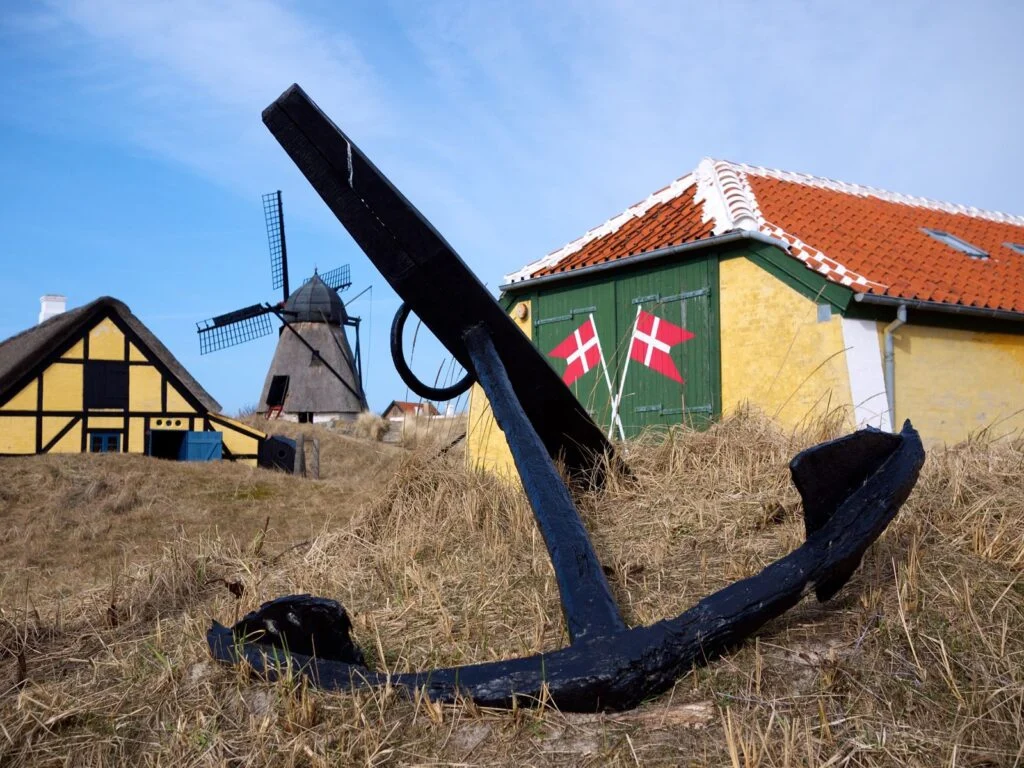
The museum works by combining open-air presentation with indoor historical displays. This is an effective choice because Skagen’s local history is best understood not only through labels and artifacts but through buildings, tools, and reconstructed environments. The site lets visitors move between exhibition modes rather than treating the town’s past as something that can be contained in cases alone.
That hybrid structure also suits the subject matter. Maritime and local history are physical histories: of houses, workspaces, rescue equipment, and everyday material culture. By preserving a more tactile and spatial approach, the museum makes those histories easier to grasp.
Kystmuseet also works especially well in relation to the rest of Skagen. After visiting the art museums, the local history here begins to feel like an underlying framework. The fishermen, working families, and rescue culture that appear in cultural memory are given concrete historical form. This relationship between sites strengthens the museum’s value considerably.
Exhibitions and Collection
The museum’s collection is strongest where it deals directly with Skagen’s maritime life. Exhibits on fishing, rescue services, shipping, and local domestic conditions give the institution real substance. Rather than relying on one or two iconic objects, it builds meaning through a broader range of material culture that shows how people lived and worked.
This is important because local history museums often risk becoming miscellanies of interesting remnants. Kystmuseet Skagen performs better when it connects objects back to a coherent account of coastal life. Boats, tools, rescue material, household settings, and open-air elements combine to show how the town functioned under real physical and economic pressures.
The museum is at its most persuasive when it reveals the vulnerability and resilience of coastal living. Rescue history in particular adds gravity, because it reminds visitors that the sea supported Skagen but also endangered it. That duality gives the museum emotional and historical depth.
Although the museum is not large in scale, it gains strength from the specificity of its subject. It is not trying to tell all of Danish history. It is telling the history of one place shaped by one set of conditions, and that precision gives the collection focus.
Architecture / Space
The spatial structure of the museum is a major asset. By combining indoor exhibition areas with open-air elements, it avoids the flatness that can weaken small local museums. Movement through the site keeps the visit varied, and the physical presence of reconstructed or preserved environments makes the history feel closer to lived reality.
The museum’s architecture is not intended as spectacle, and that is entirely appropriate. Its role is to support local historical interpretation. The setting in Skagen itself provides much of the deeper meaning. Being in the town where these maritime histories unfolded is far more important than having a dramatic museum building.
This relationship to place is one of the museum’s greatest advantages. The site feels rooted. It does not merely describe coastal life from a distance. It stands within the environment that produced it.
Visitor Experience
The visitor experience is straightforward, informative, and often more engaging than outsiders might expect from a local history museum. Families, maritime-history enthusiasts, and travelers who want a fuller sense of Skagen beyond the standard highlights are likely to find it particularly worthwhile.
Because the museum is moderate in scale, it can be visited comfortably without turning into an all-day commitment. That practicality is useful in Skagen, where many visitors are balancing art museums, landscape experiences, and town walks. Even within a shorter visit, however, the museum manages to shift how the town is understood.
The site is especially rewarding for those who appreciate social history. Kystmuseet Skagen is not mainly about grand narratives or rare masterpieces. It is about ordinary life under extraordinary environmental conditions, and that gives the visit quiet force.
Historical Context
Skagen’s artistic fame can sometimes obscure the fact that it developed within a much older maritime and fishing world. Kystmuseet Skagen helps restore that background. The town’s economy, social structure, and patterns of risk were formed by coastal labor, and those realities shaped the community long before Skagen became a symbol of northern artistic life.
This makes the museum historically important within the town. It does not compete with the art museums. It completes them. It shows the material world behind the cultural image and reminds visitors that local history is rarely as decorative as later memory makes it seem.
Practical Information
Current opening hours list Tuesday to Friday from 11:00 to 15:00 and Saturday to Sunday from 11:00 to 15:00, with Monday closed. Adult day and week tickets are available, and visitors under 18 are admitted free. Since seasonal shifts can occur, checking current details remains sensible.
The museum works particularly well as part of a mixed Skagen day. It pairs naturally with harbor walks, coastal exploration, and the town’s artistic sites, all of which gain extra meaning once the local history is understood more concretely.
Final Verdict
Kystmuseet Skagen is a strong museum because it tells an essential story with clarity and local authority. It gives Skagen historical depth, corrects the imbalance created by art-focused tourism, and preserves the maritime and domestic realities that shaped the town for generations.
For visitors who want to understand Skagen as more than an image, it is highly worthwhile. It may not be the most famous museum in town, but it is one of the most informative.
Plan your visit
Plan Kystmuseet Skagen as a companion to the art museums rather than as a substitute for them. The museum works best when it is allowed to broaden the story of Skagen rather than compete for the same kind of attention. A good approach is to combine it with time around the harbor or with a visit to Skagens Museum, so the relationship between local labor, maritime life, and artistic representation becomes especially clear.