Inhotim Review
Brumadinho, Brazil. Inhotim is an expansive contemporary art museum and botanical garden situated in Brumadinho, Brazil, approximately 60 kilometers from Belo Horizonte. Established in 2006, the museum grew from the private collection of Bernardo Paz, an…
Brumadinho, Brazil. Inhotim is an expansive contemporary art museum and botanical garden situated in Brumadinho, Brazil, approximately 60 kilometers from Belo Horizonte. Established in 2006, the museum grew from the private collection of Bernardo Paz, an…
Best forMuseum lovers, culture travelers, first-time visitors
Review focusCollections, visitor experience, and practical planning
Historical Context
Inhotim is an expansive contemporary art museum and botanical garden situated in Brumadinho, Brazil, approximately 60 kilometers from Belo Horizonte. Established in 2006, the museum grew from the private collection of Bernardo Paz, an industrialist who transformed his rural estate into one of the largest outdoor art centers in Latin America. Inhotim occupies an unusual position in the museum landscape, blending a botanical garden with an extensive display of contemporary art. The site covers some 140 hectares of land, combining natural beauty with ambitious art commissions that extend from indoor galleries to lush outdoor spaces.
The museum’s development reflects Brazil’s broader cultural aspirations in the early 21st century to create innovative platforms for contemporary art outside traditional urban museum settings. It presents an alternative approach to art presentation by situating works within a carefully curated natural environment, thereby challenging conventional gallery boundaries. Over the years, Inhotim has gained international recognition for its experimental model, presenting art as part of an ecological ecosystem while also serving as an important conservation project. This dual mission situates Inhotim at the intersection of global conversations regarding art, nature, and sustainability.
What You See on Arrival
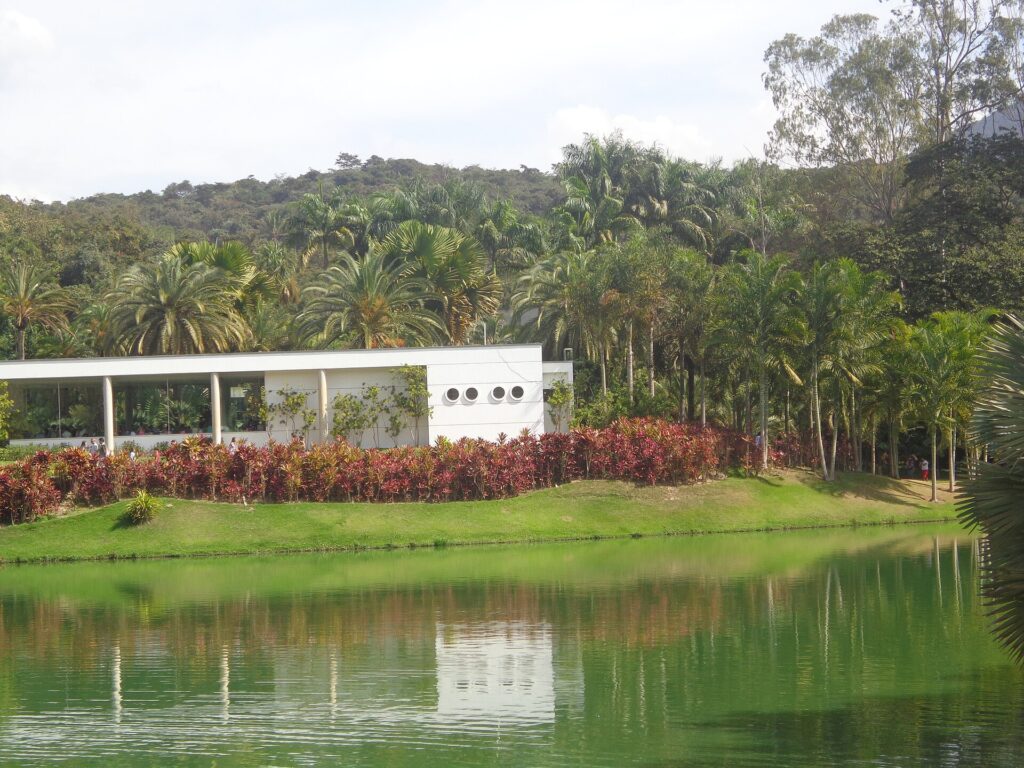
Approaching Inhotim, visitors encounter a setting more reminiscent of a vast botanical park than a conventional museum. The entrance functions as a gateway into a sprawling outdoor landscape dotted with substantial architectural pavilions and scattered artworks. The initial experience is framed by wide walking paths, tropical vegetation, and curated plant collections that set the tone for an encounter where art and environment coexist.
The physical layout is open and largely horizontal rather than stacked in multi-floor buildings. Visitors are given a sense of freedom but also face the challenge of self-directed navigation across a wide terrain. The museum does not impose a strict linear route; instead, it encourages exploration with guides and maps serving as essential tools to understand the spatial relationships between artworks and gardens.
At arrival, the museum’s scale becomes immediately clear. This is not a compact urban institution but an extensive outdoor space designed for visitors with a degree of stamina and curiosity about the synthesis of art and nature. The juxtaposition of minimal architectural forms with vivid plant life and striking contemporary sculpture signals the museum's ambition to blur the boundaries between disciplines.
Highlights and Key Exhibitions
Inhotim’s core strength lies in its permanent collection, which focuses principally on contemporary visual art with an emphasis on site-specific installations and large-scale sculptures integrated into the landscape. Artists represented are international but with significant attention to Latin American creators. The collection spans video, painting, sculpture, and installation, frequently on an epic scale.
One of the defining features is Inhotim’s architectural diversity: numerous pavilions, each custom-built to accommodate or complement particular works. This makes the museum a layered environment of distinct art experiences. For example, the immersive and kinetic installations housed in specialized pavilions contrast sharply with monumental outdoor sculptures placed among native flora.
The works of Ernesto Neto, a Brazilian contemporary artist recognized for his organic, textile-based sculptures, can often be encountered here. These installations use lightweight materials to create environments that engage visitors’ senses and spatial awareness. Similarly, pieces by Adriana Varejão, known for exploring Brazil’s colonial history and cultural identities, contribute to the collection’s regional depth.
Inhotim is also notable for its pieces by international artists such as Doug Aitken, whose large-scale video projections break traditional art-viewing conventions, and Olafur Eliasson, whose explorations of perception and natural phenomena resonate with the museum’s naturalistic setting. These monumental works invite ample contemplation and physical engagement by viewers.
The botanical component is not a mere backdrop but a central element of the museum’s mission. Inhotim contains one of the country’s largest botanical gardens, with collections including native and exotic species arranged in ecological clusters. Visitors encounter thematic gardens—such as those focusing on palms, orchids, and bromeliads—that highlight biodiversity alongside human creativity.
This interface between art and botany raises interesting questions about environmental conservation, human intervention, and artistic expression. The museum’s collection strategy includes commissions where artists respond directly to local ecological and cultural contexts, further enriching the dialogue between site and art object.
Visitor Experience
Navigating Inhotim requires a certain degree of physical preparedness and time management. The museum’s sprawling geography means a day visit can be demanding, particularly in Brazil’s hot climate. Proper footwear, hydration, and pacing are advisable. While the park-like setting invites leisurely strolling, the distance between some major pavilions and artworks necessitates a level of endurance that casual visitors should anticipate.
The museum caters well to audiences interested in contemporary art intersecting with nature, but those expecting traditional galleries or urban art institutions might find the open-air format unconventional. Interpretation tends to be delivered via placards and occasional multimedia stations, with an emphasis on allowing the art to occupy the space without overwhelming narration. This can reward visitors who prefer self-guided exploration but may pose challenges for those seeking extensive historical context or in-depth didactics.
Inhotim’s environment is conducive to contemplative encounters, and artworks are generally spaced to avoid visual congestion. The integration with gardens encourages visitors to consider the artworks in relation to their surroundings, though the scope of the campus means some installations might receive less immediate attention depending on visitor routing choices.
Families and casual tourists should note that the museum lacks the sort of hands-on activities or family-focused programming typical of other contemporary art institutions. However, the natural landscape and novel artwork formats can engage younger visitors who appreciate outdoor spaces and unusual visual forms.
Lastly, the museum’s innovative marriage of art and ecology makes it relevant to educators, researchers, and artists interested in interdisciplinary approaches. Academic or artistic visitors interested in site-specific practices will find Inhotim’s collection and context uniquely informative.
Tickets, Access, and Planning
Information regarding ticketing, opening hours, discounts, accessibility, and visitor services should be verified directly through official museum channels since these details can vary seasonally and due to operational changes. Potential visitors should prepare for a rural location that may require private transport arrangements or reliance on organized shuttle services from nearby urban centers.
Because the museum encompasses a substantial outdoor area, visitors should plan accordingly for weather variations, and the use of sunscreen, appropriate clothing, and hydration is advisable. Given the scale, allocating sufficient time to experience the museum fully is important, though the flexible layout permits shorter visits focusing on selected pavilions and exhibitions.
While Inhotim is recognized internationally, it is important not to expect the level of infrastructural convenience typical of major city museums. Access to some facilities may be limited, and visitors should anticipate a more naturalistic setting with fewer enclosed amenities.
Final Verdict
Inhotim stands out as an ambitious fusion of garden and gallery, offering a distinctive experience that diverges from conventional museum visits. Its value lies in the scale and ambition of integrating contemporary art with one of Brazil’s significant botanical collections. The museum’s permanent collection and architectural approaches invite sustained engagement, particularly for visitors interested in environmental themes and site-specific contemporary art.
However, Inhotim is not suited for those expecting a compact or highly curated traditional museum experience. The sheer scale demands considerable time and energy, and the interpretative framework relies on visitor initiative rather than heavy mediation. In this way, it aligns well with visitors who prioritize exploration and discovery but less so with those seeking structured, narrative-driven exhibitions.
The museum’s commitment to placing art within an ecological context opens productive dialogues about culture and environment that differentiate it from many contemporary art institutions. It occupies a unique niche internationally and within Brazil’s cultural ecosystem. Prospective visitors should undertake planning with attention to practical considerations such as travel logistics and physical stamina.
Overall, Inhotim offers a thought-provoking encounter with art in the landscape, marked by a range of significant works that reflect Brazil’s artistic identity alongside global contemporary concerns. Its scale and ambition may be daunting but equally rewarding for those prepared to engage with its distinctive concept.