Museum of Decorative Arts in Prague Review
Art Museums · Prague, Czech Republic. The Museum of Decorative Arts in Prague occupies a distinctive position among European decorative arts institutions by firmly situating itself in the historical and cultural context of Central Europe. Unlike museums that sweep broadly…

Art Museums · Prague, Czech Republic. The Museum of Decorative Arts in Prague occupies a distinctive position among European decorative arts institutions by firmly situating itself in the historical and cultural context of Central Europe. Unlike museums that sweep broadly…
Best forArt lovers, visual culture, architecture
Review focusCollections, curatorial focus, and visitor planning
What Sets It Apart
The Museum of Decorative Arts in Prague occupies a distinctive position among European decorative arts institutions by firmly situating itself in the historical and cultural context of Central Europe. Unlike museums that sweep broadly across international decorative arts, this museum defines itself through its focus on Czech and Bohemian craftsmanship and design traditions from the Middle Ages to the present. The museum’s scope is wide in chronology but shaped by a clear regional perspective, offering depth where many decorative arts museums adopt breadth.
Prague’s rich manufacturing and artisanal legacy, including strong traditions in glassmaking, ceramics, textiles, and metalwork, anchors the museum’s unique identity. This concentration on regional production nurtures a narrative less common in larger European decorative arts museums, which often foreground Western European or international schools. The result is a collection that allows visitors to appreciate not only stylistic developments across centuries but also the socio-economic and political circumstances behind Central European craft and design.
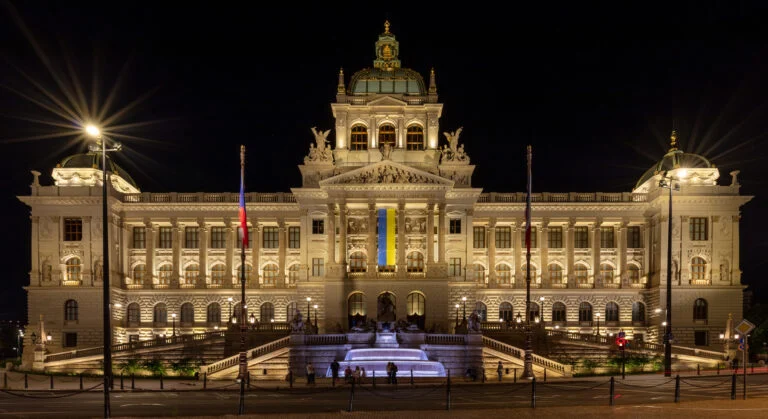
This museum’s setting further distinguishes it. Housed in the late 19th-century U Zlatého jednorožce palace and the historical Clam-Gallas Palace, the architecture itself is a testament to the decorative arts of a specific era in Prague’s past. The building’s elegant, period features provide a fitting backdrop to the collections, reinforcing the museum’s local cultural embeddedness instead of transplanting its holdings into a neutral, contemporary container.
Collection Depth and Significance
The core strength lies in the comprehensiveness of the Czech and Bohemian decorative arts represented, especially glass and ceramics, textiles, and historic furniture. The glass collection is particularly noteworthy, tracing the exceptional Bohemian tradition from Medieval stained glass through Baroque and Art Nouveau to Czech Cubism and functional modernism. This includes examples from renowned workshops and manufacturers documented since the 13th century, demonstrating both technical achievement and evolving artistic ambitions.
Textiles showcase significant craft skills, featuring folk embroidery alongside designs by noted 20th-century figures such as Josef Hoffmann and companies like Jungmann & Neffe. The breadth spans sacred vestments, industrial designs, and domestic fabrics, providing insight into how textile production reflected changing tastes and technologies without losing local character.
Furniture and metalwork collections document traditional craftsmanship and also highlight Bohemian functionalism and avant-garde movements. Pieces align with centuries of Prague’s fashion and domestic life, from Renaissance to Modern, and demonstrate the interplay of form, material, and function in everyday objects elevated to art.
The museum’s holdings in applied arts extend to ceramics, graphic arts, toys, and typography, though not all areas have the same depth. The graphic arts and typography notably mirror early 20th-century Czech modernism’s contributions to the applied arts field, but some other categories are less prominent, which narrows the museum’s appeal for visitors primarily interested in a global decorative arts survey.
The collection’s chronological span from the Middle Ages to the present allows for a narrative on how craftsmanship adapts to political and cultural shifts, from the Austro-Hungarian Empire through both World Wars and communist rule to contemporary Czech society. This continuity and historical layering reinforce the museum’s role as a documenter of regional identity through material culture.
Design, Displays, and Atmosphere
The layout and presentation emphasize the integration of objects with architectural elements of the historic buildings. Interiors reflect the stylistic milieus of the eras under discussion, creating a layered context but sometimes complicating the visitor’s ability to clearly differentiate periods or media. The palatial setting enhances the sense of historical continuity but can feel formal and occasionally constraining for modern exhibition design practices.
Interpretive materials focus on craftsmanship, provenance, and stylistic characteristics, supporting a scholarly understanding rather than narrative storytelling or interactive experiences. Labels are detailed, leaning more to the specialist visitor or those willing to engage deeply with technical and artistic information. This approach benefits serious students of Czech applied arts but might challenge more casual visitors expecting a broader cultural or historical narrative.
Atmosphere is quiet and contemplative, reflecting both the subject matter and the museum’s position in Prague’s museum landscape as a specialist rather than a tourist magnet. The museum does not rely on temporary exhibitions to broaden its appeal significantly or update its messages, so the core collection remains the primary draw. Its arrangement invites note-taking and study but does not encourage lingering in the sense of entertainment or discovery typical of contemporary display trends.
Visitor flow respects the historical building’s constraints, resulting in relatively small, intimate galleries rather than large open spaces. This intimacy supports detailed examination but could provoke visitor congestion if attendance rises considerably.
A Visit for Different Audiences
The museum is best suited to visitors with a serious interest in decorative arts history, Central European craftsmanship, and the development of specific material cultures over centuries. Specialists and students of art history, design, and Czech cultural history will find valuable primary source material here. The emphasis on Czech and Bohemian production offers insight unavailable in broader-based decorative arts museums.
Conversely, those looking for a survey covering global decorative arts styles or preferring thematic, visually dynamic presentations, or multimedia interpretation might find the museum’s focus narrow and somewhat academic. Casual tourists hoping for famous works of pan-European art or a wide range of international decorative objects may feel the collection both specialized and regionally confined.
The scholarly tone is consistent throughout, with limited engagement strategies for families, children, or those new to decorative arts. This reflects a clear institutional choice to prioritize depth over mass appeal, which has the admirable effect of preserving a serious study environment even if it narrows the audience.
The Strongest Reasons to Go
The museum’s principal appeal lies in its comprehensive presentation of Czech and Bohemian craft and decorative arts traditions. The glass and ceramics collections stand out as documents of both high craftsmanship and evolving artistic movements rooted in Prague and its environs. This includes key examples from the Art Nouveau period—a moment when Prague was a vibrant center of European design.
Also distinctive is the museum’s ability to show how decorative arts adapted within a specific cultural and political framework, spanning epochs rarely covered in global decorative arts overviews. The historical buildings add authenticity and atmosphere, enhancing the narrative of regional aesthetics and social history.
For anyone focused on the crossroads of history, regional identity, and material culture within decorative arts, this museum delivers a level of detail and contextual richness difficult to replicate elsewhere. Its steady commitment to the Bohemian sphere means visitors can gain a nuanced understanding of local variations within broader European craft traditions.
Planning Notes
Practical information available suggests visitors should check the museum’s official website before planning a visit to confirm current opening hours, admission policies, available discounts, accessibility arrangements, and tour options. The museum’s location in Prague’s historic center makes it accessible alongside other cultural sites, though the specialized nature of its collection means it may merit a dedicated visit rather than hurried stopovers.
Because displays are scholarly and the atmosphere reserved, potential visitors should prepare for a focused, contemplative experience rather than interactive or casual sightseeing. Non-Czech speakers may find some interpretive materials challenging, although basic English translations tend to be present.
The building’s historic fabric adds charm but means spatial constraints might limit group sizes or crowd management strategies. The museum’s reliance on the permanent collection rather than rotating exhibitions focuses the visit on incoming knowledge of long-term artistic trends rather than short-term novelty.
Editorial Conclusion
The Museum of Decorative Arts in Prague commands attention through its depth in Czech and Bohemian craftsmanship, especially glass and ceramics. Its identity is clear and well-maintained: a specialist institution dedicated to capturing a regional tradition over a long historical sweep. For those engaged with Central European design history or seeking to explore how decorative arts express local identity, it provides unmatched focus and material evidence.
The museum’s restrained interpretive style and historic surroundings restrain popular appeal and contemporary visitor experience innovation, but these limitations arise from conscious curatorial and institutional choices favoring scholarly depth and architectural authenticity. It remains a substantial resource and a site for detailed study rather than casual cultural consumption.
In short, this is a museum that defines itself clearly by what it concentrates on—not least the production of a specific cultural region—and that focus makes it valuable to those able and willing to engage with it on those terms.