Museo Nacional de Arte Romano Review
Art Museums · Mérida, Spain. The Museo Nacional de Arte Romano, located in Mérida, Spain, stands on historically significant ground, embodying the city’s Roman heritage and its role in the broader narrative of the Roman Empire in the Iberian…
Art Museums · Mérida, Spain. The Museo Nacional de Arte Romano, located in Mérida, Spain, stands on historically significant ground, embodying the city’s Roman heritage and its role in the broader narrative of the Roman Empire in the Iberian…
Best forArt lovers, visual culture, architecture
Review focusCollections, curatorial focus, and visitor planning
Historical Context
The Museo Nacional de Arte Romano, located in Mérida, Spain, stands on historically significant ground, embodying the city’s Roman heritage and its role in the broader narrative of the Roman Empire in the Iberian Peninsula. Mérida itself was founded as Emerita Augusta in 25 BCE, a retirement colony for veteran soldiers of the Roman legions. Its urban fabric and archaeological remains make it one of the most important sites for understanding Roman provincial life outside Italy. The museum’s creation in the late 20th century was part of a concerted effort to preserve and interpret the extensive Roman ruins dispersed throughout Mérida.
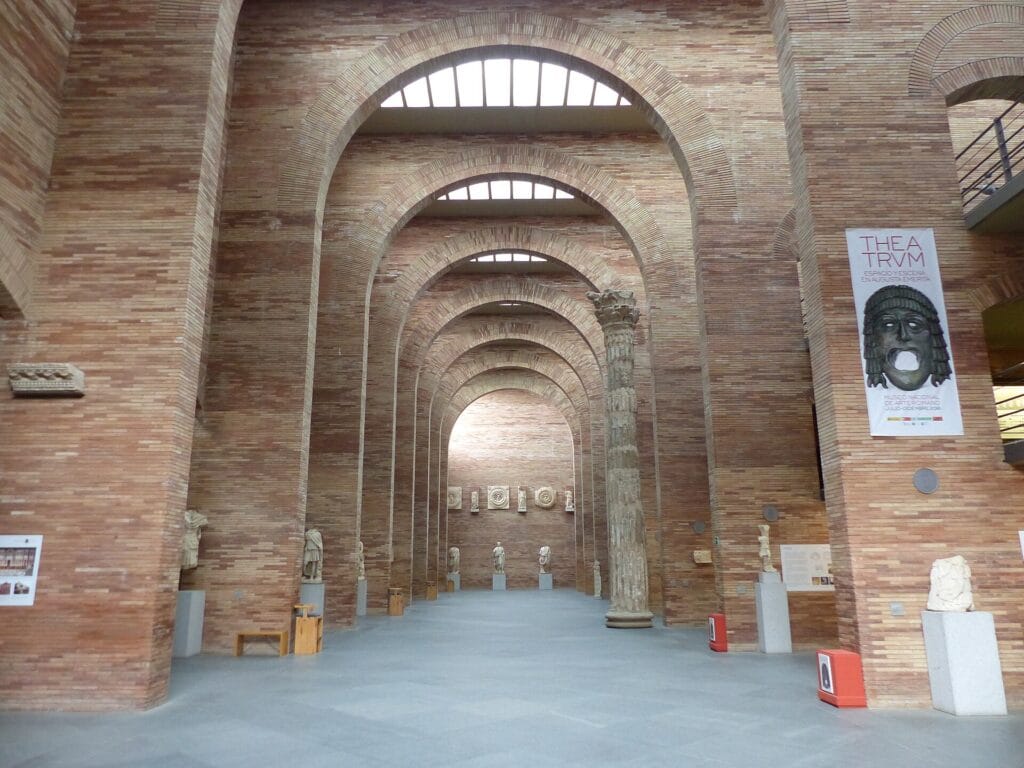
The museum’s architecture, designed by Rafael Moneo, emerged amid this context as a modern yet respectful framing of the Roman past. It was conceived not just to house artifacts but to complement the physical residue of the ancient city visible in Mérida — such as the nearby Roman theatre, amphitheatre, and aqueducts. This connection between new museum space and ancient environment situates the institution as a focal point for both local and international visitors interested in the Roman Empire’s provincial dynamics. In this way, the Museo Nacional de Arte Romano serves more than a repository; it is a node of dialogue between past and present, between archaeological finds and ongoing scholarship about Roman urbanism, daily life, art, and culture.
What You See on Arrival
Approaching the Museo Nacional de Arte Romano, visitors are met with a modernist structure that balances openness with monumentality, crafted to avoid overpowering its surroundings while marking a clear destination. The building’s exterior carries simple geometric clarity, composed primarily of smooth stone and large glass panels that subtly echo the solidity and clarity of Roman architectural principles without resorting to imitation.
The entrance area functions as a transitional zone where contemporary design sets a calm tone. This framing helps visitors appreciate that what lies inside offers a rich encounter with an ancient civilization through objects that have survived two millennia. The museum’s identity is strongly tied to Mérida’s archaeological heritage; its logo, signage, and introductory texts emphasize the site-specific nature of the collection. By placing artifacts in conversation with the local landscape and ruins, the museum signals its role as both a historical custodian and a cultural interpreter.
There is no theatrical splash or overreach, but rather a measured restraint that appeals to visitors keen on historical authenticity. The outdoor display areas, visible from multiple vantage points, provide an immediate sense of the material culture visitors will explore in depth. This initial presentation encourages curiosity about Roman provincial life and invites study rather than mere spectacle.
Highlights and Key Exhibitions
The heart of the Museo Nacional de Arte Romano is its collection of artifacts that document the breadth of Roman life in Emerita Augusta. Not a general Roman museum, its holdings reflect the particularities of the city and its inhabitants, presenting pieces that range from everyday objects to sophisticated artistic works.
Sculpture and statuary form one of the museum’s most compelling sections. Here visitors find portraits of notable citizens, deities, and mythological figures carved in marble and stone. These statues reveal local adaptations of Roman artistic canons and provide insight into identity, civic pride, and religious allegiances in the city. A notable example is a large collection of funerary reliefs, which offer valuable evidence on social structures and commemorative practices. Unlike many sculptural displays, these pieces are often accompanied by carefully curated contextual information to prevent them from being seen simply as decorative objects.
The architectural elements showcase parts of the city’s monumental fabric. Reliefs, inscriptions, and fragments of columns and capitals bring to life the scale and craftsmanship of public and private buildings. The museum also displays sections of mosaics that reveal Roman domestic aesthetics and everyday contexts, illustrating living spaces that combined function and artistic expression.
Sculptural pieces are complemented by an impressive inventory of smaller finds: ceramics, glassware, metalwork, coins, and tools that underline the economic and social patchwork of Roman Mérida. Of particular interest are items related to domestic rituals and personal adornment, such as jewelry and lamps, which make tangible the daily rhythms of ancient city inhabitants.
One distinctive strength of the museum is its systematic approach to thematic presentation. Exhibitions track the transformation of Mérida from a Roman colony to a thriving provincial capital, illustrating changes over several centuries. This chronological framing helps visitors understand historical processes rather than encountering disparate artifacts.
The museum also explores religious and funerary practices in detail, documenting the coexistence of Roman paganism, local cults, and later Christian influences. This interplay provides insight into evolving spiritual landscapes and social dynamics. The attention to epigraphy, notably through carved stone inscriptions, enriches the narrative by connecting textual evidence to material culture.
Though the primary focus is on Roman-era collections, the museum clearly situates these within Mérida’s broader urban and historical fabric. Exhibits frequently reference archaeological sites accessible in the city, encouraging visitors to see the museum as part of a wider historical experience rather than a standalone phenomenon.
Visitor Experience
The Museo Nacional de Arte Romano aims to accommodate a variety of visitors, from casual tourists interested in history to scholars specializing in Roman archaeology. The layout is logically structured, encouraging a paced exploration that gradually deepens in complexity and detail.
Interpretative materials are evidently designed to be accessible. Labels and panels provide clear descriptions and contextual background without assuming specialized prior knowledge, a balance that helps engage a broad audience. The museum also offers multilingual materials, reflecting an international visitor base common in Mérida.
The flow between galleries allows coherent movement along historical and thematic lines, minimizing confusion and fostering a constructive learning experience. This sense of order makes the museum suitable for individual visitors, families, or groups with diverse interests. However, those expecting a highly interactive or technology-driven experience might find it understated, as the emphasis lies on traditional display methods and scholarly presentation.
Visitor pacing benefits from the museum’s moderate scale. It’s neither overwhelmingly large nor too compact, enabling visitors to absorb detailed information without fatigue. The presence of mid-sized exhibit rooms and open areas can accommodate varying group sizes and educational activities.
On the other hand, due to the museum’s strong focus on Roman artifacts from a specific locale, visitors looking for a broader Roman Empire overview might find the scope somewhat narrow. The institution’s strength—depth and specificity—may not suit those expecting a comprehensive survey or engaging multimedia displays.
The museum’s connection to Mérida’s archaeological sites is a significant advantage for those with time and interest to explore beyond indoor exhibits. However, the experience within the museum alone requires linguistic and cultural engagement to fully appreciate references and subtleties in the displays.
Tickets, Access, and Planning
As with any heritage institution tied to an archaeological site, practical details are subject to change; potential visitors should check the official Museo Nacional de Arte Romano website for current information regarding operating hours, admission fees, discounts, booking policies, guided tours, audio guide availability, and accessibility services.
Considering the museum is a national institution in Spain, general regulations about entrance fees and visitor conduct may apply but are best confirmed directly to avoid assumptions. Accessibility for visitors with reduced mobility is likely facilitated given Spain’s museum standards, but specific facilities can vary and are worth verifying.
The museum’s location in Mérida, a city known for its Roman architecture, encourages combined visits to open-air sites and the museum collection. For visitors unfamiliar with the city, planning should incorporate transportation options and time management to fit multiple attractions into one itinerary.
Since the museum is focused on archaeological and historical objects, those seeking interactive or family-friendly entertainment may wish to consider supplemental activities in Mérida or elsewhere. On-site facilities such as cafés or shops should be checked with the official source ahead of a visit, as these amenities are not always guaranteed in archaeological museums.
Final Verdict
The Museo Nacional de Arte Romano in Mérida offers a substantial, carefully curated portrayal of Roman life in one of the empire’s most significant provincial cities. Its collection serves as a vital resource for appreciating the complexity of the Roman world beyond the well-known urban centers of Rome or Ostia.
The museum’s strength lies in its focus and depth. Visitors can encounter a rich variety of artifacts that together build a coherent picture of Mérida’s society, religion, art, and daily customs. The integration of sculpture, architecture, epigraphy, and smaller finds creates a well-rounded and informative narrative.
However, this specificity also limits its appeal to those seeking a broader or more interactive Roman experience. The museum leans on traditional exhibit methods and assumes some cultural and linguistic engagement. Its intellectual rigor makes it best suited to visitors with serious interest in archaeology or Roman history rather than casual tourists looking for entertainment or light browsing.
Location-wise, the museum complements Mérida’s ensemble of ancient ruins, inviting a combined approach to the city’s heritage. For visitors willing to immerse themselves in archaeological substance and thoughtful interpretation, the Museo Nacional de Arte Romano provides a clear window into Roman provincial life. For others, its quiet, scholarly atmosphere and focused thematic range may feel somewhat restricted.
Ultimately, this museum fulfills a crucial role in preserving and presenting a distinctly regional aspect of Roman heritage. It stands as a solid destination for those engaged in historical study or those looking to deepen their understanding of Spain’s ancient past. Potential visitors should plan accordingly, aligning their interests and expectations with the museum’s measured presentation and specialized scope.