National Museum of the Philippines
Manila, Philippines. The National Museum of the Philippines in Manila combines several disciplines under a single institutional framework, spanning archaeology, fine arts, ethnography, and natural history. It operates as a government-run institution focused on Philippine heritag…
Best forMuseum lovers, culture travelers, first-time visitors
Setting / nearbyManila, Philippines
Overview
The National Museum of the Philippines in Manila combines several disciplines under a single institutional framework, spanning archaeology, fine arts, ethnography, and natural history. It operates as a government-run institution focused on Philippine heritage, preserving objects and specimens that reflect the country’s diverse cultural and natural environments. Rather than concentrating on a single type of collection or narrative, it encompasses multiple museums with distinct themes that collectively trace the archipelago’s human history, artistic achievements, and biodiversity. This breadth gives the museum a particular character as a national repository, where the story of the Philippines unfolds in many forms and periods.
Collection Highlights
The National Museum includes galleries dedicated to archaeology, ethnology, visual arts, and natural history. The archaeology section covers prehistory and early civilizations within the Philippine islands, with objects such as pottery, tools, and burial goods that illuminate ancient practices. Some artifacts may date back thousands of years, linking visitors to groups like the Negritos and early Austronesian settlers.
In the ethnology galleries, the focus turns to the material culture of living Filipino ethnic groups, showcasing textiles, weaponry, house models, and ritual objects from indigenous and lowland communities. These objects provide concrete evidence of diverse lifestyles and social structures across northern, southern, and central Philippine regions.
The fine arts division contains paintings, sculptures, and prints, including historical and modern works by Filipino artists. While specific named masterworks are not always cited, the collection spans the colonial period into contemporary times, reflecting changing political, social, and cultural circumstances. This section also reflects Filipino artistic traditions absorbed and adapted from Spanish, American, and local practices.
The natural history museum holds specimens relevant to the Philippines’ unique ecosystems, including preserved animals, plants, and fossils. This part traces the archipelago’s geological and biological past as well as current biodiversity, which includes endemic species found nowhere else.
Building and Setting
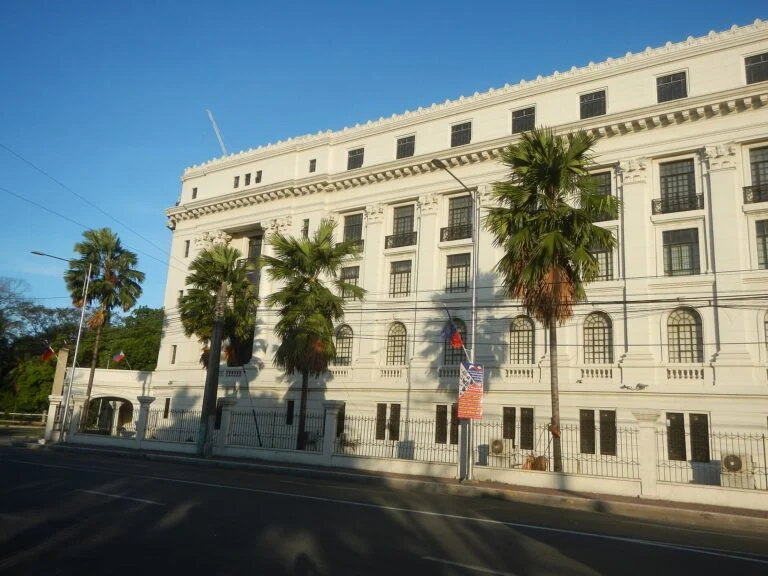
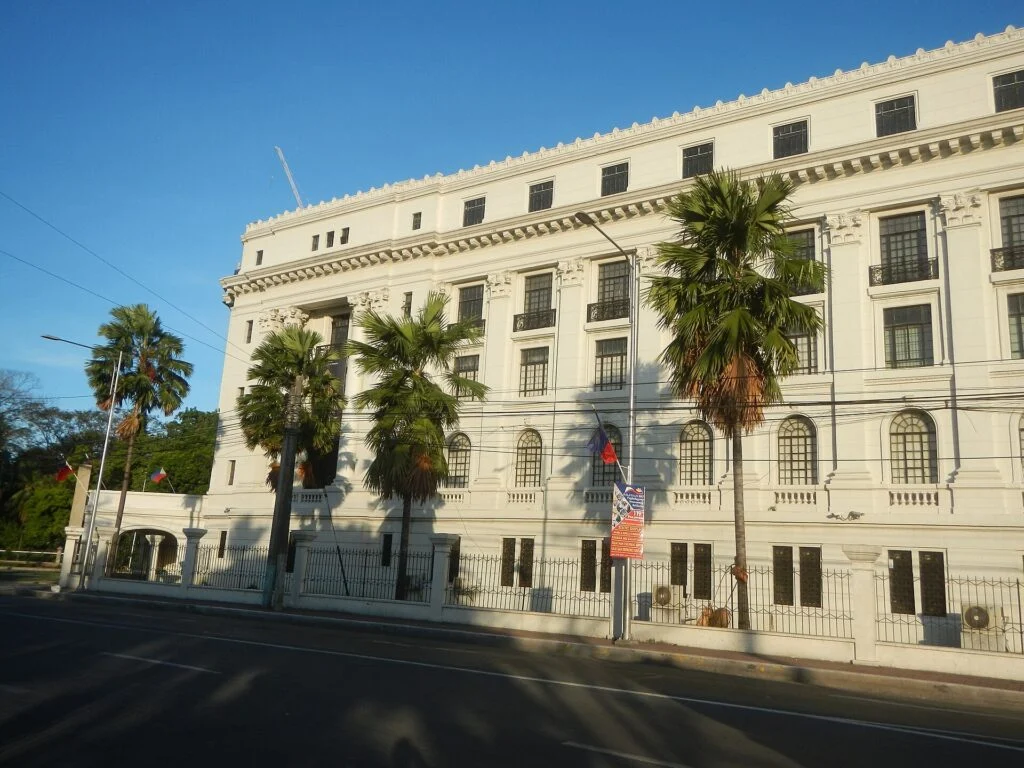
The principal building of the National Museum is the historic Manila structure formerly known as the Old Legislative Building. Constructed in the early 20th century, its neoclassical style features columns and grand staircases, demonstrating American colonial architectural influence. The building occupies a central Manila location along the Padre Burgos corridor, near government offices and Rizal Park, one of the capital’s main open spaces.
The museum complex includes several adjacent buildings and satellite locations housing its different departments. The Old Legislative Building’s size and layout create a formal atmosphere appropriate to national institutions. Unlike some museums purpose-built for exhibitions, this older building adapts to multiple functions while preserving its architectural heritage.
Practical Information
Visitors interested in going to the National Museum of the Philippines should check the official website in advance to confirm hours, ticketing policies, and any visitor guidelines that may apply. Admission fees or discounts are not consistently detailed in accessible sources, so online verification is advisable. The multiple sites and sections may have separate opening times.
The museum is within easy reach of Manila’s historic district and accessible by various forms of city transport. Its central location means that it can easily be combined with visits to nearby landmarks such as Rizal Park and Intramuros. Details on wheelchair access, guided tours, or audio guides are not certain and should be explored through official channels.
Why Visit
Those drawn to the complexity of Philippine history and culture will find the National Museum a dense and factual resource. It does not specialize in an immersive, single-artform experience but rather offers a broad spectrum of materials that reflect different times and realities. The success of this approach depends on one’s interest in handling many facets of cultural heritage simultaneously.
The natural history section adds an unexpected layer to the narrative, connecting cultural artifacts with the physical environment. For those interested in how the Philippines’ geography and ecology interplay with its history, this museum combines those themes in a single institutional umbrella.
A possible limitation is the museum’s scale and scope, which could feel overwhelming or fragmented without clear guidance. Some sections may have fewer works on display than dedicated art or archaeology museums elsewhere. It may appeal most to readers who wish to approach Philippine culture from multiple angles, appreciating the interplay of art, history, ethnicity, and nature.
The building itself provides tangible links to the colonial past of Manila’s civic center, though it is not a purpose-built museum design. This arrangement reminds visitors that cultural preservation here rests on institutions that also serve governmental or historical functions. The juxtaposition may affect how exhibitions are presented or experienced compared to more conventional museum venues.
In sum, the National Museum of the Philippines serves as a solid foundation for understanding the country’s layered identity and environment. Its composite character has practical and conceptual implications worth considering when planning a visit. Checking current visitor information well ahead will help make the experience as straightforward as possible.