Museo Larco
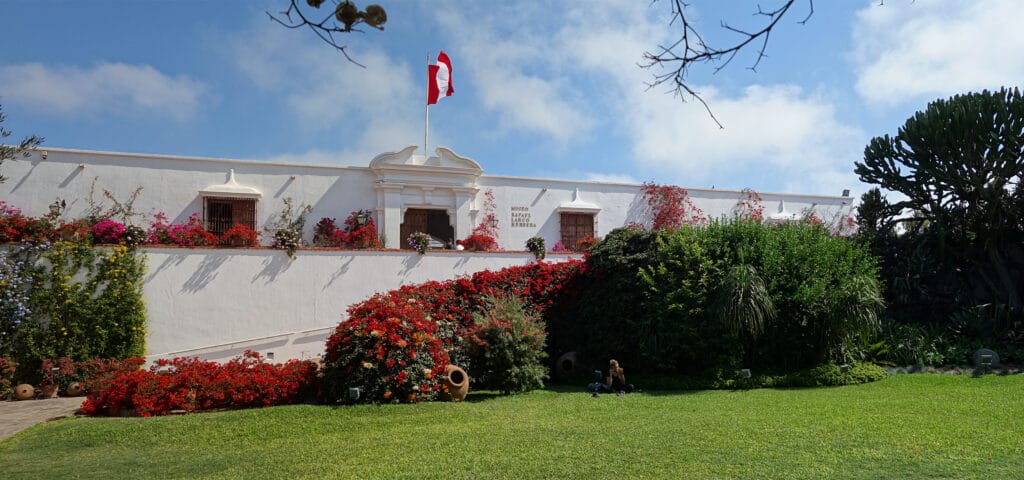
About: Museo Larco wins through intimacy rather than monumentality. Housed in an 18th‑century vice‑royal mansion, it’s human‑scale: courtyards, gardens.
Best forMasterpieces, architecture, cultural history
Setting / nearbySouth America
Overview
Museo Larco in Lima is one of the finest museums in South America and one of the most rewarding places anywhere to understand the artistic and material culture of ancient Peru. Unlike larger national museums that try to cover every period and region with equal weight, Museo Larco feels focused, elegant, and unusually coherent. Its strength lies in the quality of its pre-Columbian collection and in the clarity with which that collection is presented. For visitors, this means the museum works not only as a place to see remarkable objects, but as a place to understand the sophistication, variety, and continuity of Andean civilizations through ceramics, metalwork, textiles, ritual objects, and funerary material.
What makes Museo Larco especially impressive is the way it balances scholarship with accessibility. The collection is serious and historically important, yet the museum rarely feels intimidating or overly academic. Even visitors with limited prior knowledge of pre-Columbian Peru can come away with a much clearer sense of the cultures represented here. That is partly because the displays are strong, but also because the museum has a very clear identity. It knows what it is showing and why it matters. Rather than overwhelming visitors with too many disconnected narratives, it offers a more controlled and elegant encounter with ancient Peruvian culture.
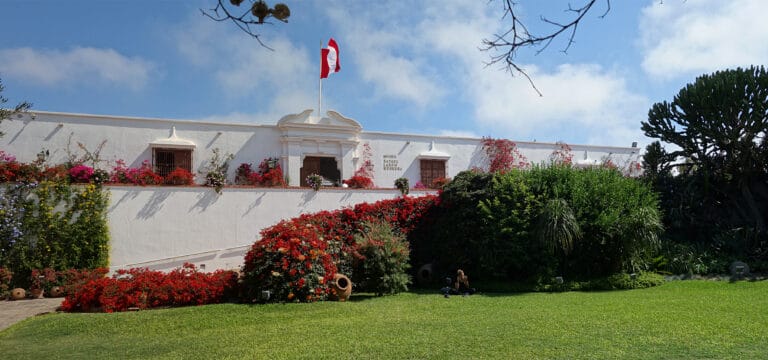
The museum is also distinctive because of its setting. Housed in a historic vice-royal mansion built over an earlier pyramid site, Museo Larco combines pre-Columbian material with a colonial-era architectural environment that is itself memorable. The white walls, courtyards, flowers, and calm atmosphere create a very different tone from the dense, institutional feel of some archaeological museums. This does not make the museum less serious. On the contrary, it makes it easier to concentrate. The setting gives the visit rhythm, light, and a kind of visual relief that suits the collection well.
Another major strength is the museum’s sense of refinement. Museo Larco is not trying to impress through size alone. It impresses through quality, curation, and atmosphere. The objects are strong enough to sustain real attention, and the museum’s layout encourages slower looking. This is one reason it is so often recommended in Lima. It provides a museum experience that feels complete. Visitors leave with the sense that they have seen not just isolated treasures, but a larger artistic and historical world made legible through careful selection and display.
Collection Highlights
The museum’s ceramic collection is one of its greatest strengths and often the clearest entry point for visitors. Ancient Peruvian ceramics at Museo Larco are not presented simply as decorative objects. They reveal systems of ritual, portraiture, symbolism, status, and daily life across different cultures and periods. The stirrup-spout vessels are especially memorable, both for their sculptural quality and for the way they show the creative range of pre-Columbian ceramic production. Some are highly formal, others vividly observational, and together they make clear how sophisticated these traditions were.
The portrait vessels are among the museum’s most striking objects. These works are powerful because they feel so immediate. Faces emerge with a degree of individuality that often surprises first-time visitors, especially those who associate ancient art mainly with stylization or symbolic form. In these ceramics, ancient Peru can feel unexpectedly close and human. They are not just important archaeological objects; they are also some of the museum’s strongest artistic encounters.
The gold and silver objects are another major highlight. These pieces reveal the technical refinement and ritual prestige of metalwork in ancient Peru, and they add a different visual language to the museum after the ceramic galleries. Where ceramics often provide narrative and human detail, the metal objects can feel more concentrated, ceremonial, and elite. They help broaden the museum’s story beyond pottery and reinforce the richness of the societies represented.
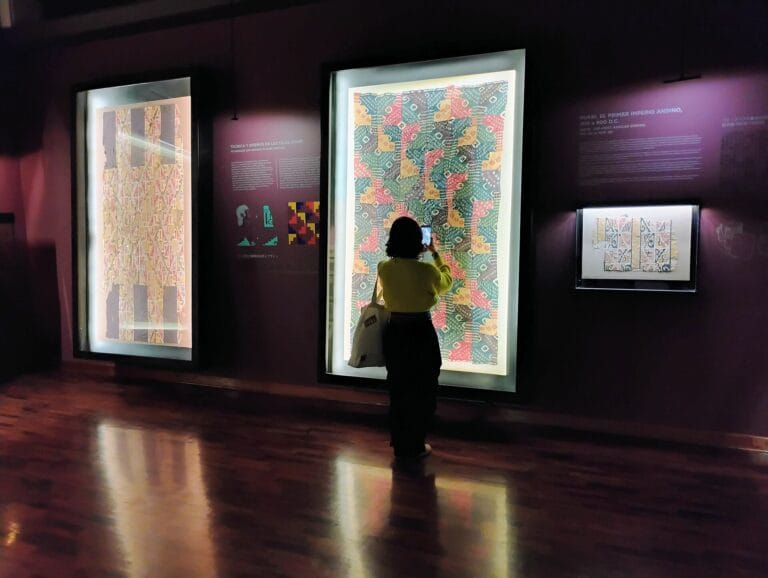
Textiles and funerary materials also deserve attention, even if some visitors move past them too quickly. These sections are important because they deepen the sense of ancient Peru as a world of layered craft traditions and ritual practices. They also remind visitors that a great deal of what survives from the past comes through burial contexts, preservation, and archaeological recovery. The museum becomes more rewarding when these quieter materials are treated as central rather than secondary.
One of Museo Larco’s most distinctive features is its visible storage collection. This area gives visitors a rare sense of abundance and institutional depth. Seeing shelves filled with ceramics is not just impressive; it changes one’s understanding of the museum. The collection feels less like a carefully limited display of masterpieces and more like access to a vast archaeological inheritance. This visible storage area is one of the museum’s smartest features because it combines transparency, scholarship, and spectacle in a way that strengthens the whole visit.
The erotic pottery section is also well known and often draws special attention. What makes it meaningful is not simply its novelty, but the way it widens the visitor’s understanding of ancient Peruvian visual culture. These objects challenge narrow assumptions about what ancient art could address, and they contribute to the museum’s broader role as an interpreter of ritual, symbolism, and human life.
Building and Setting
The building and setting are a major part of what makes Museo Larco so memorable. The museum occupies an elegant colonial-era mansion with whitewashed walls, internal courtyards, and gardens that create a calm and beautifully composed environment. This setting immediately changes the mood of the visit. Instead of entering a heavy institutional structure, visitors move through a place that feels open, light, and carefully maintained. That atmosphere supports the collection rather than distracting from it.
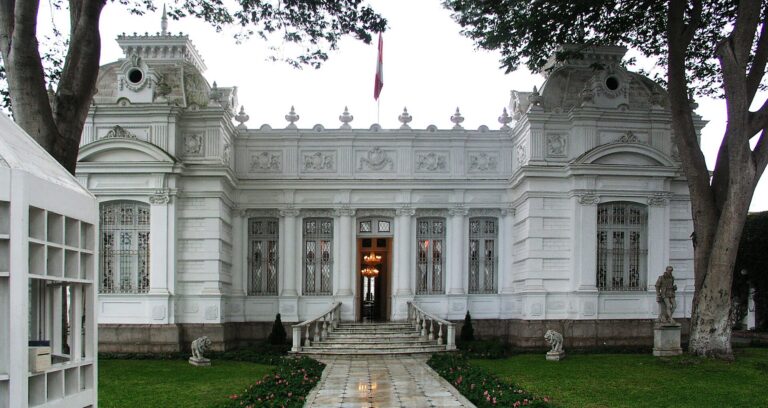
The relationship between the colonial architecture and the pre-Columbian collection is also important. Museo Larco does not erase the layers of Peruvian history; it allows them to coexist. Ancient material is presented within a later architectural environment, and that layering gives the museum unusual depth. Visitors are not simply seeing objects from a distant past. They are moving through a place where different historical periods of Peru remain visible in relation to one another.
The courtyards and gardens provide more than beauty. They also help pace the visit. Archaeological museums can become visually dense, especially when many objects are on display, but Museo Larco’s layout allows moments of pause and reorientation. This is one reason the museum feels so well judged. It understands that the visitor’s experience depends not only on object quality but on movement, light, rest, and atmosphere.
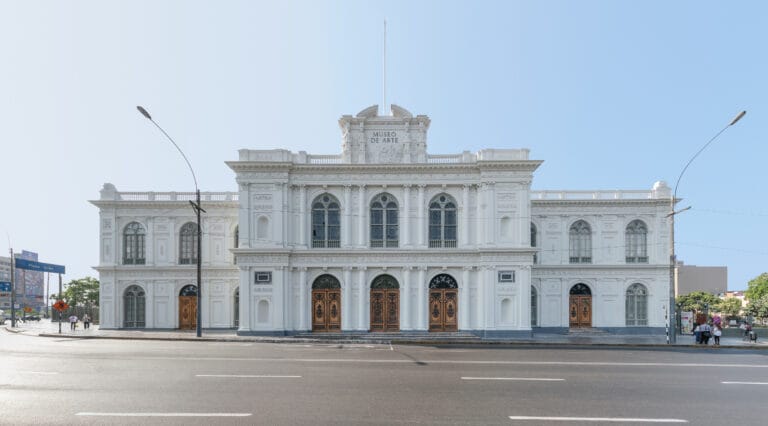
Its location in Lima also contributes to the experience. While not the most central museum in the city’s tourist imagination, it is strong enough to justify the journey on its own terms. Many visitors find it becomes one of the most memorable museum experiences in Lima precisely because it feels distinct from the city’s other attractions. It is less about civic scale and more about concentrated cultural quality.
Practical Information
Museo Larco is best visited slowly. This is not a museum to rush through in search of a few headline pieces. Its strength lies in accumulation, comparison, and atmosphere, and that means the visit improves the more attention you give it. A good approach is to begin with the main chronological and cultural sequence of galleries, then spend extra time in the ceramic rooms, the metalwork sections, and the visible storage area.
The visible storage collection should not be treated as an optional extra. It is one of the museum’s defining experiences and gives important perspective on the scale of the holdings. Likewise, the more specialized sections can become some of the most memorable if visitors allow enough time for them.
Because the museum is so visually composed and relatively manageable in scale, it works well for both shorter and longer visits. A more casual visitor can still have a satisfying experience in a limited amount of time, but those who enjoy archaeological museums will find it worth lingering. The calm setting, courtyards, and café also help make the visit feel less demanding than some denser institutions.
Why Visit
Museo Larco is best for visitors interested in pre-Columbian art, Andean civilizations, archaeological collections, and museum experiences where quality matters more than brute scale. It is especially rewarding for first-time visitors to Lima who want one museum that feels both intellectually substantial and visually memorable. Its greatest strength is the way it presents ancient Peru not as an abstract historical subject, but as a world of extraordinary artistic skill, ritual sophistication, and material richness.
What makes Museo Larco worth prioritising is the completeness of the experience. The objects are excellent, the curation is clear, the visible storage is unforgettable, and the building itself adds grace and calm to the visit. Few museums combine these qualities so well. For many visitors, it is not only one of the best museums in Lima, but one of the most satisfying museum visits anywhere in South America.