Musée national des beaux-arts du Québec Review
Art Museums · Quebec City, Canada. The Musée national des beaux-arts du Québec (MNBAQ) in Quebec City stands as a repository of Quebecois visual culture and Canadian art within an institutional framework that has evolved significantly since its inception. Emerging…
Art Museums · Quebec City, Canada. The Musée national des beaux-arts du Québec (MNBAQ) in Quebec City stands as a repository of Quebecois visual culture and Canadian art within an institutional framework that has evolved significantly since its inception. Emerging…
Best forArt lovers, visual culture, architecture
Review focusCollections, curatorial focus, and visitor planning
Historical Context
The Musée national des beaux-arts du Québec (MNBAQ) in Quebec City stands as a repository of Quebecois visual culture and Canadian art within an institutional framework that has evolved significantly since its inception. Emerging from a provincial art collection founded in the early 20th century, the museum’s mission has consistently emphasized the preservation and presentation of Quebec art alongside broader Canadian and international works. Its establishment reflects Quebec’s unique cultural identity, which intersects Francophone heritage, Canadian history, and Indigenous narratives.
The current iteration of the museum combines multiple architectural phases, including the historic Gérard-Morisset Pavilion and a more recent addition by architect Pierre Thibault, completed in the early 2010s. This expansion not only provided increased exhibition space but aimed to position the museum as a flagship cultural institution for Quebec. The MNBAQ’s curatorial direction has been marked by efforts to articulate a distinct Quebec cultural story through painting, sculpture, and contemporary media, maintaining dialogue with both historical and modern artistic practices. This approach situates the museum within ongoing conversations about regional identity, artistic innovation, and the evolving role of public art institutions in Canada.
What You See on Arrival
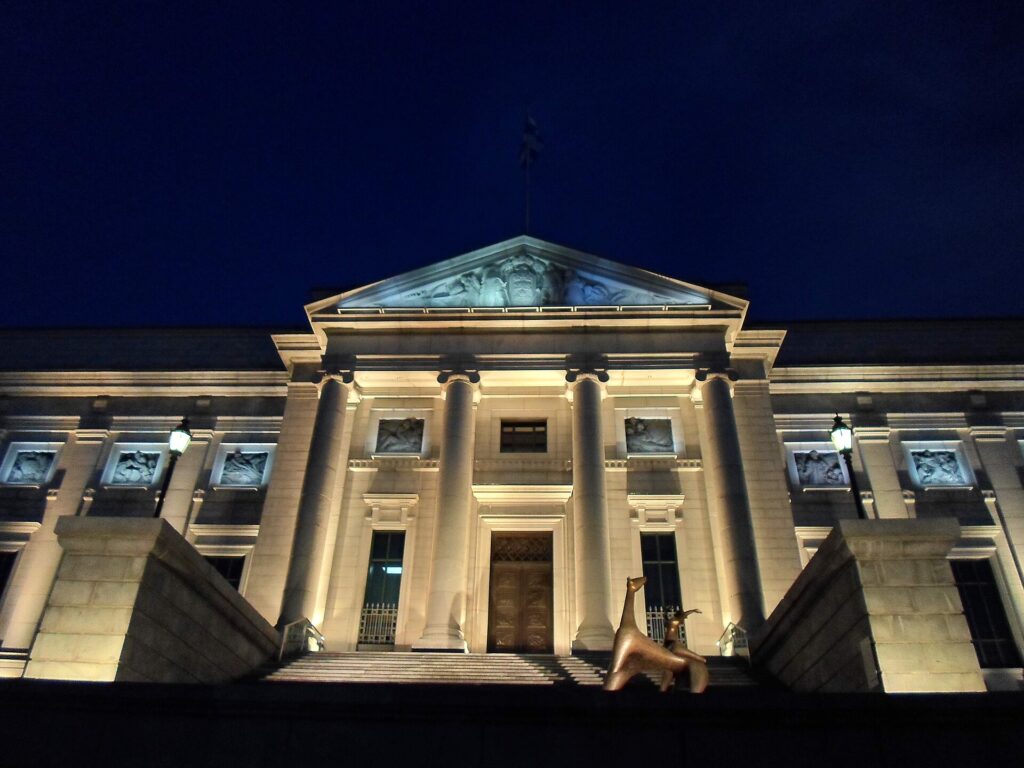
Visitors approaching the Musée national des beaux-arts du Québec encounter a complex that physically and symbolically merges old and new. The historic pavilions, with their classical façades, hint at the institution’s long-standing cultural mission, while the recent wing features contemporary architectural lines and landscape integration, signaling a forward-looking vision. The museum’s location on the historic Plains of Abraham offers a vantage not only over Quebec City’s skyline but also into a site layered with historical connotations, adding a spatial narrative to the visit.
The entrance experience graciously balances clarity and openness. The layout and signage generally direct visitors fluidly from ticketing to gallery spaces, though the architectural variety can require some acclimation. From the outset, the institution projects its focus on Quebec art through introductory panels and visual cues. Early display areas and lobby spaces set a tone oriented toward local artistic heritage with select objects and interpretive texts that provide context for the collections ahead. The museum’s identity as a custodian of both heritage and contemporary creation is evident in the juxtaposition of traditional and modern design elements visible immediately upon arrival.
Highlights and Key Exhibitions
The MNBAQ’s core strength lies in its presentation of Quebec art from the 17th century to the present, arranged to illustrate the region’s particular artistic development alongside Canadian and international trends. Paintings and decorative arts from the colonial period convey early French influence and religious themes pertinent to Quebec’s cultural foundations. These foundational works establish the historical narrative on which the museum builds.
A substantial portion of the permanent collection focuses on early 20th-century and mid-century Quebec painters such as Jean-Paul Riopelle, Paul-Émile Borduas, and Guido Molinari. Riopelle’s abstract expressionism, with its spirited textures and dynamic compositions, is represented through works conveying his pivotal role in Canadian modernism. Borduas, associated with the Automatistes movement, appears frequently alongside related pieces that underscore the artist’s engagement with both avant-garde ideas and Quebec identity. These collections effectively map the region’s 20th-century artistic awakenings.
The museum also devotes considerable space to Indigenous art, recognizing the importance of traditional and contemporary Indigenous creations to Quebec’s cultural landscape. This inclusion presents ceramics, textiles, and sculptures, contributing to a more comprehensive understanding of the province’s artistic diversity.
In addition to painting and sculpture, the MNBAQ embraces contemporary media and visual experimentation. Photography, video art, and graphic design feature within the permanent collection, demonstrating the institution’s commitment to representing multiple dimensions of artistic expression relevant to Quebec and beyond.
Sculpture is another noted specialty, with works displayed indoors and integrated into the museum’s outdoor spaces. The grounds themselves function as an extension of the collection, allowing visitors to engage with three-dimensional art within a landscaped environment linked to the city’s historic open spaces.
While the museum delivers robust permanent displays, its approach to temporary exhibitions is designed to complement core holdings rather than overshadow them. Although specifics about transient shows are not emphasized here, visitors can expect programming aligned with regional artistic conversations or significant Canadian art developments. This balance aims to provide both depth in permanent content and periodic variety through rotating exhibitions.
Visitor Experience
The MNBAQ’s internal layout reflects its multiple buildings and phased architecture, producing circuitous gallery routes that can require careful navigation, especially for first-time visitors. Signage and maps facilitate orientation but do not always fully resolve the complexity of transitions between older and newer wings. This architectural interplay, while visually stimulating, may influence pacing, with some galleries feeling more spacious and others more intimate.
Interpretative materials within the museum tend toward clarity and accessibility, featuring bilingual captions and a range of wall texts that provide historical context without overwhelming technical jargon. The presentation pays attention to local cultural nuances, especially regarding Quebec identity and Indigenous perspectives, although the depth of interpretation varies by gallery. Some sections offer nuanced critical viewpoints on artistic movements and their social circumstances, while others emphasize formal qualities and biographical details.
The museum accommodates diverse audiences, appealing particularly to those interested in Canadian and Quebec art history, contemporary art enthusiasts, and visitors seeking insights into regional cultural heritage. While casual tourists might find some architectural navigation challenging, enthusiasts and scholars will appreciate the collection’s scope and the curatorial ambition to situate Quebec art within a broader cultural conversation.
Educational resources and visitor engagement initiatives are a part of the MNBAQ’s outlook, though specifics regarding programs or accessibility features should be verified via official channels. The museum’s setting invites contemplative experiences, especially with the outdoor sculpture and the proximity to historic sites, offering layers beyond the gallery content alone.
Tickets, Access, and Planning
Potential visitors should consider consulting the museum’s official website before planning their visit since operational details such as opening hours, admission fees, discounts, accessibility accommodations, guided tours, and audio guide availability may vary or be subject to change.
The museum’s urban location in Quebec City makes it reasonably accessible via public transportation and city infrastructure, though parking and traffic conditions depend on local factors. The architectural design includes multiple levels and both historic and modern elements, which likely influence accessibility arrangements. Checking updated information on entrance accessibility, elevator use, and facilities for persons with restricted mobility is advisable.
Given the museum’s layout, allocating sufficient time for a thorough visit is recommended. The breadth of permanent collections and the integration of outdoor spaces encourage a paced exploration rather than a rapid walkthrough. Visitors with particular interests in Quebec art or Canadian cultural history will gain the most from a more extensive engagement.
Final Verdict
The Musée national des beaux-arts du Québec represents a significant effort to collect, preserve, and present artistic production that is integral to the province’s identity and to the narrative of Canadian art more broadly. Its dual architectural nature encapsulates both tradition and renewal, mirroring the artistic currents showcased within its walls.
The museum’s strengths reside in its focused and well-curated permanent collection of Quebec and Canadian artists, which provides visitors with a coherent visual and historical trajectory. The inclusion of Indigenous art and contemporary media strengthens the institution’s claim to cultural relevance and diversity. Its outdoor sculpture spaces offer an additional dimension, expanding the traditional museum experience into the landscape.
Visitor experience will benefit from some familiarization with the site’s architectural complexity and deliberate pacing, as the physical environment shapes how one encounters the artworks. Interpretation is generally effective, though not uniformly deep across all collections, which may prompt those seeking extensive critical analysis to supplement their visit with further research.
For travelers or locals interested primarily in broad international art or other genres less emphasized here, the MNBAQ might feel specialized, but for those invested in Quebec’s artistic heritage and current practices, it presents a valuable, thoughtfully structured cultural resource. Prospective visitors should confirm current operational details ahead of time for a smooth visit.
Overall, the Musée national des beaux-arts du Québec offers a comprehensive and regionally distinctive art museum experience. It blends historical richness with contemporary engagement, making it a substantial cultural institution within Quebec City’s vibrant arts landscape.