Museo Arqueológico Nacional Review
Archaeology Museums · Madrid, Spain. The Museo Arqueológico Nacional (National Archaeological Museum) in Madrid occupies a significant position in Spain’s effort to conserve and present its archaeological heritage. Founded in 1867 under the reign of Queen Isabella II, the…
Archaeology Museums · Madrid, Spain. The Museo Arqueológico Nacional (National Archaeological Museum) in Madrid occupies a significant position in Spain’s effort to conserve and present its archaeological heritage. Founded in 1867 under the reign of Queen Isabella II, the…
Best forMuseum lovers, culture travelers, first-time visitors
Review focusCollections, visitor experience, and practical planning
Historical Context
The Museo Arqueológico Nacional (National Archaeological Museum) in Madrid occupies a significant position in Spain’s effort to conserve and present its archaeological heritage. Founded in 1867 under the reign of Queen Isabella II, the museum emerged from the need to assemble and display artifacts from Spain’s vast historical timeline, stretching from prehistory through to the early modern era. It was conceived during a period when European nations sought to build national identities through state-sponsored cultural institutions, with archaeology playing a central role in this cultural consolidation.
Originally housed in a smaller venue, the museum’s present building, constructed in the late 19th century, reflects neoclassical architectural trends and was designed specifically to accommodate the growing collections. Over the years, the focus has been on gathering Spanish archaeological artifacts alongside notable imports, giving visitors a comprehensive overview of the Iberian Peninsula's history through material culture rather than a purely artistic or ethnographic lens.
The museum’s collection is notable not only for its range but also for its regional depth, including significant finds from the Iberian, Roman, Visigothic, and Moorish periods. The institution has played a role in scholarly research, national cultural education, and the conservation of archaeological materials, positioning itself as a key repository for understanding Spain’s complex past. While the emphasis is heavily on the national context, the museum also provides clues about cross-cultural interactions across the Mediterranean.
What You See on Arrival
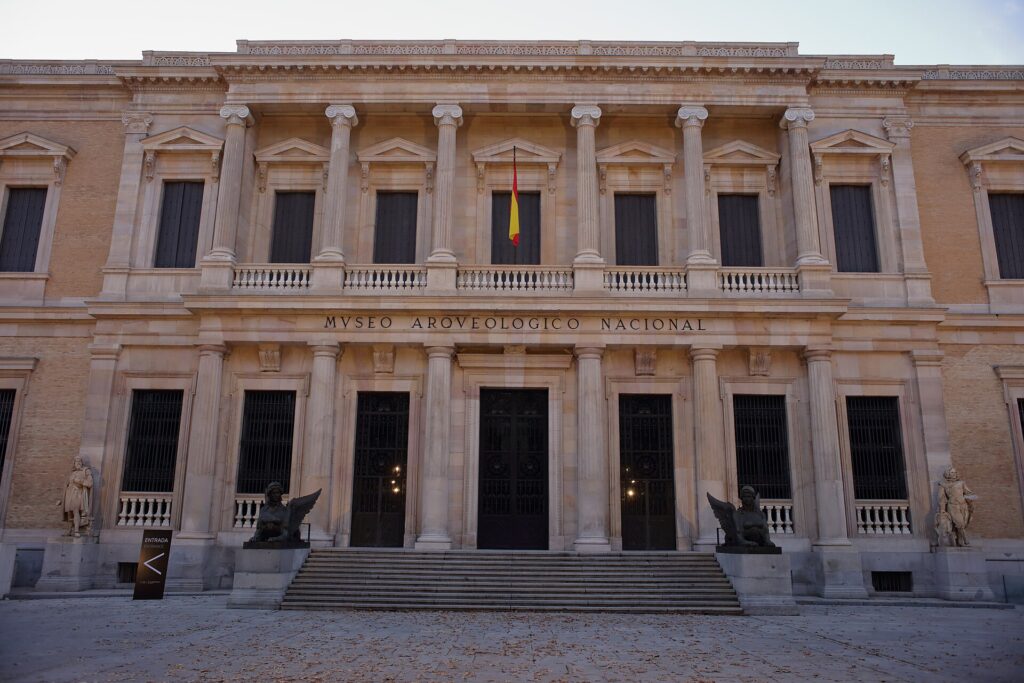
Approaching the Museo Arqueológico Nacional, visitors encounter a sober yet dignified façade emblematic of 19th-century institutional architecture. The building itself sets a formal tone, communicating the museum’s role as a serious scholarly and public resource. The entrance area is typically designed to orient visitors with a reception space, ticketing counters, and preliminary information about the layout of the galleries.
Inside, the initial impression is of a methodically organized site, where circulation routes guide visitors chronologically or thematically through Spain’s archaeological record. The museum’s identity is clearly tied to its mission: to present the material evidence of human activity across vast spans of time rather than offering a broader art historical or ethnographic perspective. This framing is reinforced by introductory panels and carefully placed artifacts designed to situate objects in their cultural and historical contexts without overwhelming the visitor with academic terminology.
The museum’s approach balances scholarly thoroughness with a public-facing narrative that is meant to be educational. Therefore, the arrival experience should prepare visitors not for entertainment or spectacle, but for thoughtful engagement with objects that have endured millennia. This focus on archaeological material culture, with an emphasis on Iberian civilization, invites contemplation rather than casual browsing. It is not a venue that depends on theatrical presentation but rather on the inherent interest of the collection itself.
Highlights and Key Exhibitions
The core strength of the Museo Arqueológico Nacional lies in its extensive and well-documented collection of artifacts spanning from prehistory to the late Middle Ages. Key exhibitions provide insights into different periods and cultures integral to the Iberian Peninsula’s development.
One of the museum’s standout components is its prehistoric collection. It offers a variety of Paleolithic tools and artifacts that detail early human activity in the region, including finely crafted flint implements and ceramics. This section provides essential context on the lifestyles and technological ingenuity of Spain’s earliest inhabitants, setting the foundation for understanding subsequent societal evolution.
The museum’s Iberian collection commands particular attention. It contains a rich array of sculptures, ceramics, weaponry, and jewelry from the various indigenous cultures that flourished prior to Roman conquest. Among these objects are the famous Lady of Elche, a sculpted bust dating from the 4th century BC, representing a striking example of Iberian art and religious symbolism. These items offer insights into the social structure, religious beliefs, and artistic achievements of pre-Roman peoples in Spain.
Roman artifacts form another pivotal area, reflecting the Iberian Peninsula’s integration into the Roman Empire. The collection includes mosaics, inscriptions, statues, and everyday objects, helping visitors trace the transformation of the region under Roman administration. It emphasizes urban development, trade, and cultural syncretism, illustrating how indigenous and Roman traditions intermingled.
From late antiquity, the Visigothic collection provides valuable examples of jewelry, weaponry, and religious art, illuminating the period following Roman decline. The Moorish section similarly explores Spain’s Islamic heritage, showing architectural elements, ceramics, and metalwork that underscore the cultural and scientific achievements of Al-Andalus. These exhibits afford a valuable perspective on Spain’s pluralistic medieval past, highlighting periods often simplified in popular narratives.
The museum also dedicates space to medieval Iberian artifacts, including religious sculpture, illuminated manuscripts, and artifacts relating to the Christian Reconquista. Collectively, these materials document shifting power dynamics and cultural exchanges across centuries.
While the permanent collection is broad and substantive, visitors should note that the museum prioritizes the preservation and presentation of archaeological objects rather than immersive or multimedia displays. The focus remains on tangible artifacts complemented by well-researched explanatory texts, rather than on visual spectacle or thematic storytelling through technology.
Visitor Experience
For visitors, the Museo Arqueológico Nacional offers an experience grounded in measured study and reflection. Its layout favors a near-linear progression through time, facilitating an understanding of cultural development across eras, although visitors inclined to focus on particular periods can navigate selectively.
The museum’s audience tends to be those with a prior interest in archaeology, history, or anthropology, as the level of detail and the volume of textual information can demand a degree of attentiveness. Interpretation is generally clear and factual, but at times may prioritize academic rigor over simplification, which might overwhelm casual visitors used to lighter presentations. The use of bilingual signage in Spanish and English helps reach international audiences, though not all panels are always translated comprehensively.
Despite the density of information, the presentation style remains restrained; while this enhances the educational value, it may constrain the appeal for visitors more accustomed to interactive or sensory museum experiences. The layout can sometimes feel formal, with comparatively little in the way of seating or spaces for rest, which is an important consideration when planning longer visits.
The museum’s collection holds value for diverse visitors—from students and scholars to general travelers with an interest in Spain’s past. However, those seeking a rapid or entertainment-driven visit might find the experience less engaging. The focus on archaeological validity, careful conservation, and historical detail appeals most to visitors willing to invest time and effort.
Ticketing, access to certain restricted areas, and visitor flow are designed to maintain the integrity of the collection, which might result in limited crowding even during peak times. The museum does not rely heavily on temporary shows or commercial activities, staying true to its core mission.
Tickets, Access, and Planning
Before planning a visit to the Museo Arqueológico Nacional, prospective visitors should consult the official website for the latest information regarding opening hours, admission fees, and any special requirements. While the museum generally aims to be accessible with reasonable ticketing policies, this can vary seasonally or due to institutional measures.
Due to the building’s historic nature and the fragile condition of many artifacts, visitor flow is managed carefully. Large groups may be subject to restrictions, and entry times could be staggered to prevent overcrowding in the galleries. Those with special needs or mobility concerns should check ahead, as the building’s age may introduce certain access limitations despite ongoing efforts to improve facilities.
Public transport options serve the central Madrid location well, but parking and car access in the immediate area may be limited. Visitors should plan accordingly and consider public transit as the primary means of arrival.
The museum’s environment is generally quiet, with a focus on scholarly quietude rather than casual leisure, so visitors should prepare for a paced experience. Language considerations may also play a role—the core interpretation is available in Spanish and English, but additional languages or interpretation for specific exhibits may not always be present.
Final Verdict
The Museo Arqueológico Nacional presents a detailed and serious study of Spain’s archaeological heritage. It stands as a vital institution for those interested in understanding the layers of human activity that have shaped the Iberian Peninsula. By focusing on material culture from prehistory through the Middle Ages, it offers an organized and comprehensive narrative grounded in scholarly expertise.
The museum’s strength lies in its collection’s breadth and depth, particularly its prehistoric artifacts, Iberian sculptures, Roman finds, and medieval relics. These provide a valuable window into Spain’s multifaceted past, emphasizing archaeological authenticity and careful curation rather than spectacle.
However, the museum’s approach may not cater to all audiences equally. Visitors seeking interactive, highly visual, or entertainment-oriented museum experiences might find the presentation somewhat formal and text-heavy. Casual tourists or families with young children might need to adjust their expectations accordingly.
Operationally, the Museo Arqueológico Nacional requires some planning regarding tickets, opening hours, and accessibility details—all of which are subject to change. Prospective visitors should verify current conditions through official channels before making arrangements.
In sum, the Museo Arqueológico Nacional performs a crucial function as a repository and presenter of Spain’s archaeological treasures. It offers thorough exploration for serious learners and those with a specific interest in archaeology or Spanish history. While not tailored for rapid or light visits, it rewards thoughtful engagement and serves as a cornerstone for understanding the material past of one of Europe’s historically rich countries.