Museo Nacional de Ciencias Naturales Review
Natural History Museums · Madrid, Spain. The Museo Nacional de Ciencias Naturales in Madrid stands as one of Spain’s oldest institutions dedicated to natural history, with its origins dating back to the 18th century. Established in 1771 under the patronage…
Natural History Museums · Madrid, Spain. The Museo Nacional de Ciencias Naturales in Madrid stands as one of Spain’s oldest institutions dedicated to natural history, with its origins dating back to the 18th century. Established in 1771 under the patronage…
Best forMuseum lovers, culture travelers, first-time visitors
Review focusCollections, visitor experience, and practical planning
Historical Context
The Museo Nacional de Ciencias Naturales in Madrid stands as one of Spain’s oldest institutions dedicated to natural history, with its origins dating back to the 18th century. Established in 1771 under the patronage of King Charles III, it reflects the Enlightenment era’s ambition to classify and understand the natural world through systematic collection and study. Over the centuries, the museum has evolved alongside scientific developments and changing cultural attitudes toward nature, expanding both its physical presence and its collections.
Initially focused on botany and zoology, the museum’s scope broadened throughout the 19th and 20th centuries to incorporate paleontology, geology, and human evolutionary studies. Its holdings have grown through acquisitions, expeditions, and donations, resulting in a repository that not only documents Spanish biodiversity but also houses specimens from around the globe. This evolution positions the Museo Nacional de Ciencias Naturales as a reference institution within the Iberian Peninsula, both for public education and scientific research. Its history encapsulates the broader European trajectory of natural history museums transitioning from aristocratic cabinets of curiosity to public spaces for learning and discovery.
What You See on Arrival
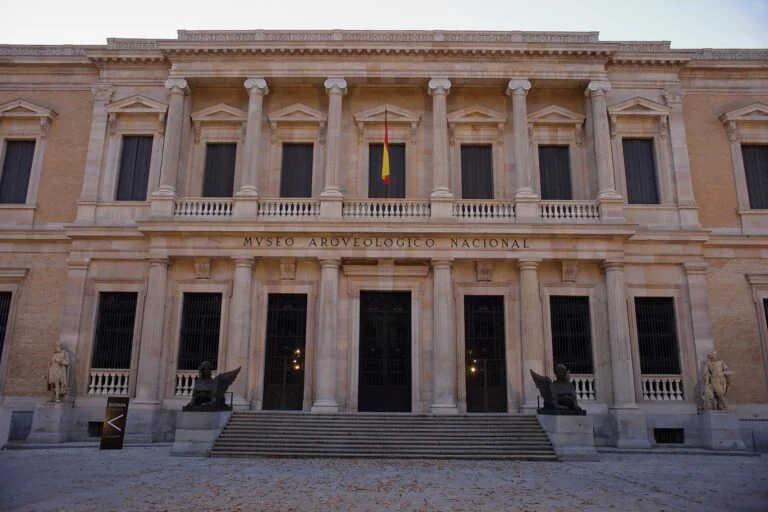
The museum occupies a stately building in Madrid’s Chamberí district, whose understated exterior signals seriousness and tradition rather than spectacle. Visitors approaching the entrance encounter a neoclassical façade that hints at the institution’s long heritage and scholarly focus. The setting is urban but relatively calm, allowing attention to settle on the institutional gravitas the museum conveys. From the outset, the Museo Nacional de Ciencias Naturales presents itself as a place devoted to scientific knowledge rather than entertainment.
Inside, the spatial layout is designed to facilitate a broad chronological and thematic journey through natural history. The entrance areas and reception typically set an orderly tone without grandiose displays or overwhelming thematic introductions. This framing, while somewhat restrained, positions the visitor to engage with the collections in a measured and reflective manner. The museum’s identity as a scientific institution is clear, and visitors can expect exhibits constructed with attention to factual detail and systematic presentation rather than narrative flair or dramatic spectacle.
Highlights and Key Exhibitions
The core of the Museo Nacional de Ciencias Naturales is its comprehensive natural history collections, which span multiple disciplines. One of the most notable sections is the paleontological gallery, where fossil specimens illustrate the evolution of life on Earth. Large dinosaur skeletons and well-preserved fossil casts demonstrate both global prehistoric biodiversity and species linked to the Iberian Peninsula’s geological record. These displays underscore the museum’s role in contextualizing Spain’s natural heritage within a broader paleobiological framework.
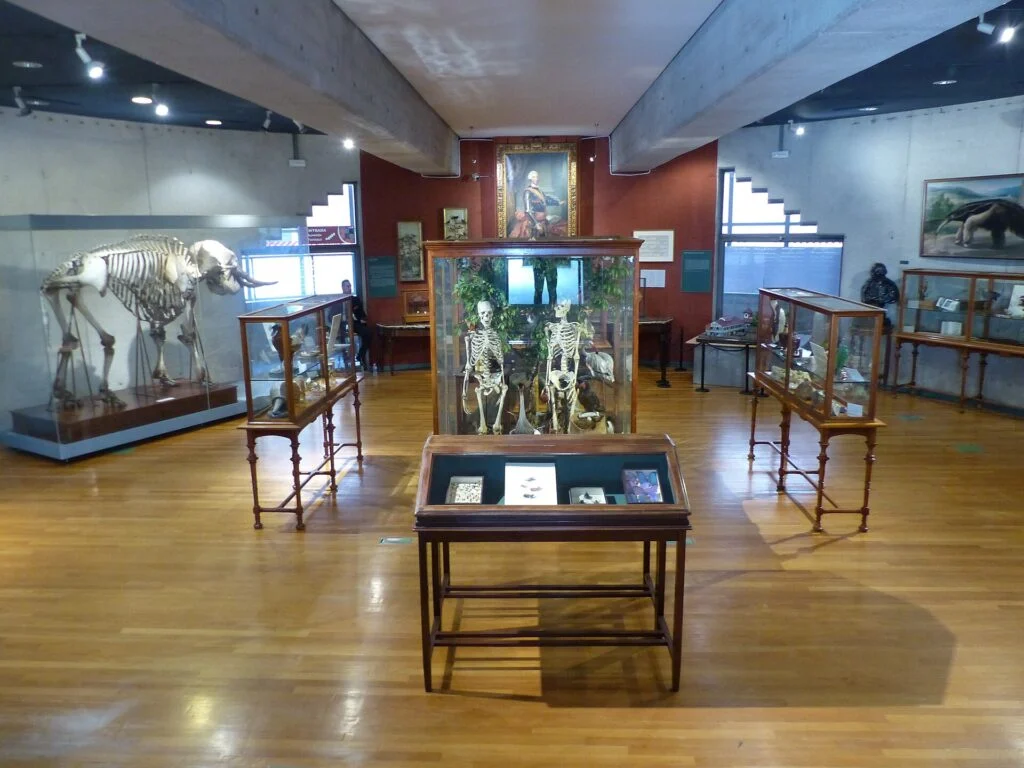
Another key focus is zoology, reflected in vast assemblages of taxidermy mammals, birds, fishes, and insects. This collection supports study of comparative anatomy and biodiversity and is organized to emphasize the diversity of ecosystems, from Mediterranean to tropical species. Special attention is given to native fauna alongside specimens from overseas, illustrating Spain’s historical and scientific connections with colonial and global biodiversity hotspots.
The geology and mineralogy exhibits feature an array of minerals, crystals, and rock formations that chart Earth’s geophysical processes. Spanish mineral samples form an essential component, highlighting the country’s varied geology. Interpretive panels tend to be clear and factual, aiding understanding of geological phenomena without excessive simplification.
Botanical collections focus on plant taxonomy with herbarium specimens and illustrative materials that trace plant diversity and classification. The museum integrates these collections with broader environmental concerns, often linking botanical heritage to issues like conservation and climate change, though these themes are generally presented with scientific restraint rather than advocacy.
Additionally, the museum maintains a section on human evolution and anthropology, which addresses the origins and adaptations of hominids. Exhibits here are empirical, featuring fossil skulls, tools, and explanatory models that emphasize scientific hypotheses about human ancestry.
The composition of the Museo Nacional de Ciencias Naturales strikes a balance between specimen-rich displays and interpretive text panels, designed predominantly for visitors with a clear interest in natural history and biology. While the exhibitions provide foundational knowledge on evolutionary science and biodiversity, they do not heavily rely on experiential or multimedia technologies, favoring traditional display methods.
Visitor Experience
Visitors approaching the Museo Nacional de Ciencias Naturales should anticipate a structured and informative experience, particularly suited to those with a genuine interest in the natural sciences. The pace is generally unhurried, as rooms are arranged to allow close inspection of specimens and detailed reading of contextual information. This measured approach suits audiences seeking depth and factual clarity, including students, researchers, and families with older children who can engage with scientific content.
Signage and labels prioritize precision and completeness, which serves an informed audience well but may challenge visitors with limited scientific background or younger children who might find the text-heavy nature less engaging. The museum’s interpretive style is traditional, relying on physical specimens rather than immersive environments or interactive elements. Some visitors may appreciate this as it mirrors the tactile and observational principles of classical natural history study; others may find it lacking in sensory variety.
The flow through the galleries generally follows chronological and thematic lines, facilitating comprehension of natural history as an evolutionary continuum. This organizational clarity supports learning but could feel somewhat linear to visitors expecting a more thematic or storytelling format. In terms of visitor amenities and comfort, detailed information should be sought from the museum’s official communications. The institution’s atmosphere appears civic and scholarly rather than tourist-oriented, meaning visitors should prepare for a thoughtful rather than casual encounter.
Tickets, Access, and Planning
For those planning a visit to the Museo Nacional de Ciencias Naturales, it is advisable to consult the museum’s official website prior to arrival for up-to-date information on opening hours, ticketing policies, and any temporary operational changes. Official sources will also clarify whether discounts apply, if pre-booking is required or recommended, and specific provisions for group visits or educational programs.
Accessibility details, including mobility accommodations and facilities for visitors with disabilities, should be confirmed directly with the museum. While the institution aims to serve a broad public, the historic building and traditional layout may pose some limitations. Likewise, information about guided tours or supplementary educational materials such as exhibition catalogs or audio guides is best obtained directly from museum staff or official channels.
The museum’s urban location within Madrid makes it accessible via public transportation, although parking and nearby amenities should be verified independently. As the Museo Nacional de Ciencias Naturales emphasizes study and display over entertainment, visitors are encouraged to allocate sufficient time to absorb and reflect on the exhibits rather than expect a brief stop.
Final Verdict
The Museo Nacional de Ciencias Naturales in Madrid presents a serious and substantial collection that reflects centuries of scientific inquiry into the natural world, with particular attention to Spain’s geological and biological heritage. It serves as an important cultural and research institution, offering a detailed and comprehensive survey of natural history through collections that prioritize accuracy and scientific integrity.
Its strengths lie in the breadth and quality of its fossil, zoological, mineralogical, and botanical specimens, supported by clear, informative labeling. The museum will appeal to visitors who appreciate methodical, evidence-based displays and those with existing interest or background in biology, paleontology, or geology. Furthermore, the institution plays a critical role in preserving key scientific materials and making them available to both the public and academic communities.
On the other hand, visitors seeking a highly interactive or multimedia approach to natural history may find the museum’s more traditional exhibition style somewhat reserved. Its presentation can be dense, with a text-heavy approach that requires patience and engagement. Families with young children might need to prepare accordingly or combine the visit with more engaging activities elsewhere.
In conclusion, the Museo Nacional de Ciencias Naturales is a cornerstone of Madrid’s cultural landscape that offers an instructive and detailed exploration of natural sciences. It is best suited for those who value in-depth learning and appreciate the foundational principles of natural history museums. Those planning to visit should consult official sources to ensure they have the latest practical details to make the most of their experience.