Museo de América Review
Archaeology Museums · Madrid, Spain. The Museo de América in Madrid offers a complex, layered narrative through its focus on the diverse cultures and histories of the American continents prior to and following European contact. Established in 1941, the…
Archaeology Museums · Madrid, Spain. The Museo de América in Madrid offers a complex, layered narrative through its focus on the diverse cultures and histories of the American continents prior to and following European contact. Established in 1941, the…
Best forMuseum lovers, culture travelers, first-time visitors
Review focusCollections, visitor experience, and practical planning
Historical Context
The Museo de América in Madrid offers a complex, layered narrative through its focus on the diverse cultures and histories of the American continents prior to and following European contact. Established in 1941, the museum reflects a mid-20th-century impulse within Spain to consolidate and present material relating to the country’s historical ties with the Americas. The collection primarily draws from archaeological, ethnographic, and artistic objects originating from the indigenous civilizations of North, Central, and South America, as well as from the colonial period marked by Spanish conquest and colonization.
Over the decades, the Museo de América has undergone shifts in approach and presentation, mirroring broader evolutions in museology and historical interpretation. Earlier practices often emphasized Spain’s colonial role with limited critical reflection, whereas more recent curatorial choices aim to provide a more nuanced and multifaceted perspective, focusing on indigenous knowledge systems, cultural resilience, and the legacies of encounter and exchange. This reorientation aligns the museum less as a repository of conquest memorabilia and more as a site for dialogue on cultural diversity and historical complexity.
While the museum’s origins lie in Spain’s imperial narrative, its current mission acknowledges the challenges inherent in addressing the history of colonization alongside the rich and varied indigenous experiences. This makes the Museo de América relevant both as a historical institution and a cultural forum within Spain’s capital, connecting European audiences with the Americas’ vast pre-Hispanic backgrounds and subsequent transformations.
What You See on Arrival
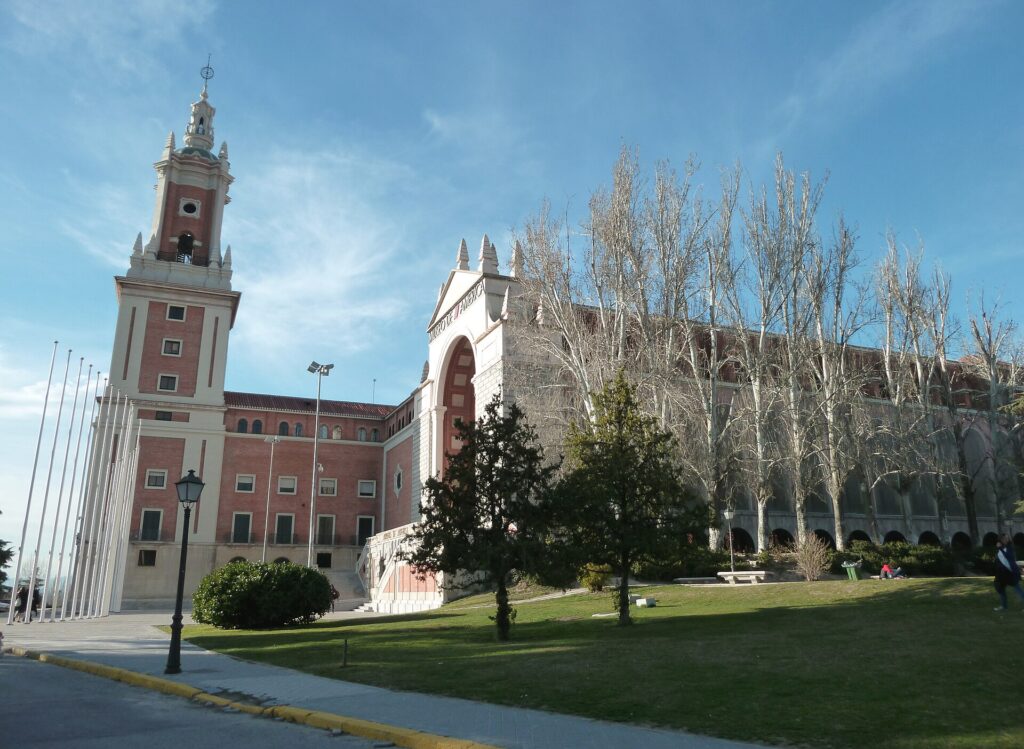
Approaching the Museo de América situates visitors in a somewhat austere architectural setting that reflects mid-century institutional design rather than the ornate or avant-garde. The façade and entrance avoid theatrical grandeur in favor of a serious, understated presence in the district. This restraint communicates a scholarly and documentary tone, setting expectations for an educational rather than merely decorative experience.
The identity conveyed by the museum’s exterior is consistent with its self-positioning as a center for research and cultural preservation rather than a commercial or entertainment venue. Signage and external visuals focus on the museum’s thematic remit rather than specific star objects, signaling that visitors should prepare for a structured learning process centered on the cultural and historical narratives of the Americas.
Inside, visitors likely encounter preliminary contextual materials framing the museum’s scope, perhaps spotlighting key historical moments such as pre-Columbian civilizations and the colonial encounter. This zero-stage orientation primes visitors intellectually before entering the main galleries, emphasizing the museum’s role as a mediator of knowledge rather than merely a collector of curiosities.
Highlights and Key Exhibitions
The core strength of the Museo de América lies in its extensive collection of objects representing multiple civilizations across the Americas, spanning thousands of years. The museum organizes its material into thematic and chronological sections that guide visitors through the complex histories of indigenous peoples, colonial dynamics, and post-contact cultural developments.
The pre-Columbian galleries feature artifacts from major cultural areas including the Andean highlands, Mesoamerica, and North American indigenous groups. Visitors can encounter ceramics, textiles, metalwork, stone sculptures, and ritual objects that illustrate technical mastery and symbolic complexity. Particular attention is often paid to the cultures of the Maya, Aztec, Inca, and other less globally known groups, offering a broad-ranging view beyond familiar headline civilizations.
This section emphasizes the diversity of indigenous lifeways, showcasing the role of art and objects within social, religious, and political systems. For example, the museum’s collection of ceramics and ritual items helps underscore the cosmological and communal values embedded in material culture. Similarly, textiles reveal not only artistic sophistication but also serve as records of identity and social status.
The colonial and post-contact sections address a more fraught period in history, encompassing the Spanish conquest, evangelization, and the complex cultural syncretism that followed. These galleries include documents, maps, religious art, and everyday objects that illustrate the transformations wrought by European arrival. Here, the museum tackles the interplay of domination, resistance, and adaptation in the Americas under Spanish rule.
Notably, the Museo de América does not limit itself to pre-modern history. It extends its gaze to anthropological and ethnographic materials from the postcolonial period, preserving indigenous traditions and cultures into the present day. This inclusion broadens the narrative from a static past to ongoing cultural dialogues and survivals, highlighting the living dimension of American indigenous heritage.
While the museum’s holdings offer extensive geographic and chronological coverage, the narrative focus sometimes risks a certain Eurocentric framing, which is not uncommon in institutions with colonial legacies. Nevertheless, recent interpretive efforts have aimed to temper these limitations with more reflexive explanations and by emphasizing indigenous voices and agency.
Visitor Experience
The Museo de América intends to serve a broad public, including students, researchers, tourists, and local audiences interested in the Americas. Its layout and information design cater primarily to those comfortable with concentrated reading and reflection, as the labeling and explanatory texts tend to assume a reasonable degree of prior interest or familiarity with historical and anthropological concepts.
The museum’s atmosphere is generally quiet and reserved, favoring contemplative engagement over casual browsing. This suits visitors who prefer a paced, deliberate experience allowing for detailed observation of objects and thoughtful absorption of historical contexts. However, for less specialized audiences or families seeking a highly interactive or dynamic visit, the experience may feel somewhat dense or slow-moving.
Interpretation relies mainly on traditional display methods: wall texts, captions, and a structured chronological flow. While informative, the presentation is less inclined toward multimedia or interactive elements, which may challenge audiences expecting more technologically driven encounters. This choice reinforces the Museo de América’s character as a repository and educational institution grounded in material culture study rather than spectacle.
The museum’s careful curation balances the need to represent vast cultural territories within a finite space. The thematic divisions between pre-Columbian, colonial, and postcolonial eras help guide visitors through complex historical relationships. This clarity benefits those seeking a comprehensive overview rather than fragmented impressions.
One noteworthy limitation is the relative scarcity of large-scale contextual reconstructions or immersive environments. Visitors looking for dramatic visualizations of indigenous life or colonial cities might find the displays more artifact-centered and documentary in style, placing emphasis on objects as historical witnesses rather than immersive storytelling tools.
For researchers and enthusiasts, the Museo de América offers valuable primary materials and a reliable introduction to American indigenous cultures as seen through Spanish collections. Yet, it may leave some questions unanswered about the ongoing debates concerning colonialism, restitution, and indigenous rights, partly due to the information depth and presentation style.
Tickets, Access, and Planning
Practical considerations for planning a visit to the Museo de América underscore the need to consult the institution’s official website or direct sources for the most current details. As with many museums, schedules, admission rules, pricing, and service availability may vary seasonally or due to special circumstances.
The museum is located within Madrid, a city with multiple transport options; however, specific access details such as nearest public transit stops or parking facilities should be verified beforehand for convenience. Those with particular accessibility needs should seek up-to-date information to ensure the museum can accommodate them comfortably.
Given the Museo de América’s specialized nature, casual visitors might benefit from allocating a moderate amount of time to absorb its content without rushing, though the total duration will depend on individual interest levels. Advance booking policies or visitor limits should be confirmed to avoid surprises, especially during high season or public holidays.
While the museum does not heavily promote guided tours or audio guides publicly, these services may exist or become available intermittently, so checking current options before visiting remains advisable for those seeking enhanced interpretative support.
Final Verdict
The Museo de América occupies a distinct place among Madrid’s cultural institutions by focusing on the rich, extensive histories and cultures of the American continents through artifacts largely framed within Spain’s specific historical narrative. Its collection is broad and diverse, spanning millennia and numerous cultural areas, offering visitors an opportunity to explore indigenous civilizations, colonial encounters, and cultural legacies that continue into the modern era.
Strengths of the museum include its depth of material in archaeology and ethnography, and its measured attempt in recent years to provide a more balanced treatment of the colonial past and indigenous perspectives. The museum’s methodical arrangement and scholarly tone make it particularly suited to visitors with an academic or serious interest in American history and cultural studies.
On the other hand, the museum’s presentation style leans toward conventional displays, prioritizing textual information and artifact-based interpretation over multimedia or experiential elements. This can make the visit feel slow or less engaging for those accustomed to more interactive museum environments. Additionally, while the museum’s curatorship is increasingly self-critical, the imprint of Spain’s colonial legacy remains a framing challenge, especially in fully integrating indigenous interpretations and contemporary concerns.
Prospective visitors should approach the Museo de América with an expectation of a thoughtful, educational museum where historical depth takes precedence over entertainment. It can serve as a valuable complement to broader visits in Madrid for those curious about transatlantic histories and pre-Hispanic Americas. For others, particularly with young or casual audiences, more dynamic or specialized museums might better sustain attention and enjoyment.
In summary, the Museo de América offers a substantial, carefully curated resource for understanding the complex histories of the Americas from the perspective of Spain’s collections. It carries the responsibility of addressing a sensitive and contested past with growing nuance, even if its style remains somewhat traditional. Its presence in Madrid enriches the city’s museum landscape by providing a focused avenue to study American indigenous and colonial heritage, while inviting ongoing reflection on the implications of cultural encounter and historical memory. For up-to-date visitor information, checking the official website before planning a visit is recommended.