The Museum of New Zealand Te Papa Tongarewa Review
The Museum of New Zealand Te Papa Tongarewa National Museum & Cultural Heritage · Wellington, New Zealand A Nation Told in Its Own Voice The Museum.
The Museum of New Zealand Te Papa Tongarewa National Museum & Cultural Heritage · Wellington, New Zealand A Nation Told in Its Own Voice The Museum.
Best forArchitecture, royal history, heritage
Review focusArchitecture, history, visitor experience
Historical Context
The Museum of New Zealand Te Papa Tongarewa, commonly known as Te Papa, opened in 1998 in Wellington as the country’s national museum. Its creation marked a significant shift in how national identity and heritage were presented in a museum context. Rather than focusing solely on traditional displays of artifacts, Te Papa was designed to integrate history, culture, science, and art into a unified narrative that reflects New Zealand’s diverse society.
A central principle of the museum is its bicultural foundation, acknowledging both Māori and European (Pākehā) heritage. This approach is visible throughout the institution, particularly in the way Māori culture is presented not as a historical subject but as a living and evolving tradition. Te Papa’s exhibitions often emphasize storytelling, participation, and multiple perspectives, moving away from conventional museum formats.
The building itself was purpose-built to accommodate this modern vision. It was designed to withstand earthquakes, reflecting the country’s geological realities, and to support large-scale, interactive exhibitions. Since its opening, Te Papa has become one of the most visited cultural institutions in New Zealand, playing a key role in shaping how the nation presents itself to both domestic and international audiences.
What You See on Arrival
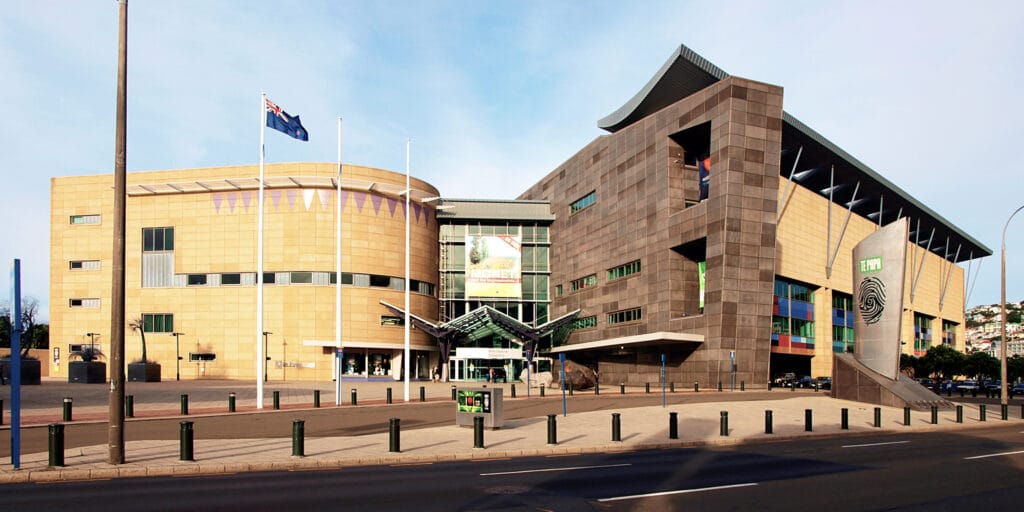
Arriving at Te Papa, the first impression is of a large, contemporary structure positioned along Wellington’s waterfront. The building does not rely on ornamentation or historical references. Instead, it presents a modern, functional appearance that aligns with its forward-looking approach.
Inside, the space opens into wide, accessible areas designed to accommodate large numbers of visitors. The layout is clearly organized, with multiple floors dedicated to different themes, including natural history, Māori culture, art, and social history. The atmosphere is active and welcoming, with a noticeable emphasis on accessibility and engagement.
The entrance areas are often busy, reflecting the museum’s popularity, but the scale of the building allows for movement without congestion. Interactive elements and open spaces immediately signal that this is not a traditional, object-focused museum. Instead, it invites participation and exploration from the outset.
The mood is energetic and inclusive. Visitors encounter a mix of visual displays, multimedia installations, and hands-on exhibits, creating an environment that appeals to a wide range of audiences, including families and first-time museum visitors.
Highlights and Key Exhibitions
Te Papa is known for its diverse range of exhibitions, which combine cultural, scientific, and artistic content. One of the most significant areas of the museum is its Māori galleries, where visitors can explore taonga (treasures) and learn about Māori traditions, history, and contemporary culture. These spaces are presented with a strong sense of respect and authenticity, often incorporating storytelling and ceremonial elements.
The natural history exhibitions are another major highlight. Displays covering New Zealand’s unique ecosystems, wildlife, and geological history provide context for the country’s distinctive environment. Interactive features and large-scale models help make complex topics accessible and engaging.
A well-known attraction is the museum’s focus on earthquakes and natural forces. Given New Zealand’s seismic activity, these exhibits provide both educational and experiential insights into how the country interacts with its environment. Visitors can engage directly with simulations and demonstrations that illustrate these forces in a tangible way.
Art exhibitions, both permanent and temporary, add another dimension to the museum. These displays often include contemporary New Zealand artists alongside international works, creating a dialogue between local and global perspectives.
Overall, the strength of Te Papa lies in its ability to present a wide range of subjects without losing coherence. Each exhibition contributes to a broader understanding of New Zealand’s identity, making the visit both varied and unified.
Visitor Experience
The visitor experience at Te Papa is defined by its interactive and accessible approach. Unlike more traditional museums, where visitors move passively through galleries, Te Papa encourages active participation. This is reflected in the design of exhibits, which often include touch elements, multimedia presentations, and opportunities for direct engagement.
Pacing is flexible, as the museum allows visitors to choose their own route through the space. Clear signage and logical organization make it easy to navigate, even for those unfamiliar with the layout. The variety of exhibitions means that visitors can focus on specific areas of interest or explore the museum more broadly.
Crowds are common, particularly during peak times, but the building’s size helps distribute visitors effectively. Quiet areas can still be found, especially in sections dedicated to reflection or more detailed displays.
The atmosphere is lively and educational without being overwhelming. Families, tourists, and local visitors all share the space, contributing to a dynamic environment. The museum succeeds in balancing depth of content with accessibility, ensuring that both casual visitors and those seeking more detailed knowledge can find value in the experience.
Tickets, Access, and Planning
Te Papa is centrally located in Wellington and is easily accessible on foot from many parts of the city. Its position along the waterfront also makes it a natural stop for visitors exploring the area.
One of the defining features of the museum is that general admission is free, making it accessible to a wide audience. Some special exhibitions may require a ticket, but the core museum experience is available without charge.
Planning a visit depends largely on available time. A shorter visit can cover key highlights, while a more comprehensive exploration may require several hours. Given the range of exhibitions, it is advisable to prioritize areas of interest in advance.
Facilities within the museum, including cafés and rest areas, support longer visits. The overall design ensures that visitors can move comfortably between exhibitions without feeling rushed.
Final Verdict
The Museum of New Zealand Te Papa Tongarewa offers a comprehensive and modern approach to presenting national identity. By combining cultural, scientific, and artistic perspectives, it provides a multidimensional understanding of New Zealand that goes beyond traditional museum formats.
Who should visit? Te Papa is suitable for a wide range of visitors, including families, first-time museum-goers, and those with a specific interest in Māori culture or natural history. Its interactive approach makes it particularly accessible to those who prefer a more engaging experience.
Why visit? Because it presents a unique model of what a national museum can be. Rather than focusing on static displays, Te Papa creates an environment where visitors can actively explore and connect with the material.
For those seeking a museum experience that is both informative and interactive, Te Papa stands out as one of the most compelling cultural institutions in the region.