Puke Ariki Review
Indigenous Culture Museums · New Plymouth, New Zealand. Puke Ariki, located in New Plymouth, New Zealand, occupies a distinctive role as a combined museum, library, and information centre. The institution arose from the merging of earlier bodies—the Taranaki Museum and the New…

Indigenous Culture Museums · New Plymouth, New Zealand. Puke Ariki, located in New Plymouth, New Zealand, occupies a distinctive role as a combined museum, library, and information centre. The institution arose from the merging of earlier bodies—the Taranaki Museum and the New…
Best forMuseum lovers, culture travelers, first-time visitors
Review focusCollections, visitor experience, and practical planning
Historical Context
Puke Ariki, located in New Plymouth, New Zealand, occupies a distinctive role as a combined museum, library, and information centre. The institution arose from the merging of earlier bodies—the Taranaki Museum and the New Plymouth District Library—in the early 2000s, resulting in an integrated cultural hub that serves both local residents and visitors. Its name, "Puke Ariki," translates from Māori as "hill of chiefs," reflecting layers of both indigenous and settler histories embedded in the site and collections.
The region’s history is marked by the interactions between Māori iwi (tribes), especially Te Āti Awa, and European settlers since the 19th century. This dynamic underpins much of the museum’s thematic content, particularly the narratives of colonisation, conflict, adaptation, and resilience. Moreover, the museum situates the local within wider New Zealand contexts, spanning natural history, geology, and cultural development. The museum’s setting on a volcanic hill adds physical and symbolic weight to its mission, integrating place and story.
Puke Ariki’s foundation and ongoing development reflect New Zealand’s efforts to reconcile bicultural heritage, blending Māori cultural heritage with Pacific and European settler influences. Its collections and exhibitions seek to accommodate multiple voices and histories, though like many such institutions it navigates the challenge of balancing indigenous knowledge systems alongside conventional museum practices.
What You See on Arrival
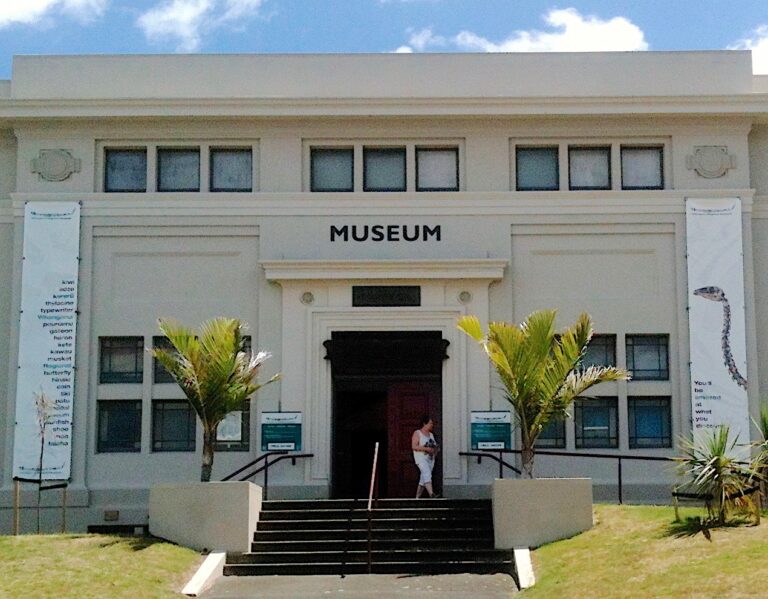
Upon approach, visitors are met with a contemporary building that diverges from the purely traditional museum façade. The architecture prioritises functionality and integration with its surroundings, with clean lines, subtle references to local motifs, and a design that hints at its multifaceted role. The museum shares its space with library facilities and public amenities, creating an impression of accessibility and community orientation rather than an exclusive heritage repository.
Signage at the site identifies Puke Ariki clearly, but the identity one encounters at the entrance reflects this combined nature—it is as much a civic information centre as a place dedicated to historical and cultural display. Visitors might initially sense the institution’s dual role, which shapes expectations differently than a standalone museum might. The welcome area and exhibition entrances suggest openness, but also a nuanced layering of resources.
Inside, one notices the attempt to create a coherent flow linking the collections housed within. The mood is deliberately approachable without excessive dramatization, encouraging visitors to take their time and absorb material at their own pace. The museum clearly positions itself as a resource for the broader Taranaki community while functioning as a cultural touchpoint for tourists interested in New Zealand’s regional histories.
Highlights and Key Exhibitions
Puke Ariki’s core strength lies in its comprehensive and regionally focused collection that spans pre-European Māori settlements, colonial history, natural sciences, and contemporary cultural developments. The exhibition design brings these elements together thematically and chronologically.
A significant portion of the display focuses on Māori heritage specific to the Taranaki region. This includes artefacts such as traditional carving, taonga (treasures), and tools that illuminate the daily life and spiritual practices of local iwi before European contact. The museum expressly highlights the whakapapa (genealogies) and tribal histories of Te Āti Awa and related groups, integrating Māori perspectives alongside the material culture. This approach is notable because it tries to move beyond mere display of objects, aiming to contextualise cultural practices within ongoing Indigenous lifeways.
The colonial period is well documented with archival materials, photographs, documents, and personal effects that trace the arrival of European settlers, the impact of the New Zealand Wars in the mid-19th century, and the subsequent social and economic development of New Plymouth and the wider Taranaki district. Artefacts and exhibits detail both the conflicts and the cultural encounters that influenced the region, offering a grounded perspective on New Zealand’s settler history.
Natural history is another significant dimension of the displays. The geology of the volcanic Taranaki region, including Mount Taranaki itself, is represented through rock samples, models, and interpretive panels. The flora and fauna of the area receive detailed attention, presenting an ecological narrative alongside human history. This scientific content complements the cultural stories and adds variety to the museum’s offerings.
The museum also houses photographic archives and an oral history collection, which augment the material exhibits by offering personal and community voices. These collections are made available through dedicated spaces and digital resources, underscoring Puke Ariki’s role as an active research institution. While many exhibitions are permanent, Puke Ariki updates and rotates some elements to reflect new acquisitions or scholarly insights.
In terms of display style, the museum balances traditional glass cases and didactic panels with interactive or multimedia components. This mix aims to engage diverse audiences, including families, students, and academics, without relying heavily on immersive technologies. The curation generally favours clarity and factual presentation over theatricality.
Visitor Experience
Puke Ariki’s combined institutional identity influences the visitor journey significantly. The integrated layout means that visitors transition smoothly from library and information spaces to exhibition galleries, although this also means that the museum’s public identity might feel less focused than single-purpose museums built solely as display venues. For a visitor primarily interested in museum collections and exhibitions, the experience is rewarding if taken at a considered pace.
Interpretive materials are well written and accessible, suitable for a general audience with some background knowledge of New Zealand history but also useful for international visitors seeking to understand the region’s context. Labels and panels avoid excessive jargon, and while Māori language and concepts appear throughout, they are supported with clear explanations. This dual-language approach supports Puke Ariki’s commitment to bicultural representation.
The museum’s strength lies in its local specificity, making it particularly valuable for those interested in New Zealand’s regional histories or Māori culture. The natural history content offers a helpful environmental dimension that rounds out the story of place.
However, visitors should be aware that the museum is not centred on blockbuster displays or expansive global themes. It prioritises regional identity, and this can sometimes mean smaller or more focused exhibitions than visitors accustomed to larger metropolitan museums might expect. The combined library and museum approach also means exhibitions share space and resources with other public functions, which slightly limits the scale and impact of some galleries.
Puke Ariki’s pace suits a reflective visitor rather than a rapid walkthrough. There is enough variety to engage different age groups, though some younger children might find the content less immediately entertaining unless accompanied and guided. The presence of research facilities and archives adds depth for serious students or historians.
Tickets, Access, and Planning
Up-to-date information on admission, opening hours, and additional services should be checked on Puke Ariki’s official website before planning a visit. The museum’s central location in New Plymouth makes it accessible by public transport and within easy reach of city amenities. Its integration with library and civic functions suggests a welcoming environment, but visitors seeking purely museum-focused experiences should consider their time allocation carefully.
Because Puke Ariki also functions as a library and information centre, the range of services is broader than a pure museum, which may influence crowding at peak times or affect quietness in some areas. This dual usage might appeal to those looking for a comprehensive cultural resource but may require navigating signage and spaces to focus on exhibition areas.
Visitors with specific accessibility needs or those requiring guided tours or audio guides should verify available provisions directly with the institution, as this information can vary and is best confirmed through official channels.
Final Verdict
Puke Ariki stands as a multifaceted cultural institution that straddles the roles of museum, library, and community centre in New Plymouth. Its strength lies in presenting a well-grounded, regionally specific narrative that integrates Māori heritage, colonial history, and natural environment, all set against the distinctive backdrop of Taranaki’s volcanic landscape.
The museum’s collection and exhibition approach emphasise clarity, contextualisation, and bicultural representation without resorting to spectacle. This makes it particularly suited to visitors with a substantive interest in local history, those researching New Zealand’s cultural landscape, and anyone seeking an accessible introduction to Māori cultural narratives in the region.
While not a venue for blockbuster global exhibitions or cutting-edge technological displays, Puke Ariki’s combined institutional format offers a diverse experience that blends community resource with artifact stewardship. The site encourages reflective exploration over hurried viewing, appealing especially to visitors who appreciate historical detail and cultural specificity.
Potential visitors should consider the museum’s dual identity when planning a visit, understanding that it is as much a community hub as a museum. Those solely interested in large-scale displays and extensive chronological narratives may find some limitations in scope and scale, but the detailed local focus compensates with depth and authenticity.
For comprehensive details on current exhibitions, ticketing, accessibility, and visitor services, consulting Puke Ariki’s official website is recommended to ensure the most accurate and timely information. Overall, Puke Ariki offers a thoughtful, layered presentation of Taranaki’s history and culture that enriches New Zealand’s museum landscape through its distinctive regional grounding.