Städel Museum Review
Intro The Städel Museum in Frankfurt is one of the most satisfying large art museums in Europe because it balances breadth and coherence better than many.
Intro The Städel Museum in Frankfurt is one of the most satisfying large art museums in Europe because it balances breadth and coherence better than many.
Best forMasterpieces, architecture, cultural history
Review focusCollection highlights, building, visitor flow
Intro
The Städel Museum in Frankfurt is one of the most satisfying large art museums in Europe because it balances breadth and coherence better than many institutions of comparable ambition. Large museums often face a structural problem: the stronger their coverage becomes, the easier it is for the visit to dissolve into disconnected departments. The Städel avoids that more successfully than most. It offers several centuries of European art, from medieval and Renaissance material through the nineteenth century and into modern and contemporary work, yet the museum rarely feels like a sequence of unrelated obligations. Instead, it feels composed.
That composure matters. Visitors are not just seeing famous paintings in succession. They are moving through a museum that understands how to sustain visual attention, historical progression, and institutional identity at once. Frankfurt is not always the first city that comes to mind in conversations about Europe’s major art museums, which may actually help the Städel. It arrives with less tourist mythology and more substance than many grander-sounding institutions.
Its strength is not theatricality. It is consistency. Room after room, period after period, the museum keeps making the case for itself.
How the Site Works
The museum works through strong chronological and departmental structure without becoming rigid. Visitors can broadly follow European art through time, but the museum also allows for selective engagement. Someone primarily interested in Old Masters can have a complete experience; someone more drawn to nineteenth-century painting or modernism can do the same. This flexibility is one reason the museum works so well for mixed audiences. It is educational without becoming prescriptive.
The route through the collection is readable and generally well paced. Transitions between periods feel earned rather than abrupt, and the institution benefits from a scale that is substantial without being overwhelming. This balance is difficult to achieve. Many major museums leave visitors with the sense that one needs either multiple days or a willingness to miss most of what matters. The Städel is large enough to feel serious but compact enough to remain intelligible in a single focused visit.
This practical coherence also improves the intellectual side of the experience. You can see continuities between periods rather than merely isolated peaks. The museum’s design therefore supports comparison as much as admiration.
Exhibitions and Collection
The collection is strong because it combines recognisable artistic landmarks with sustained quality across less immediately famous rooms. Old Master holdings establish historical depth, especially in Northern European traditions, while later galleries give the museum real force in nineteenth-century and early modern art. The collection does not depend entirely on one period or school. It earns its reputation through range.
One of the museum’s great advantages is that the nineteenth century and modern periods are not treated as appendices to a stronger historical core. They carry real weight. This matters because many museums with good medieval and Renaissance collections lose intensity as they move toward the modern era, or vice versa. The Städel manages to remain persuasive across both.
Another strength is the feeling that the museum still values the act of looking. Paintings are given space, and there is enough curatorial discipline that visitors can register differences in style, mood, and ambition rather than simply ticking off names. The museum is not trying to entertain through density. It is trying to sustain attention through quality.
Architecture / Space
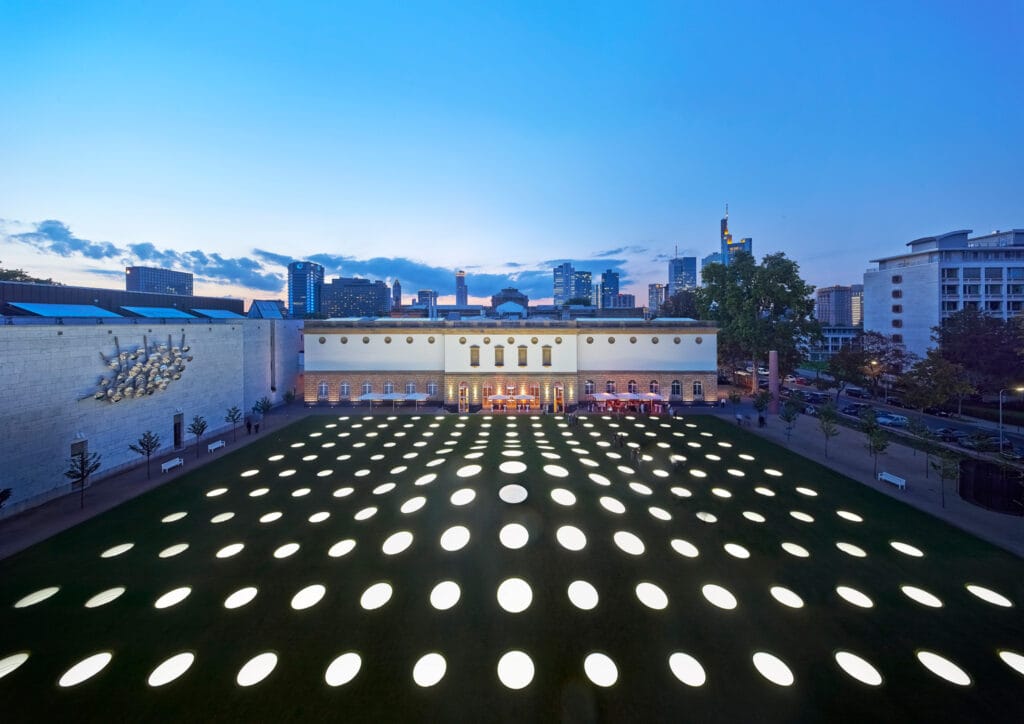
The architecture serves the collection effectively because it avoids trying to out-perform it. The museum’s historic institutional presence is important, but the building does not depend on overpowering monumentality. Instead, the spaces are proportioned in ways that suit the material. Older art is shown in rooms that feel appropriate to sustained looking, while later expansions and newer spaces allow more openness where it is needed.
This is one of the museum’s less obvious virtues. In many large art museums, architecture becomes a competing attraction. Here, the building is felt mainly through calm, proportion, and the practical intelligence of display. That restraint improves the visit. The art remains the event.
The location on the Museumsufer also matters. The riverfront museum setting gives the Städel both cultural context and a sense of arrival. It feels like part of a serious museum district rather than an isolated prestige object.
Visitor Experience
The visitor experience is excellent because the museum combines seriousness with accessibility. It works for first-time visitors who want a major European art museum without the exhaustion of the very largest institutions, and it works for experienced museum-goers who care about display quality, pacing, and art-historical depth. The galleries are generally calm enough to support real looking, which is not a minor achievement in an era of hurried museum tourism.
The museum also handles mixed interests well. It is easy to imagine one visitor arriving for Renaissance or Dutch painting and another for modern art, with both leaving satisfied. That broad usability gives the institution strong public value without making it feel diluted.
Atmospherically, the Städel is focused rather than spectacular. It does not try to generate awe through scale alone. It earns respect through concentration, which in the end is more convincing.
Historical Context
The Städel matters historically because it belongs to the broader nineteenth-century development of public museums in Europe while also remaining unusually clear in identity. It emerged from private bequest but developed into a major civic and scholarly institution. That dual origin—collector’s seriousness and public mission—still shapes the museum today.
It also matters because it expands the mental map of European art museums. Visitors often imagine the continent’s most important painting collections only in the most famous capitals. The Städel quietly argues for a broader geography of cultural significance. Frankfurt is not peripheral to the story of European museum culture, and the museum makes that plain through the quality of its collection and the steadiness of its presentation.
Practical Information
Two to three hours is a strong minimum for a balanced visit, with longer rewarding for those who want to linger in the nineteenth-century and modern rooms or move carefully through the Old Master sections. The museum fits naturally into Frankfurt’s museum district and works well as a central cultural stop in the city. It is best approached with enough time for real looking rather than as a rushed checklist destination.
Because the museum supports both overview and depth, visitors can shape the experience according to their interests. That flexibility is one of its practical strengths.
Final Verdict
The Städel Museum is one of Europe’s strongest large art museums precisely because it is less noisy about its quality than many of its peers. It does not depend on theatrical architecture, tourist mythology, or one canonical room. It succeeds through sustained excellence, coherent structure, and the confidence to let art remain central.
For visitors in Frankfurt, it is essential. For anyone interested in European painting and museum culture, it is one of the most rewarding institutions in Germany and one of the continent’s more complete art-museum experiences.