National Museum of Bangladesh Review
Dhaka, Bangladesh. The National Museum of Bangladesh, located in Dhaka, stands as the principal repository for the country’s material culture, history, and art. Far from a simple antiquities display or a generic ethnographic collection, it anchors…
Dhaka, Bangladesh. The National Museum of Bangladesh, located in Dhaka, stands as the principal repository for the country’s material culture, history, and art. Far from a simple antiquities display or a generic ethnographic collection, it anchors…
Best forMuseum lovers, culture travelers, first-time visitors
Review focusCollections, visitor experience, and practical planning
Context and Identity
The National Museum of Bangladesh, located in Dhaka, stands as the principal repository for the country’s material culture, history, and art. Far from a simple antiquities display or a generic ethnographic collection, it anchors itself in narrating Bangladesh’s formation as a nation, blending ancient heritage with a revolutionary 20th-century narrative. It is not just the size or volume of its holdings that marks it out, but the deliberate emphasis on identity, particularly through the medium of Bengali history and the struggle for independence in 1971. This focus gives the museum a sharply defined frame: it is not a broad South Asian or colonial-era museum but one that centers on what makes Bangladesh distinct.
In this sense, the National Museum functions less as a universal natural history or global art institution and more as a cultural crucible for a country still quite young in its sovereign form. It presents Bangladesh’s prehistoric to modern epochs alongside artefacts from the Liberation War, telling a layered, sometimes painful story tied to language, land, and community. By doing so, it marks a rare institutional attempt in the region to fuse art, archaeology, and modern political history under one roof, aiming to craft a complex narrative of statehood and identity.
Inside the Collection
The collection spans several millennia, including archaeological finds from ancient Bengal, Mughal and Sultanate relics, and an important archive of folk art and crafts. Ancient terracotta plaques, inscriptions, and ceramics highlight the region’s archaeological depth. Manuscripts and historic coins trace a monetary and intellectual history across centuries. Yet the museum’s core strength lies in its concentration on the 20th century, particularly artefacts connected to Bangladesh’s struggle for independence.
Photographs, documents, weapons, and personal effects from the Liberation War occupy a significant and highly charged part of the collection. This section arguably offers the museum its most distinctive material, as few similar institutions incorporate such recent, politically sensitive history so directly. It also documents the cultural revival linked with Bengali language activism and political movements, providing a nuanced take on nationalism that refuses to romanticize or simplify this history.
Artworks within the collection range from traditional folk paintings like patachitra to modernist Bengali artists who explored regional identity in new forms. While the art holdings are not as large as those in dedicated art galleries, they serve the overall narrative by bridging past and present cultural expressions. Textiles and crafts underscore the economic and social fabric of rural communities, often overlooked in larger national narratives.
Architecture and Display
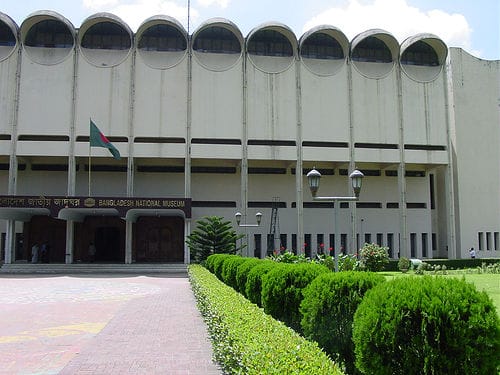
The building itself is functional rather than monumental, reflecting a modernist architectural approach with straightforward, rather nondescript lines. This lack of architectural drama means the museum relies entirely on its collections and displays for impact. While this might present a missed opportunity to use architecture to embody national identity, it has the advantage of keeping visitor attention focused on the contents.
Exhibition galleries are organized roughly by chronology and theme, although information on visitor flow and display techniques is limited. Known images and accounts suggest a traditional rather than cutting-edge museological style—largely glass cases, framed texts, and photographic panels. There is no evidence of immersive or highly interactive interpretation. This might limit appeal to younger or casual audiences but aligns with a more straightforward educational mission.
The presentation aims to be comprehensive yet restrained. The Liberation War material is curated with care to avoid sensationalism, prioritizing historical document and artefact authenticity. Galleries covering earlier periods present a range of archaeological items and crafts but probably lack the contextual multimedia that might make them more accessible internationally. The way the museum navigates sensitive political history with gravity but without heavy ideological framing is a notable achievement.
For Families, Specialists, and First-Time Visitors
Families might find the museum a challenging environment if seeking interactive or hands-on engagement, given its traditionally display-based approach. Children could need some prior interest or background to appreciate the more complex historical artefacts or the significance of the Liberation War exhibits. The absence of large-scale family-targeted programming or dedicated children’s galleries seems likely.
Specialists—archaeologists, historians of South Asia, or experts on modern political movements—will find considerable value in the museum’s concentrated collections and archival material. The breadth of artefacts related to Bangladesh’s political formation is rare, providing a solid resource for researchers interested in the intersection of material culture and nationalism. Likewise, the preservation of folk art and documents offers fertile ground for study in regional art history and social anthropology.
First-time visitors with a general interest in Bangladesh or South Asia will encounter a museum that demands a bit of patience and preparation. The institution’s focus is narrower than a general national museum might be; it assumes some interest in the liberation history or Bengalis’ cultural evolution. For those without that background, the displays tend to be straightforward but may seem dense or insufficiently illustrated. English-language interpretation may be limited or inconsistent, potentially restricting accessibility for international visitors.
What Works Best
The museum’s strongest quality is its commitment to a narrative rooted in national identity, particularly through the 20th century political struggles. The Liberation War exhibitions lend the museum a depth and immediacy that outstrips many neighboring national museums, which often stop short at colonial history or base themselves purely in ancient collections. This focus gives the institution a sharp and serious purpose, rather than presenting a scattered national story.
Another asset is the variety and quality of artefacts representing Bengal’s archaeological heritage. While not a world-class archaeological museum, it contains important material for understanding the region’s early civilizations and medieval history. The juxtaposition of these with the modern political era allows for a dynamic sense of continuity rather than isolating the country’s past into discrete epochs.
The museum’s restraint in display style is also effective in a way. The sober presentation of Liberation War artefacts, with clear labels and without dramatization, supports a respectful historical approach that avoids sensationalism. This encourages reflection rather than spectacle, a welcome stance given the charged history involved.
Practical Considerations
Official source information on visiting details like opening times, ticketing, accessibility, guided tours, and facilities is sparse or variable. Standards at governmental museums in Dhaka often fluctuate, so anyone planning a visit should check the National Museum’s official website or contact local resources to confirm current conditions.
The museum’s existing building and display methods suggest it is not optimized for large crowds or extensive tourism infrastructure. Visitors with mobility challenges or those needing special accommodations should seek up-to-date information before attending. Potential language barriers may exist, with Bengali as the main language for labels and staff communication, although the extent of English-language support is unclear.
Verdict
As a museum, the National Museum of Bangladesh occupies an indispensable role in framing Bangladesh’s identity through material culture, especially its relatively recent history of nation-building. Its strength lies in its focused collection and narrative, where the Liberation War artefacts provide a rare and essential viewpoint for a country defined by that struggle. While its displays and architecture do not offer architectural spectacle or cutting-edge museology, their sobriety complements the sensitive nature of the content.
The museum’s appeal is greatest for those with a serious interest in Bangladesh’s cultural and political history or for scholars of South Asia. It does not attempt to be a fully comprehensive national museum in the broadest sense but offers a deeply rooted, specific perspective on what defines modern Bangladesh. For general visitors, the experience may require some background preparation and an understanding that the displays lean towards the documentary and factual over the experiential or playful.
In sum, the National Museum of Bangladesh stands out as a significant institutional voice in preserving and presenting the country’s historical narrative, particularly as it relates to identity and independence. This specificity gives it clarity and purpose, even if it limits a wider narrative scope or interpretive innovation. By anchoring itself in tangible objects tied to crucial political moments and local history, it fills a gap no other museum in Bangladesh presently covers so fully.