National Gallery Review
A Chronicle of European Mastery Standing prominently on Trafalgar Square, the National Gallery presents itself with classical restraint. Its neoclassical.
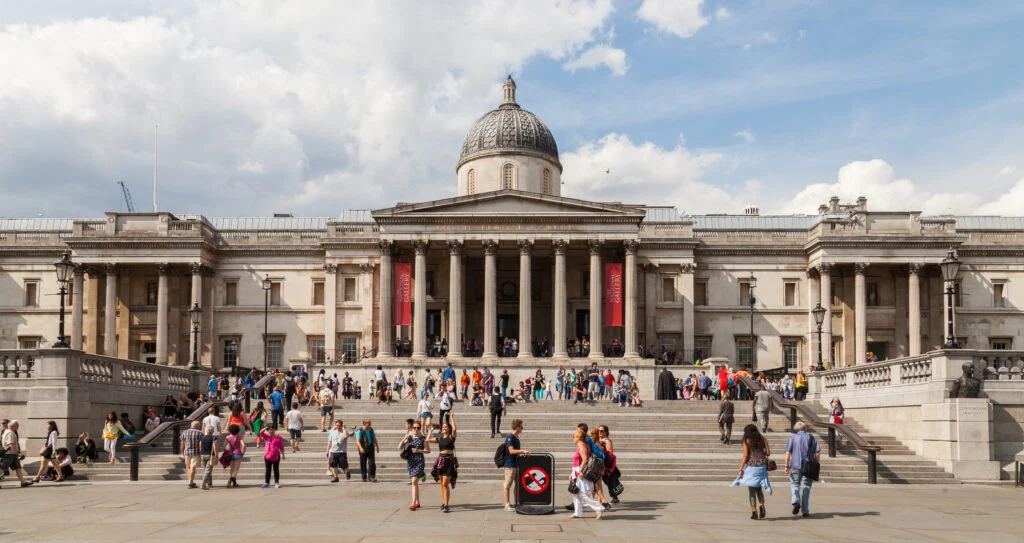
A Chronicle of European Mastery Standing prominently on Trafalgar Square, the National Gallery presents itself with classical restraint. Its neoclassical.
Best forMasterpieces, architecture, cultural history
Review focusCollection highlights, building, visitor flow
Historical Context
The National Gallery in London holds one of the most important collections of European painting in the world, but part of its significance comes from how the museum was formed. Unlike royal palace museums that began as dynastic collections, the National Gallery was created in the nineteenth century as a public institution meant to serve the nation. That distinction still shapes the experience of visiting it. The museum was built around the idea that major painting should be accessible to the public, not hidden within court circles or aristocratic interiors. Over time the collection grew into a broad survey of Western European painting from the thirteenth to the early twentieth century, giving visitors the chance to see artistic change unfold across centuries. Its position on Trafalgar Square also matters historically, because the gallery became part of London’s civic identity rather than just its elite cultural life. That public mission still gives the museum a distinctive tone. It feels less like a treasury of private prestige and more like a place where the history of European painting has been organized for shared study, comparison, and long-term public access.
What You See on Arrival
The National Gallery makes a strong first impression precisely because it does not try too hard to overwhelm you. Standing on Trafalgar Square, the museum presents itself with classical restraint. The façade, steps, dome, and portico suggest stability and civic seriousness rather than theatrical spectacle. Compared with some museums that announce themselves through monumental entrances or highly modern interventions, the National Gallery feels confident in a quieter way. It does not need to perform importance aggressively because its place in London’s cultural landscape is already established.
Once inside, the mood changes from urban monument to something more concentrated and practical. The entrance areas can be busy, especially during peak visiting hours, but the museum quickly begins to feel more organized once you move beyond the initial circulation zones. The overall layout gives the impression of a museum built for looking rather than for pure architectural drama. There are central halls, branching galleries, and a sequence of rooms that gradually shifts the visitor from arrival logistics into historical attention.
The first impression of the collection is often one of order. The National Gallery does not feel like an endless maze in the way some larger museums do. Instead, it gives a sense that the collection can be understood if you are willing to follow its structure. The atmosphere also depends on when you arrive. Early in the day the museum can feel almost meditative in certain rooms, while later the central areas may become much more active with guided groups, school visits, and general traffic. Even so, the first impression remains one of seriousness. You are entering a place shaped around painting, and that focus becomes clear almost immediately.
Highlights and Key Exhibitions
The National Gallery’s greatest strength is that it presents not just a group of famous paintings, but a coherent history of European painting across multiple schools, centuries, and stylistic shifts. The museum is full of individual masterpieces, but what makes it exceptional is the way those works speak to one another in sequence. The collection works best when seen not as a checklist of star names, but as a structured conversation across time.
The earlier Italian rooms are fundamental to the museum’s power. These galleries show how painting moved from medieval gold-ground traditions toward greater naturalism, spatial awareness, and emotional complexity. Visitors who begin here can see European painting being built almost step by step. That is one of the National Gallery’s major advantages over smaller institutions: it lets you observe the development of pictorial language rather than just admire isolated achievements. The transition from devotional formality to Renaissance confidence becomes visually legible.
As visitors move deeper into the collection, the range broadens. Renaissance works by artists such as Leonardo, Raphael, and Titian bring a different kind of authority, while Northern European painting adds its own intensity through detail, symbolism, and surface realism. The National Gallery’s holdings in Dutch and Flemish painting are particularly strong, and these rooms often provide some of the most rewarding sustained viewing in the museum. Portraiture, domestic scenes, religious works, and landscapes reveal how artistic ambition took different forms across Europe. This variety prevents the museum from feeling too centered on one national school or one narrow narrative of greatness.
The seventeenth-century collections also carry major weight. Baroque painting brings more movement, theatrical lighting, and emotional charge into the sequence. Visitors who respond to dramatic composition and material richness will find these rooms particularly satisfying. At the same time, the museum’s structure allows viewers to compare the Baroque not only with what follows it, but with what came before, which deepens the experience considerably.
The later galleries, including eighteenth- and nineteenth-century painting, are essential to understanding the museum as a whole. Here the collection begins to open toward modernity without losing its earlier coherence. Landscapes, portraits, history paintings, and changing treatments of light and atmosphere all become more visible as long-term developments rather than isolated stylistic shifts. One of the pleasures of the National Gallery is precisely this sense of continuity. A visitor can move from early Italian painting to nineteenth-century European work and still feel that the museum is building one large historical argument.
Temporary exhibitions vary, but when well chosen they often deepen the permanent collection rather than distracting from it. Because the National Gallery is already so strong historically, the best exhibitions tend to be those that sharpen a period, artist, or theme already embedded in the museum’s larger identity. Even without a temporary show, however, the permanent collection alone is more than enough to justify the visit.
Visitor Experience
The visitor experience at the National Gallery is one of the museum’s great strengths. It is large enough to be important, but not so large that the average visitor feels defeated before the visit has truly begun. That balance matters. Many world-famous museums ask too much of their visitors physically and mentally. The National Gallery still requires time and focus, but it generally remains readable. You can have a serious, coherent visit in a few hours, which is not true of every major European museum.
Pacing is easier here than in many larger institutions because the gallery structure supports natural pauses. The rooms allow the eye to reset, and the collection is arranged in a way that helps viewers move chronologically or selectively without becoming totally disoriented. Visitors interested in one period can focus on it, while those wanting a broader overview can follow the historical route. This flexibility is a real strength.
Signage is generally clear, and the museum’s layout makes orientation easier than it might first appear. Central spaces help visitors re-establish their position within the building, and room sequences often feel logical rather than arbitrary. That said, the gallery can still become busy enough in major rooms that movement slows, especially when guided groups gather around well-known paintings. Crowding is not usually as relentless as at the most pressured museums in Europe, but it is certainly a factor in the most popular sections.
Atmospherically, the National Gallery often feels calmer than its reputation might suggest. This is partly because painting remains central to the institution’s identity. The museum does not try to distract visitors with too much spectacle around the collection. There is a seriousness to the rooms that supports concentration. In quieter periods, some galleries feel almost ideal for close looking. This makes the museum especially rewarding for visitors who want to stand with a painting and let it unfold slowly.
The museum also works well for mixed audiences. Art-historical specialists can use it comparatively and analytically, while first-time visitors can still come away with a strong understanding of why these works matter. That is difficult to achieve, and the National Gallery does it unusually well.
Tickets, Access, and Planning
Planning for the National Gallery is simpler than for some heavily timed-entry museums, but a little preparation still improves the visit. The most important question is not simply when to go, but what kind of visit you want. A broad first overview is perfectly reasonable, but the museum becomes much more satisfying when approached with a few priorities in mind. It is better to spend real time with selected galleries than to move through the whole building too quickly.
The location is one of the museum’s practical advantages. Trafalgar Square is central and easy to reach, which makes the gallery straightforward to include in a wider London itinerary. That convenience, however, can tempt visitors into treating it as a short add-on rather than a major destination. It deserves better than that. Even a compact visit should allow enough time for a real encounter with the collection.
Access within the building is generally good, and the museum’s scale remains manageable for most visitors. Still, as with any major gallery, energy matters. Good pacing, short pauses, and realistic expectations make a real difference. If you are visiting at a busy time, starting with less crowded rooms can often improve the whole experience before moving toward the most famous paintings.
A useful visitor tip is to begin historically, even if only for a short time. The National Gallery’s greatest strength lies in its historical sequence, and following that structure, even partially, makes the museum much more meaningful. It transforms the visit from “seeing famous paintings” into understanding how European painting evolved.
Final Verdict
The National Gallery is one of Europe’s essential painting museums because it combines major masterpieces with something even more valuable: clarity. It lets visitors see European painting as a long, structured development rather than a collection of disconnected highlights. That makes it not only impressive, but deeply useful. The museum succeeds because it remains focused on painting, public access, and historical understanding without overcomplicating the experience.
Who should visit? Anyone interested in European art, whether as a beginner or an experienced museum-goer, will find it rewarding. First-time visitors to London should see it because it offers one of the clearest introductions to the history of painting available anywhere. Repeat visitors may appreciate it even more, because the collection supports comparison, return, and slower study.
Why visit? Because the National Gallery offers a rare combination of accessibility, intellectual depth, and sustained artistic quality. It is a museum that can educate without becoming heavy, impress without exhausting, and reward both quick overview and deep attention. For anyone who wants to understand why European painting matters, it remains one of the best places in the world to begin.