Museo del Romanticismo Review
Design Museums · Madrid, Spain. The Museo del Romanticismo, officially known as the Museo de Romanticismo, occupies a notable position within Madrid’s network of art and cultural institutions. Established in 1924 and housed in a former 18th-century palace on…
Design Museums · Madrid, Spain. The Museo del Romanticismo, officially known as the Museo de Romanticismo, occupies a notable position within Madrid’s network of art and cultural institutions. Established in 1924 and housed in a former 18th-century palace on…
Best forMuseum lovers, culture travelers, first-time visitors
Review focusCollections, visitor experience, and practical planning
Historical Context
The Museo del Romanticismo, officially known as the Museo de Romanticismo, occupies a notable position within Madrid’s network of art and cultural institutions. Established in 1924 and housed in a former 18th-century palace on Calle de San Mateo, the museum offers insight into the Romantic era in Spain, a period roughly spanning the early to mid-19th century. This epoch was marked by political upheaval and cultural transformation as Spain grappled with the aftermath of the Napoleonic wars, the decline of absolutism, and the rise of liberal ideas. Romanticism, as an artistic and intellectual movement, emphasized emotion, nature, individualism, and a renewed interest in medieval and folk traditions. In the Spanish context, it is entwined with national identity and the country’s literary, artistic, and social developments during that turbulent century.
The Museo del Romanticismo’s creation coincided with broader cultural efforts in Spain during the early 20th century to preserve and reinterpret the Romantic legacy, an era that had deeply influenced Spanish painting, literature, furniture, and decorative arts. Rather than presenting solely fine art, the museum acts as a historic house museum, offering a portrait of lifestyle, social customs, and material culture from the period. This historical framing underscores the institution’s dual function as both an art museum and a conservatory of Spanish cultural memory, reflecting an early 20th-century museological trend to combine artistic presentation with domestic context.
What You See on Arrival
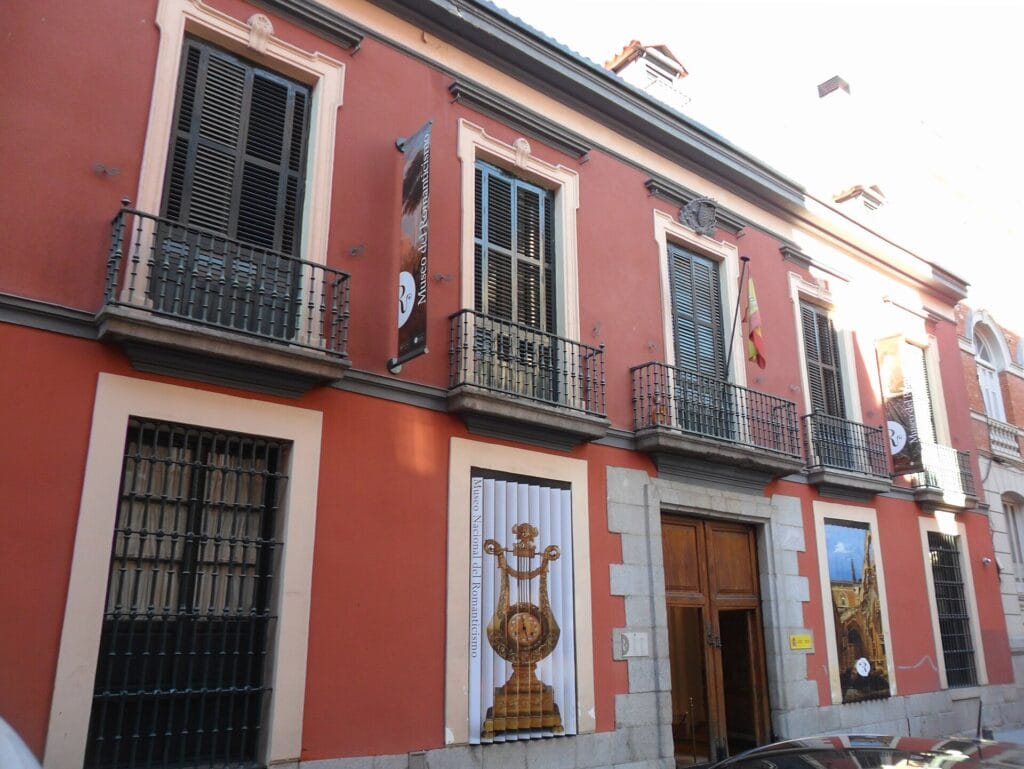
Upon approaching the Museo del Romanticismo, visitors will encounter a building that itself reflects part of the narrative the museum seeks to tell. The former palace façade and the intimate scale contrast with the grander, more monumental museums nearby. This setting primes visitors for an experience that is as much about the atmosphere and daily life of the Romantic period as it is about artworks. The entrance and lobby areas typically emphasize the house-like nature of the place, with period-appropriate furnishings and décor offering a prelude to the interior rooms.
Visitors are likely to experience a transition from the public exterior to more private interior spaces arranged in a manner intended to replicate the ambiance of a bourgeois Madrid household in the 19th century. This framing defines the museum’s identity clearly: it is less about presenting art in isolation and more about situating artworks within their original social and cultural environment. This approach shapes the flow of the visit and frames expectations accordingly.
Highlights and Key Exhibitions
The core strength of the Museo del Romanticismo lies in its extensive and varied collection representing the visual arts, decorative arts, and domestic objects characteristic of 19th-century Romantic Spain. The museum’s holdings include paintings, sculpture, furniture, ceramics, metalwork, textiles, and manuscripts, primarily dating from the first half of the 19th century. This material collectively illustrates the aesthetic tastes, social customs, and intellectual currents of the period.
Painting is central, with works by prominent Spanish Romantic artists such as Francisco de Goya, Antonio María Esquivel, and Eugenio Lucas Velázquez on display. Goya’s presence is particularly notable; the museum houses several important works that document his late period, showcasing his evolving style and critical engagement with contemporary themes. Paintings often depict subjects typical of Romanticism: historical scenes, dramatic portrayals of emotion, and an interest in folklore and popular traditions. Portraiture is another significant focus, with works illustrating the social strata and individual personalities that shaped the period’s cultural fabric.
Beyond fine art, the museum’s collection of decorative arts and furnishings adds texture and context to the visitor’s understanding. The arrangement of rooms with period furniture, wall hangings, clocks, and ceramics recreates the domestic environment of a well-to-do 19th-century urban family. These objects enhance the sense of immersion into the era’s everyday life and aesthetic values. Of particular interest are collections of ceramics from Talavera and Manises, historic ceramics centers whose products appeared in both elite and more popular domestic settings. The museum’s use of these objects underscores the interconnectedness of artistic production and daily practice.
Manuscripts, letters, and printed materials within the collection document the literary and intellectual milieu of Romantic Spain. The intimate inclusion of such ephemera alongside visual art and objects facilitates a multifaceted appreciation of the movement’s cultural significance. It’s important to note, however, that the museum’s focus narrows primarily on Madrid and Castilian cultural products, which may leave some regional Romantic expressions comparatively underrepresented.
Highlights also include special rooms devoted to notable cultural figures of the era. These spaces often blend artistic representation with biographical and historical interpretation, providing depth to the visitor’s understanding of Romanticism’s protagonists. These rooms can function as condensed case studies within the larger narrative, balancing broad cultural tendencies with individual stories.
Visitor Experience
For a visitor interested in 19th-century Spanish culture or Romanticism more generally, the Museo del Romanticismo offers a distinctive encounter. The experience is largely shaped by the museum’s historic house format, which encourages slower pacing and close attention to detail. The intimate size of the spaces and the density of objects invite visitors to move carefully and engage with both individual pieces and their relationships within the curated domestic scenes.
The museum's interpretive materials aim to clarify historical and artistic contexts without overwhelming. Labels and wall texts generally provide accessible explanations of the objects’ provenance, function, and cultural relevance. Some language and concepts may assume prior familiarity with the period, so complete newcomers might benefit from preparatory reading or supplemental guides. The museum avoids excessively academic jargon, instead fostering a more narrative style of explanation that connects objects to everyday life and national cultural history.
One of the strengths of the museum’s layout is its capacity to integrate different media and object types in a coherent manner. Unlike large encyclopedic museums that often compartmentalize fine art and decorative arts, here these spheres blend organically, reflecting how they coexisted in the lived experience of the era. This comprehensive approach suits visitors with an interest in cultural history, art history, and material culture.
That said, the intimate scale and focus on a particular slice of time and society may limit broader appeal. Visitors expecting broad contemporary commentary or a sweeping survey of European Romanticism might find the scope too narrow. The museum makes little effort to address Romanticism's complex political, social, and ideological contradictions in depth. The presentation tends towards a respectful, somewhat nostalgic reconstruction of a specific elite social milieu rather than a critical interrogation of the period’s more contentious issues.
For travelers with limited time, the modest size of the collection can be an advantage. It encourages a more contemplative visit without the fatigue often associated with larger institutions. However, the trade-off is that the museum may not satisfy those seeking a wide variety of periods or art forms. The focus on the Romantic era means that visitors interested in other Spanish historical phases or broader international art history need supplementary museum visits.
Tickets, Access, and Planning
Practical details regarding tickets, opening hours, accessibility, and additional services for the Museo del Romanticismo should be verified through the museum’s official website or contacting the institution directly. This due diligence is advisable as policies may change, and accurate current information is essential for effective planning.
The museum is centrally located in Madrid, a city well-served by public transportation. Visitors may find it convenient to combine a visit here with other nearby museums or cultural sites. While the modest scale of the building suggests a degree of accessibility, those with specific mobility concerns should confirm accommodations and facilities in advance.
Because of the house museum’s nature, there may be visitor flow constraints due to room size, and some parts of the building might not be physically suited for all visitors. Checking accessibility information helps ensure expectations are aligned.
The museum does not revolve around frequent temporary exhibitions; instead, it presents a steady permanent collection. This consistency appeals to those wanting to explore Spanish Romanticism through a fixed set of objects rather than changing displays. Whether the museum offers guided tours or audio guides at a given time is also subject to change and requires confirmation.
Final Verdict
The Museo del Romanticismo stands as a focused cultural institution that offers a rich, nuanced window into Spain’s Romantic era through a distinctive combination of art, decorative objects, and domestic reconstruction. Its historic house setting provides an atmosphere conducive to appreciating the material culture and aesthetic sensibilities of early 19th-century Madrid’s urban bourgeoisie.
As an editorial assessment, the museum is particularly well-suited to visitors with an interest in Spanish cultural history and Romanticism understood as an artistic and social phenomenon. Those who value contextual, lived-in approaches to art—where objects reside in recreated domestic scenes—will find the museum’s format rewarding. The presence of important historic works by Goya and other major artists anchors the collection’s artistic value.
On the other hand, the museum’s tight chronological and geographic focus is also a limitation. It has little to offer those who seek a broader spectrum of Spanish art or who hope for extensive interpretative engagement with the political and ideological complexity of Romanticism. Its relatively small size and quiet presentation style require a different visitor mindset than a large national gallery or a more contemporary, technologically driven museum.
For planning purposes, prospective visitors should consult the Museo del Romanticismo’s official online resources to ensure up-to-date information on operational details. The museum’s central Madrid setting is a practical advantage for many travelers.
In sum, the Museo del Romanticismo is a specialized, well-curated institution that excels in its interpretative niche. It remains an important stop for those interested specifically in 19th-century Spanish life and culture, offering a tangible and detailed sense of a period that shaped Spain’s modern identity, even if it does not cater to wider-ranging curiosities or more critical contemporary museological interventions.