Museo del Templo Mayor Review
Mexico City, Mexico. The Museo del Templo Mayor, located in the heart of Mexico City, is a museum dedicated to the extensive archaeological site of the Templo Mayor, the main temple of the Mexica (Aztec) capital Tenochtitlan.…
Mexico City, Mexico. The Museo del Templo Mayor, located in the heart of Mexico City, is a museum dedicated to the extensive archaeological site of the Templo Mayor, the main temple of the Mexica (Aztec) capital Tenochtitlan.…
Best forMuseum lovers, culture travelers, first-time visitors
Review focusCollections, visitor experience, and practical planning
Historical Context
The Museo del Templo Mayor, located in the heart of Mexico City, is a museum dedicated to the extensive archaeological site of the Templo Mayor, the main temple of the Mexica (Aztec) capital Tenochtitlan. This ancient city, founded in the early 14th century on an island in Lake Texcoco, was the political and religious center of the Aztec empire until its conquest by Hernán Cortés in 1521. The Templo Mayor was both a religious and civic focal point, built to honor the gods Huitzilopochtli, the god of war and the sun, and Tlaloc, the rain deity. Its ruins symbolize a critical chapter in pre-Hispanic Mesoamerican history, illustrating the complex society encountered by the Spanish conquerors.
Excavations at the site began in earnest during the late 20th century, a process prompted by urban development that uncovered remnants of the temple under the streets of modern Mexico City. The Museo del Templo Mayor opened in 1987, designed to conserve, display, and interpret the discoveries from these excavations. The museum offers valuable insight into Aztec religion, governance, and daily life through artifacts, architectural remains, and interpretive materials. Situated adjacent to the Metropolitan Cathedral and the Zócalo, Mexico City’s main square, the location underscores the layered history of the site, from pre-Columbian civilization through colonization to the present-day capital.
What You See on Arrival
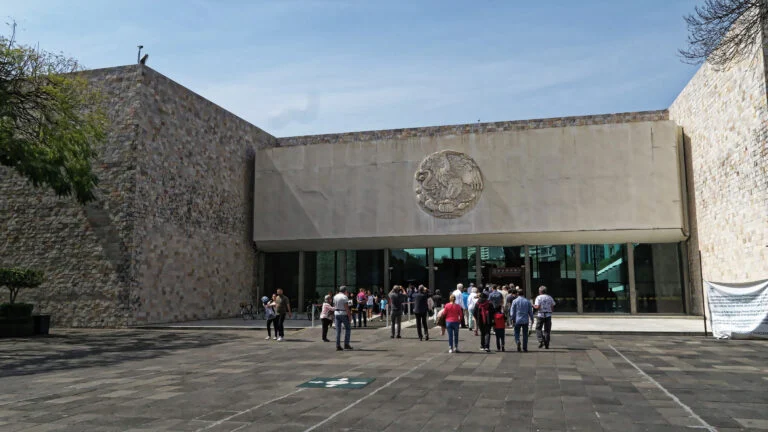
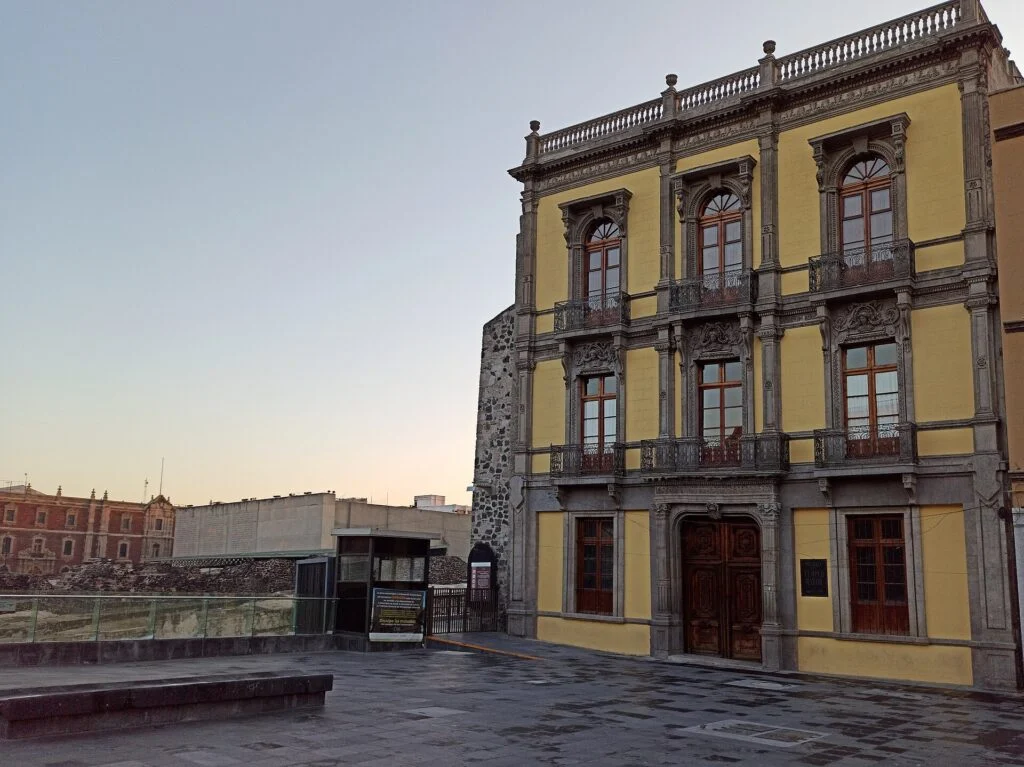
The Museo del Templo Mayor occupies a purpose-built structure bordering the archaeological site where the remnants of the temple are partially visible. The museum’s entrance is discreet compared to the scale and significance of the site it serves. Visitors approaching the museum will find themselves near the dense urban fabric of downtown Mexico City, framed by colonial and modern buildings. The museum’s design is understated and functional, with an emphasis on providing direct access to both the artifact galleries and the exposed ruins outside.
Upon entry, visitors are introduced to the museum’s dual focus: the tangible remains of the temple complex, including its massive stone platforms and foundations, and the large collection of artifacts recovered from the site. The experience begins with an orientation to the geography and urban context of the original Tenochtitlan, helping to set the scene for what follows. The close proximity to the actual archaeological zone blurs the line between museum exhibit and excavation site, rooting much of the museum’s interpretation in a powerful material and spatial reality.
Highlights and Key Exhibitions
The collection of the Museo del Templo Mayor is fundamentally tied to the temple site itself, making the museum one of the few in the world that directly links artifacts with the specific area where they were originally used or deposited. The most prominent highlight is the range of stone sculptures, many of which were uncovered during systematic archaeological digs in the late 20th and early 21st centuries.
Among the most significant objects are the Aztec stone disks and sculptures that depict the gods Huitzilopochtli and Tlaloc, illustrating the dual religious dedication of the temple. The famous Coyolxauhqui Stone—a large, carved monolithic disc depicting the dismembered moon goddess—is typically a focal point of the museum’s displays. This artifact, unearthed at the base of the temple, was critical in understanding Aztec mythology and ritual practice, and it stands as evidence of the ceremonial violence embedded in the temple’s ritual life.
Visitors will also find an extensive collection of ceramic vessels, ritual objects, and everyday tools. These objects help to flesh out the social and cultural world of the Aztecs beyond grand religious spectacles, showing how craft, trade, and domestic life were linked to religious beliefs. The museum also holds a large number of offerings found buried within temple foundations—these included jade and obsidian pieces, symbolic figurines, and remains of animals significant to Aztec spirituality.
The museum’s exhibition layout moves visitors through thematic sections that address architecture, religion, cosmology, and power structures in Aztec society. Photographs and diagrams complement the physical artifacts, illustrating the construction phases of the temple and how it expanded over time under successive rulers. This chronological approach helps to ground the visitor’s understanding of the temple’s evolution alongside the political ambitions of the Mexica.
The integration of architectural remains in the outdoor section adjacent to the museum is vital. Here, visitors encounter the fragmented but still-impressive stairways, platforms, and altars, reinforcing the scale and monumental nature of the Templo Mayor itself. These ruins serve as a constant visual reminder that the artifacts inside are not isolated objects but parts of a living urban and religious environment.
Visitor Experience
The Museo del Templo Mayor serves audiences ranging from casual visitors to scholars specializing in Mesoamerican history. Its layout allows for a paced approach, but the density of material and the depth of interpretation can be challenging for those without prior knowledge of Aztec culture. The use of clear signage, bilingual explanations, and diagrams helps make the complex subject matter more accessible. However, some exhibits rely heavily on technical vocabulary and scholarly frameworks, which may require visitors to approach the museum prepared to engage attentively or supplement with additional reading.
The proximity of the museum to the excavation site enhances the educational potential but also sets particular expectations. Visitors interested solely in traditional museum displays may find the integration of ruins and artifacts unusual but compelling. For visitors with mobility concerns, attention to the strata and open-air sections may require some careful navigation.
The museum’s interpretative materials are generally informative, including reconstructions of the temple’s surface appearance and explanations of Aztec cosmology. Photographic and graphic materials play a crucial role in conveying the scale and symbolism. While signage is usually clear, some labels and textual explanations could benefit from greater use of plain language to broaden accessibility.
Crowding may occur during peak tourist seasons and weekends given the museum’s central location and importance. This may affect the pace of visits to popular objects such as the Coyolxauhqui Stone. Those seeking a quieter or more contemplative experience might choose off-peak hours. The museum encourages reflective engagement with the artifact material and is well-suited to visitors with an interest in archaeology, indigenous cultures, or Mesoamerican studies.
Tickets, Access, and Planning
Prospective visitors should consult the official museum website for the latest information on opening times, ticketing policies, discounts, and any special access provisions before planning their visit. Information about services such as guided tours or audio guides is not consistently published, so checking in advance is advisable, especially for those wanting deeper interpretive assistance.
The museum is located in Mexico City’s historic center, close to major landmarks such as the Metropolitan Cathedral and the Zócalo plaza, easily accessible by public transportation. Visitors relying on private vehicles or those with special mobility needs will find the urban surroundings active and dense, and practical arrangements may require prior research.
As the museum focuses on archaeological and historical artifacts uncovered in situ, it is not a large venue in terms of sheer square footage but places emphasis on quality and archaeological context. This has both advantages and limits: the site is visually arresting, but visitors should not expect a large-scale museum with extensive theatrical installations or high-tech digital media. Those who prefer a focused, artifact- and context-driven approach to cultural heritage are most likely to appreciate the visit.
Final Verdict
The Museo del Templo Mayor stands as an essential site for understanding the Aztec civilization, its religious practices, and its place within the urban fabric of what is now Mexico City. Its primary strength lies in the direct archaeological connection between the artifacts and the temple site, offering visitors something close to a material encounter with a civilization that is foundational to Mexican identity and history.
Though its presentation is not constructed to compete with larger national museums in terms of volume or sensational spectacle, the museum offers a concentrated and scholarly experience valuable for informed visitors. It balances archaeological rigor with accessible explanation effectively, but those unfamiliar with Mesoamerican history might find some materials dense or understated. The integration of ruins and artifacts, while powerful, requires some time for study and reflection.
Planning a visit requires careful attention to official information as some services and visitor arrangements may vary. The museum’s central location makes it easy to access but also part of a popular and busy historic district. Accordingly, visitors should factor in time to navigate both the museum and its urban neighbors.
In sum, the Museo del Templo Mayor offers a measured, fact-rich window into the heart of Tenochtitlan’s religious life and legacy. It is well suited to those seeking archaeological substance and cultural depth linked directly to a significant pre-Hispanic site. While the experience may feel more subdued than some larger city museums, it compensates with its authenticity, scholarly foundation, and historical importance.