Museo del Templo Mayor
Mexico City, Mexico. The Museo del Templo Mayor in Mexico City is an archaeological museum dedicated to the ancient Aztec civilization, focusing specifically on the remains and history of the Templo Mayor, the main temple complex of…
Best forMuseum lovers, culture travelers, first-time visitors
Setting / nearbyMexico City, Mexico
Overview
The Museo del Templo Mayor in Mexico City is an archaeological museum dedicated to the ancient Aztec civilization, focusing specifically on the remains and history of the Templo Mayor, the main temple complex of the Aztec capital Tenochtitlan. This museum sits on a historically significant site where excavations have uncovered important material evidence of Aztec culture, religion, and daily life. Its role is to present the archaeological findings in a way that helps visitors understand the central importance of the temple to the Aztec world, both spiritually and politically.
The museum offers an insight into pre-Hispanic Mexican history through its collection of artifacts recovered directly from the Templo Mayor site. By situating these objects in their archaeological context, the museum serves as a bridge between past and present, allowing visitors to engage with the cultural heritage of the Aztecs on the very ground where they once flourished. It is an essential destination for anyone interested in indigenous Mesoamerican civilizations and the archaeological processes behind uncovering one of the most important religious centers of the Americas.
Collection Highlights
The collection at Museo del Templo Mayor primarily consists of archaeological objects unearthed during excavations of the Templo Mayor site, which was the religious nucleus of Tenochtitlan. Among the most significant finds are large stone sculptures—including the famous Coyolxauhqui stone, a carved circular disk depicting the dismembered moon goddess—which provides context for Aztec myth and ritual practice. Other stone monuments include representations of Tlaltecuhtli, the earth deity, whose carved face fragments highlight Aztec cosmology and their concepts of life, death, and sacrifice.
Beyond monumental sculpture, the museum exhibits smaller objects that shed light on Aztec artistry and everyday religious devotion. These include ceramic vessels, sacrificial knives, ornaments made from jade and turquoise, and ritual offerings. Many of these items exhibit intricate craftsmanship and symbolic designs, helping visitors appreciate the aesthetic sophistication and the ritual significance embedded in Aztec material culture.
The museum also contains displays about the construction phases of the temple itself. Models, maps, and diagrams illustrate how the Templo Mayor was rebuilt and enlarged multiple times by successive Aztec rulers, revealing the social dynamics and religious priorities of the period. Some exhibits delve into the symbolic meaning of the temple’s twin shrines dedicated to Huitzilopochtli, the god of war and the sun, and Tlaloc, the rain god, which underscores the dual forces believed to sustain the Aztec empire.
Collection labels and informational panels tend to emphasize archaeological context and interpretation, pointing out the challenges and achievements of reconstructing Aztec history from fragmentary remains. The emphasis on material culture rather than dramatized narrative allows the objects themselves to communicate aspects of life and belief in the Aztec capital.
Building and Setting
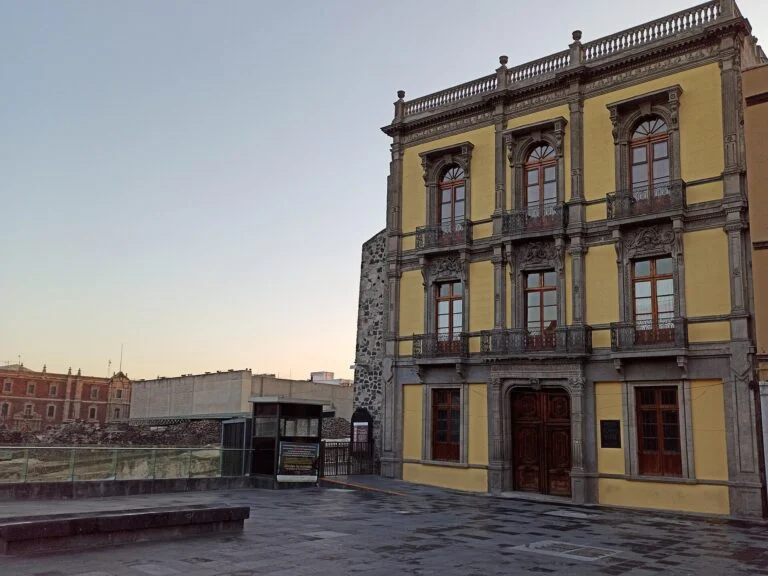
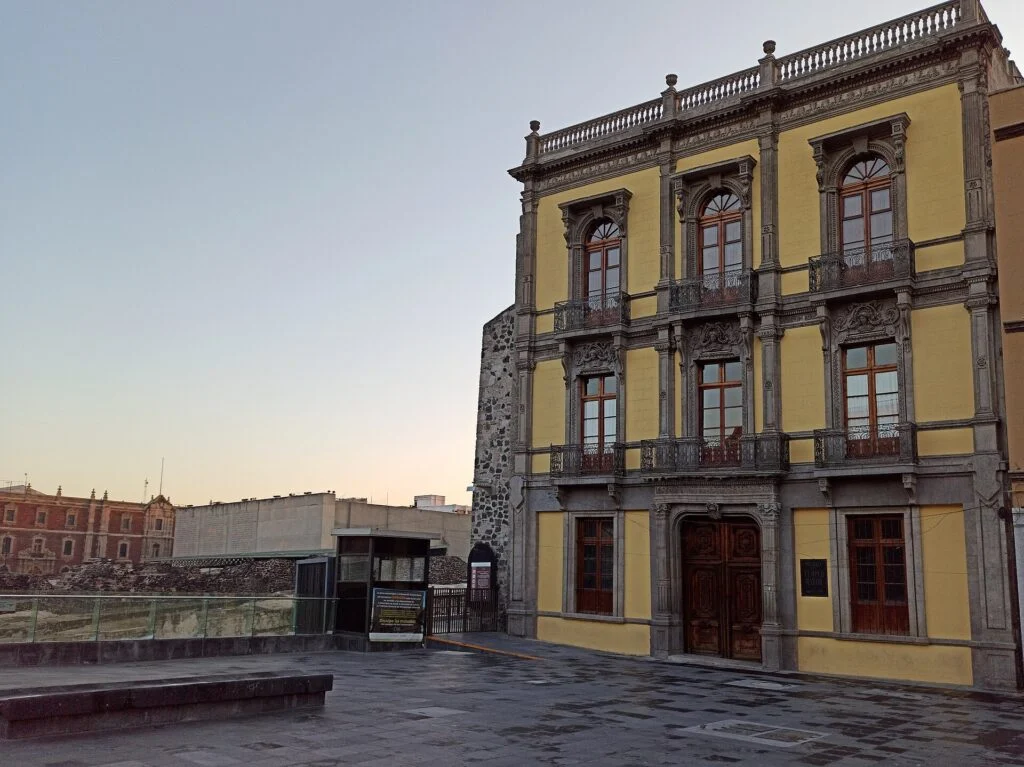
The Museo del Templo Mayor is located in the historic center of Mexico City, directly adjacent to the main cathedral and near the Zócalo, the city’s central plaza. Its building integrates exhibition spaces with parts of the actual archaeological site, enabling visitors to experience the continuity between the museum and the uncovered ruins. The museum’s design incorporates large windows that look out toward the excavated temple foundations and stone remains, reinforcing the connection between the artifacts on display and their original context.
The site’s urban surroundings mean the museum is embedded within one of Mexico City’s busiest and most historically rich areas. While the environment is lively and metropolitan, the museum interior offers a more contemplative space tailored to a deeper investigation of ancient Aztec culture. Visitor flow inside the galleries tends to be linear, guiding people through a chronological and thematic journey from the temple’s origins through its development and eventual destruction following the Spanish conquest.
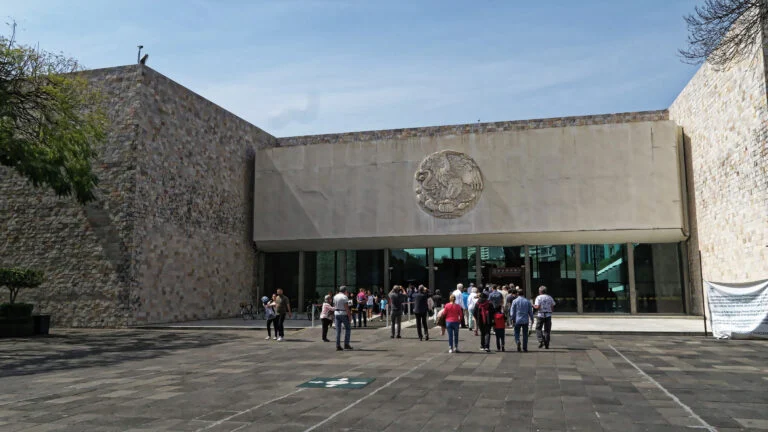
The museum structure itself is relatively modern, constructed to accommodate and protect sensitive finds while managing large visitor numbers. It is designed more as a space for archaeological study and education than as a flashy tourist attraction, which reflects its status as a specialist institution devoted to one of Mexico’s key heritage sites. Visitors should be aware that some parts of the site may be partially outdoors or on uneven ground, as archaeological sites often maintain some exposure of original materials.
Practical Information
For those considering a visit to the Museo del Templo Mayor, it is advisable to check the official museum website before planning the trip. Information such as opening hours, admission fees, guided tours, multilingual materials, and accessibility accommodations should be confirmed directly with the museum, as these details can change due to seasonal variations or special events.
The museum generally suits visitors willing to spend time reading detailed descriptions and examining archaeological objects carefully, so individuals less inclined toward dense museum labels may want to prepare for a more focused and academic experience. Careful footwear is advised, especially if visitors plan to explore any exposed parts of the archaeological site, where surfaces can be irregular.
Photography policies may vary, so it is recommended to inquire onsite or in advance. Because the museum is located in a busy part of the city, public transportation or walking are likely practical ways to access the site, but visitors should anticipate typical urban traffic conditions if traveling by car.
Why Visit
The Museo del Templo Mayor offers a distinctive encounter with Mexico’s pre-Hispanic past through direct access to one of its most significant archaeological sites and related artifacts. Unlike broader history museums or general archaeological displays, this museum is focused narrowly on the Templo Mayor and its cultural, religious, and political significance to the Aztec empire. It is particularly relevant for visitors with an interest in Mesoamerican archaeology, indigenous religious practices, or the origins of Mexico City itself.
Visiting this museum allows for reflection on the layers of history beneath the modern capital, where enormous stone sculptures and ritual items remain as testaments to the complexity and achievements of the Aztec civilization before the arrival of Europeans. The combination of in situ archaeological remains and a thoughtful presentation of artifacts enriches understanding beyond what is possible from books or standalone objects.
At the same time, the museum’s focus and style might not appeal equally to all audiences. Those looking for multimedia presentations, interactive exhibits, or a broader narrative of Mexican history may find the experience more specialized and less varied. The emphasis on archaeological evidence and context invites visitors to engage intellectually with the material culture rather than seek entertainment-focused displays.
In summary, Museo del Templo Mayor provides an invaluable resource for learning about the Aztecs directly through the lens of their sacred temple complex. It stands as a key site for appreciating the intersection of archaeology, religion, and urban history in Mexico City and contributes to preserving an important chapter of indigenous heritage. Visitors who bring curiosity and patience will find the museum rewarding, not only for what the objects reveal but also for their unexpected position beneath the surface of one of the world’s great modern metropolises.