Museo de Antioquia Review
A review of Museo de Antioquia in Medellín, where city-center energy, public identity, and Colombian art combine into a museum that feels deeply rooted in place.

A review of Museo de Antioquia in Medellín, where city-center energy, public identity, and Colombian art combine into a museum that feels deeply rooted in place.
Best forMasterpieces, architecture, cultural history
Review focusCollection highlights, building, visitor flow
Overview
Museo de Antioquia in Medellín is one of Colombia’s most important art museums and one of the strongest cultural stops in the city for visitors who want more than a quick introduction to local landmarks. It is best known internationally for its connection to Fernando Botero, whose work shapes much of the museum’s public identity, but the institution is more than a single-artist destination. At its best, the museum offers a broader view of Colombian and Latin American art while also acting as a cultural anchor in the centre of Medellín. For visitors, that combination is one of its greatest strengths. The museum can function as a place to see Botero’s work in depth, but it can also be approached as a larger civic museum that reflects the city’s artistic and historical self-understanding.
That civic role matters. Museo de Antioquia does not feel detached from Medellín. It is closely tied to the city around it, both through its central position and through the way the museum connects art to public life. This is especially visible in the relationship between the museum and Plaza Botero outside, where large sculptures create an immediate link between the institution and the surrounding urban space. Many visitors first encounter the museum through that square, and this gives the visit a strong sense of place before one even enters the building. Unlike museums that feel sealed off from their surroundings, Museo de Antioquia feels embedded in the city’s rhythm.
The museum’s appeal is therefore not just about famous works on walls. It is about how art, architecture, and public space meet in one part of Medellín. That gives the visit energy and makes it feel more grounded than institutions that are culturally important but less connected to everyday urban life. At the same time, the museum remains accessible for first-time visitors. Even if someone arrives knowing only Botero’s name, the museum is easy to engage with. The institution’s structure is clear enough that visitors can enjoy the best-known works while still discovering a broader range of material.
What makes Museo de Antioquia especially worthwhile is that it balances recognisable highlights with a wider sense of Colombian artistic identity. Some visitors will come mainly for Botero, and that is understandable. But the museum becomes more rewarding when treated as a serious art institution rather than simply a branded stop on a city itinerary. In that sense, it is one of those museums that can work on two levels at once: immediately appealing, yet capable of offering much more if the visitor gives it time.
Collection Highlights
The most obvious highlights are the works by Fernando Botero, and these are a major reason the museum has become so well known. Museo de Antioquia holds one of the most important concentrations of his work, and seeing it here gives a much fuller sense of his range than encountering only an isolated sculpture or one or two reproduced images elsewhere. Botero’s reputation is often reduced to the instantly recognisable volume of his figures, but in the museum his paintings, drawings, and sculptures show greater variation than many visitors expect. Seen together, the works reveal not only his humour and formal distinctiveness, but also his interest in Colombian society, religion, portraiture, and art history.
The Botero rooms are naturally the emotional centre of the visit for many people. These galleries reward more time than a quick walk-through. Part of their value lies in repetition and comparison: seeing how a recognisable visual language is applied across different subjects, moods, and formats. The work often feels immediately legible, but it becomes more interesting when looked at slowly. The same visual generosity that makes Botero widely popular also supports more detailed viewing. These galleries therefore work well both for casual visitors and for those who want to look more carefully.
Outside the museum, Plaza Botero strengthens this experience. The large sculptures in the square form a kind of open-air extension of the institution and make the museum feel larger than its interior footprint alone. They also help frame the visit before and after the galleries. For many visitors, this relationship between indoor and outdoor works is one of the museum’s most distinctive features. It gives the institution an unusual public presence and reinforces the sense that Botero is not simply displayed here, but woven into the city’s identity.
Beyond Botero, the museum’s broader collection is important. It includes Colombian and Latin American art that helps place the institution in a wider context. These sections may receive less immediate attention from first-time visitors, but they are part of what gives the museum seriousness. Without them, the institution could feel narrowly defined by one artist. With them, it becomes clearer that Museo de Antioquia aims to present a larger artistic conversation. Those galleries may not always have the same instant public draw, but they provide depth and help broaden the visit.
Temporary exhibitions can also be important, depending on when you visit. In a museum so strongly associated with Botero, changing exhibitions can provide contrast and bring in contemporary or historical perspectives that shift the tone of the visit. That flexibility is useful because it prevents the institution from becoming too static. While Botero remains central, the museum is at its best when it also uses that strong identity as a platform for something wider.
Building and Setting
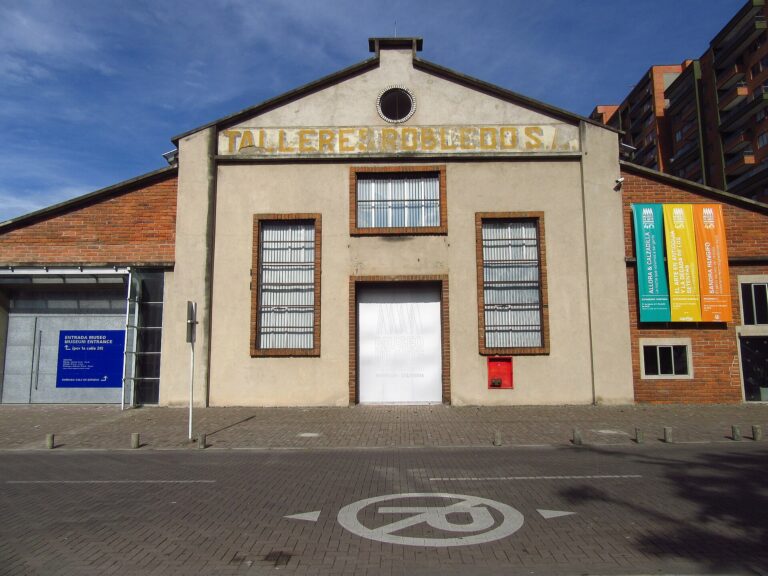
The building itself contributes to the museum’s civic presence. It has the weight and formality of an established public institution, and this suits the museum’s role in Medellín. It does not rely on flamboyant contemporary architecture for its effect. Instead, it feels substantial and historically rooted, which helps strengthen the sense that the museum belongs to the city rather than standing apart from it.
Its setting in the centre of Medellín is one of its defining strengths. The museum is not tucked away in an isolated cultural district. It sits in a dense and active urban area, and that gives the visit a different energy from museums located in quieter or more self-contained surroundings. The relationship to Plaza Botero is especially important here. The square acts as both threshold and extension, making the approach to the museum part of the experience. This gives the institution an openness that many museums lack.
That said, the urban setting also means the atmosphere outside can feel more intense than around museums in more controlled or polished districts. For some visitors, that adds realism and context. For others, it may require a slightly more attentive approach to the surrounding streets. Either way, the museum’s location is part of what makes it memorable. It is not simply a neutral container for art. It is part of the centre of Medellín, and the city’s complexity is never far away.
Inside, the museum generally allows the collection to lead rather than the architecture dominating. The galleries serve the works effectively, and the circulation is straightforward enough that visitors can move through the major sections without much confusion. The building may not be the main reason people remember the visit, but it supports the museum’s strengths by giving the collection a clear and dignified setting.
Practical Information
A good visit usually begins outside in Plaza Botero before entering the museum. Spending a little time with the sculptures first helps establish the museum’s connection to the city and gives useful context for the galleries inside. Once indoors, it makes sense to begin with the Botero works, since they form the museum’s best-known core, and then move outward into the broader Colombian and Latin American collection. This approach gives the visit a strong anchor while still leaving room for discovery.
The museum can be explored comfortably in a few hours, but it rewards visitors who move more slowly, especially in the main Botero rooms. It is also worth leaving enough time to appreciate the museum’s urban setting rather than treating it as an isolated indoor stop. Because the square and the surrounding centre are so closely tied to the institution’s identity, the visit works best when those elements are included as part of the overall experience.
For first-time visitors to Medellín, the museum is a practical and worthwhile cultural stop because it offers both artistic value and a strong sense of place. It can also fit well into a broader day in the city centre, particularly for those interested in architecture, public space, and Medellín’s cultural life.
Why Visit
Museo de Antioquia is best for visitors who want to understand Medellín through art as well as for anyone interested in seeing Fernando Botero’s work in meaningful depth. It is also a strong choice for travelers who value museums that feel connected to the city around them rather than isolated from it. Its great advantage is that it combines recognisable highlights with a broader civic and artistic role. The Botero works are a major draw and justify the visit on their own, but the museum becomes more rewarding when seen as part of a larger conversation about Colombian art and urban identity.
For many visitors, this is one of the most worthwhile museum experiences in Medellín because it offers both accessibility and substance. It is easy to enjoy on a first visit, but it also has enough depth to hold attention beyond its most famous name. If you want a museum in Medellín that feels rooted in the city and strong in its own right, Museo de Antioquia is one of the clearest recommendations.