Museo de Antioquia
An editorial guide to Museo de Antioquia in Medellín, where urban setting, public identity, and Colombian art make for a museum that feels rooted in its city.

Best forMasterpieces, architecture, cultural history
Setting / nearbyCentral Medellín, it is not only a place to see major works of art, but also a cultural i
Overview
Museo de Antioquia is one of Colombia’s most important art museums and one of the clearest examples of a museum whose identity is inseparable from its city. Located in central Medellín, it is not only a place to see major works of art, but also a cultural institution deeply tied to the public life and symbolic geography of the city. For many visitors, it is best known through its association with Fernando Botero, whose work shapes both the museum’s reputation and the surrounding plaza. Yet the museum is more than a Botero destination. At its best, it offers a broader introduction to Colombian and Latin American art while also showing how a major museum can become part of an urban centre rather than standing apart from it.
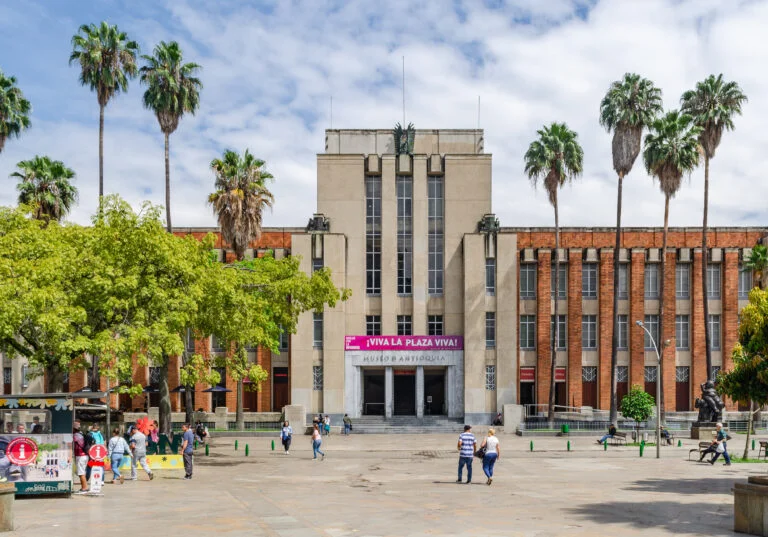
What makes Museo de Antioquia especially rewarding is the way it combines recognisable highlights with civic presence. Many museums hold important collections, but not all feel connected to the city outside their walls. Here, that connection is immediate. The museum faces Plaza Botero, where monumental sculptures extend the experience into public space and make the institution visible before one even enters the building. This relationship between museum and square changes the tone of the visit. It does not feel like a detached cultural stop. It feels like a museum woven into everyday Medellín.
The institution is also strong because it works on several levels at once. For first-time visitors, it is accessible: the Botero works provide an easy entry point, the setting is memorable, and the museum can be understood without needing specialist knowledge. For more experienced museum-goers, however, there is also enough depth to make the visit feel substantial. The broader collection and the building’s place in Medellín’s cultural history help the museum exceed the role of a simple “highlight stop.” It becomes more interesting the more one understands it as a civic art museum with a particular local and national significance.
That significance comes not only from the quality of the collections, but from the role the museum plays in how Medellín presents itself. This is especially important in a city whose image has changed dramatically over time. Museo de Antioquia contributes to a more layered cultural understanding of Medellín. It offers visitors not just art objects but a way of seeing how public space, artistic identity, and urban transformation intersect. For that reason, it is one of the most worthwhile museums in the city and one of the strongest museum visits in Colombia.
Collection Highlights
The most famous highlights are, naturally, the works by Fernando Botero. Museo de Antioquia holds one of the most significant concentrations of his work, and that alone makes the museum internationally notable. Seeing Botero here is very different from encountering only a single sculpture in a public square or a familiar image in reproduction. The museum allows visitors to see the range of his production across paintings, drawings, and sculptures, and this helps correct the common idea that his work is reducible to one visual joke or one easily summarised style. In the museum, his work becomes more varied and more serious.
The Botero galleries reward slower looking. The inflated forms that define his work are immediately recognisable, but the longer one spends with them, the more nuance becomes visible. There is humour, but also control, irony, tenderness, and a persistent interest in power, ritual, portraiture, religion, and everyday life. The museum setting makes it possible to compare works in a way that deepens understanding. Rather than a single memorable object, the Botero collection becomes a sustained visual argument. That is one of the museum’s greatest strengths.
Plaza Botero outside the museum also forms part of these highlights. The outdoor sculptures create a strong relationship between the institution and the square, and they make the museum feel larger than its interior alone. The public presence of these works means the visit often begins before the ticket desk and continues after the galleries end. This is unusual and important. It gives Museo de Antioquia a cultural reach beyond the boundaries of the building and reinforces the sense that Botero is not just collected here, but integrated into Medellín’s public image.
Beyond Botero, the museum’s broader collection of Colombian and Latin American art is what gives the institution real depth. These galleries may attract less immediate attention from first-time visitors, but they are essential to understanding the museum properly. Without them, the institution could feel too dependent on one artist. With them, it becomes clear that Museo de Antioquia is a serious art museum with wider ambitions. These sections help place Botero in context and open the visit toward broader questions of national and regional artistic identity.
Temporary exhibitions can also add greatly to the experience. In a museum so strongly identified with one name, changing exhibitions can bring in fresh perspectives and prevent the visit from feeling static. They can also create sharper curatorial focus than a broad permanent collection sometimes allows. Depending on timing, these exhibitions may become one of the most rewarding parts of the museum, particularly for repeat visitors or for those interested in contemporary or thematic approaches.
Building and Setting
The museum building contributes significantly to the experience, though in a quieter way than the square outside. It has the authority of an established civic institution and gives the museum a sense of permanence. Rather than relying on spectacular contemporary architecture, the building feels rooted and solid, which suits the museum’s role in the city. It does not compete with the artworks so much as provide a stable setting for them.
Its location in central Medellín is one of its defining advantages. Museo de Antioquia does not sit in an isolated cultural enclave. It is part of the city centre, and this gives the visit energy, realism, and context. The museum feels close to public life rather than separated from it, and that gives it a stronger civic identity than many art museums. Visitors are always aware, in one way or another, of the city around it.
Plaza Botero is crucial here. It acts as a threshold, a gathering space, and an outdoor extension of the museum’s identity. The sculptures in the square make the museum visible at urban scale and create one of the most recognisable cultural spaces in Medellín. This relationship between museum and plaza is perhaps the institution’s most distinctive setting-related strength. It changes the experience from a purely indoor art visit into something more public and more urban.
Inside, the museum generally allows the collection to lead. The galleries are straightforward enough to navigate, and the route usually feels manageable. The building may not overwhelm visitors architecturally, but that is not a weakness. In this case, the museum’s power comes more from the combination of collection and setting than from interior spectacle.
Practical Information
A good visit usually begins in Plaza Botero before entering the museum. Spending a little time outside helps establish the relationship between the museum and the city and makes the Botero works inside feel part of a larger whole. Once in the building, it makes sense to begin with the Botero galleries, since they form the best-known core of the collection, and then move into the broader Colombian and Latin American sections afterwards. This creates a clear structure and prevents the museum from feeling too fragmented.
Most visitors can have a satisfying visit in a few hours, but the experience improves if there is enough time not to rush the main rooms. The museum is not overwhelming in scale, which is one of its advantages. It is substantial enough to feel worthwhile, but still manageable within a single visit. That makes it especially suitable for travelers who want a serious museum experience without committing to the kind of physical endurance required by some much larger institutions.
Because the museum is in central Medellín, it can fit naturally into a broader city day. At the same time, the surrounding area can feel busy and intense, which is part of the city-centre character rather than a flaw. The museum works best when treated as part of Medellín’s public life rather than as an isolated sanctuary from it.
Why Visit
Museo de Antioquia is best for visitors who want to understand Medellín through art, as well as for anyone interested in seeing Fernando Botero’s work in real depth rather than in isolated examples. It is also a strong choice for travelers who appreciate museums that feel integrated into their city rather than detached from it. Its central strength lies in the combination of a major artist collection, a meaningful wider collection, and one of the most public-facing museum settings in Colombia.
What makes it worth prioritising is that it offers more than just famous works. It offers a sense of place. The museum and the plaza together create an experience that feels distinctly Medellín, and that makes the visit more memorable than a museum stop built only around objects in galleries. For many visitors, Museo de Antioquia is one of the most rewarding cultural experiences in the city because it combines accessibility, urban presence, and enough artistic depth to remain interesting beyond its most familiar name.