Military History Museum Budapest Review
Intro The Military History Museum in Budapest is one of the more rewarding war museums in Eastern Europe because it offers something broader than a.
Intro The Military History Museum in Budapest is one of the more rewarding war museums in Eastern Europe because it offers something broader than a.
Best forArchitecture, royal history, heritage
Review focusArchitecture, history, visitor experience
Intro
The Military History Museum in Budapest is one of the more rewarding war museums in Eastern Europe because it offers something broader than a simple display of weapons and uniforms. It uses military material to tell a deeper story about Hungary’s shifting position in Central Europe, the political structures that shaped its armed forces, and the repeated role of war in the country’s historical development. That gives the museum a seriousness that goes beyond hardware and battlefield narrative. Visitors are not only seeing how armies fought. They are also seeing how a nation’s identity was shaped through conflict, empire, revolution, and state transformation.
Architecture / building
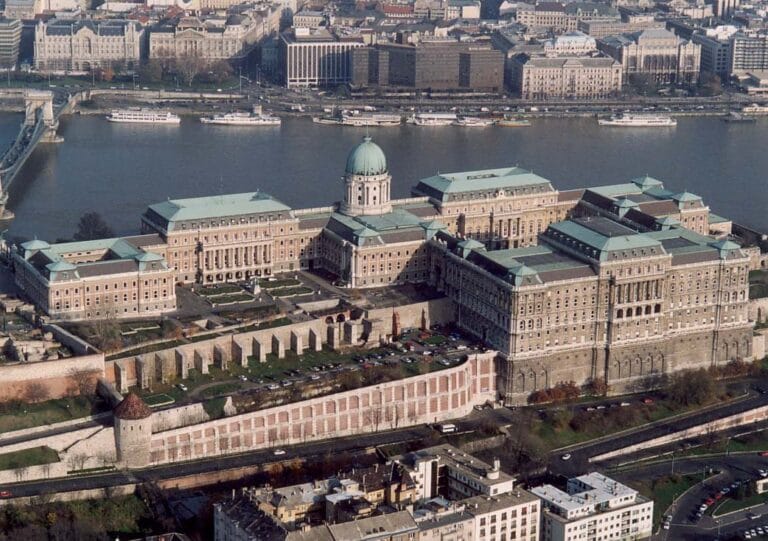
The museum benefits from its location in the Buda Castle area, where the surrounding urban landscape already carries associations of authority, defense, and state memory. This setting gives the museum more weight before the visit even begins. Inside, the spatial character tends to be more traditional than theatrical. The galleries are arranged in a way that supports chronological reading and object-based interpretation rather than immersive spectacle. That older, more classical museum style suits the subject surprisingly well. Military history can easily become over-dramatized, but here the presentation often remains grounded in material evidence and national context.
The building does not compete with the collection. Instead, it frames it with a certain historical gravity. Exhibition rooms often feel dense rather than expansive, which encourages slower movement and closer attention. This is helpful because much of the museum’s value lies in the relationship between small objects and large political change. Documents, insignia, medals, maps, and personal material often matter as much as the larger weapons displays.
Collection
The collection is broad enough to show how Hungarian military history cannot be separated from the country’s geopolitical position. Medieval material, early modern conflict, imperial structures, nineteenth-century upheaval, the World Wars, and later military developments all appear within the larger narrative. The museum is strongest when it treats military objects not as isolated trophies but as evidence of shifting loyalties, institutions, and national pressures.
Uniforms are particularly useful here because they make political change visible. They show how military identity evolved across empires and governments. Weapons, flags, decorations, and field equipment deepen that same story. Rather than functioning only as technical artifacts, they reveal what kinds of authority were being represented and defended. The later historical sections, especially those touching on the nineteenth and twentieth centuries, tend to be the most immediately engaging for international visitors because they connect military material to recognizable political transformation.
The museum’s better displays are those that keep the human and state dimensions in balance. A case of medals or ceremonial insignia can be just as informative as a room of artillery if it is properly contextualized, and the museum often understands this. It may not have the sheer scale of some larger Western European military institutions, but it has enough depth to make its national perspective genuinely useful.
Atmosphere
The atmosphere is serious, calm, and somewhat traditional. This is not a highly interactive museum built around effects or spectacle. For many visitors that is a strength rather than a weakness. Military history museums can become superficial when they rely too heavily on visual drama. Here, the museum’s more restrained tone encourages attention to chronology, symbolism, and historical context.
There is also a certain intellectual density to the museum. It expects visitors to engage with history through objects and explanation rather than through entertainment. That makes it especially rewarding for travelers who prefer museums with a more classical curatorial approach. At the same time, the subject matter is strong enough to remain meaningful even for visitors without specialist background knowledge.
Visitor experience
The visit is generally manageable in one and a half to two and a half hours, depending on pace and depth of interest. Because the museum is neither tiny nor overwhelming, it works well for travelers who want a substantial historical stop without committing an entire day. The chronological flow helps maintain orientation, and the national focus gives the visit coherence from start to finish.
Visitors with a special interest in Eastern Europe will likely appreciate the museum more than those looking only for the biggest weapons or most dramatic installations. The reward here comes from seeing how Hungary’s military history sits inside wider continental structures. The museum helps make Central Europe legible through military institutions, uniforms, and conflict.
Who should visit
The museum is ideal for visitors interested in Hungarian history, Habsburg and Central European military culture, and the role of war in national state formation. It is also a strong choice for travelers who enjoy object-based museums where the meaning accumulates gradually. Anyone expecting a highly cinematic war museum may find it more traditional than expected, but those who value context and historical continuity will likely find that traditional character appealing.
Practical notes
The museum pairs naturally with a wider historical day in Buda. Because the surrounding district already carries political and architectural significance, the visit often feels more integrated into the city than museums located in neutral modern settings. Check current opening conditions in advance, and allow enough time to read rather than rushing through the displays.
Final verdict
The Military History Museum Budapest succeeds because it frames military history as part of Hungary’s broader political and historical experience. Its strength is not flash or scale, but continuity and context. It offers a serious, grounded, and worthwhile museum experience for anyone interested in Eastern Europe, national identity, and the long historical role of armed conflict in shaping states.