Military History Museum Budapest
About The Military History Museum in Budapest is one of Hungary’s key institutions for understanding how war, empire, national identity, and political.
Best forScience, technology, hands-on learning
Setting / nearbyA city full of political and historical symbolism
Overview
The Military History Museum in Budapest is one of the most important places in Hungary for understanding war, statehood, and national memory through material culture. A museum of this kind is never only about weapons or uniforms. At its best, it explains how military institutions shaped politics, borders, identity, and public life across long periods of history. That is what gives the museum its broader value. It offers visitors a way to understand Hungary not only through rulers, treaties, and battles, but through the objects, symbols, and human experiences that accompanied conflict and defense.
What makes the museum especially compelling is the historical position of Hungary itself. The country has stood at important crossroads of Central European and imperial history, and this means that military history here is rarely simple or isolated. Questions of empire, revolution, independence, occupation, alliance, and national survival all enter the picture. A military museum in Budapest therefore has the potential to reveal much more than a sequence of campaigns. It can show how armies and conflicts became part of Hungary’s wider historical development.
The museum is also valuable because military history often makes state history more tangible. Flags, medals, swords, firearms, artillery, uniforms, documents, and portraits bring abstract events closer to lived experience. Instead of reading only about wars and changing borders, visitors see the material world through which military institutions represented themselves and operated. This helps make historical change feel more concrete and more human.
For visitors to Budapest, that makes the museum a rewarding complement to the city’s monuments, parliamentary history, and urban architecture. Hungary’s past cannot be fully understood without attention to conflict, defense, and political struggle, and this museum helps provide that dimension in a focused and object-based form.
Collection Highlights
One of the museum’s strongest features is likely to be the range of military material it can bring together across different periods. Uniforms, weapons, medals, banners, documents, and military equipment often form the core of such collections, and their value lies in the way they reveal change over time. A sword, rifle, cavalry uniform, or field insignia is not only a technical or decorative object. It reflects hierarchy, training, warfare, and the visual language through which armies expressed rank and authority.
Uniforms are often especially revealing in military museums. They show not only military style, but ideas of order, discipline, and national or imperial identity. Differences in cut, decoration, and insignia can tell visitors a great deal about rank, branch, and period. In a Central European context, they may also help illustrate political shifts and the layered military histories that affected Hungary across centuries.
Weapons and artillery naturally attract attention as well, but their strongest museum value comes when they are interpreted in broader historical context. They show how warfare changed, how technology affected conflict, and how states invested in defense and force. In a museum setting, they become less about spectacle alone and more about the relationship between military power and historical transformation.
Another important strength of a museum like this is likely to be its documentary and commemorative material. Portraits, letters, maps, battle-related objects, honors, and memorial pieces can give the visit more human depth. Without such materials, military history can become too focused on machinery and hardware. With them, visitors are reminded that armed conflict was lived by individuals and carried into public memory through commemoration and national narrative.
Building and Setting
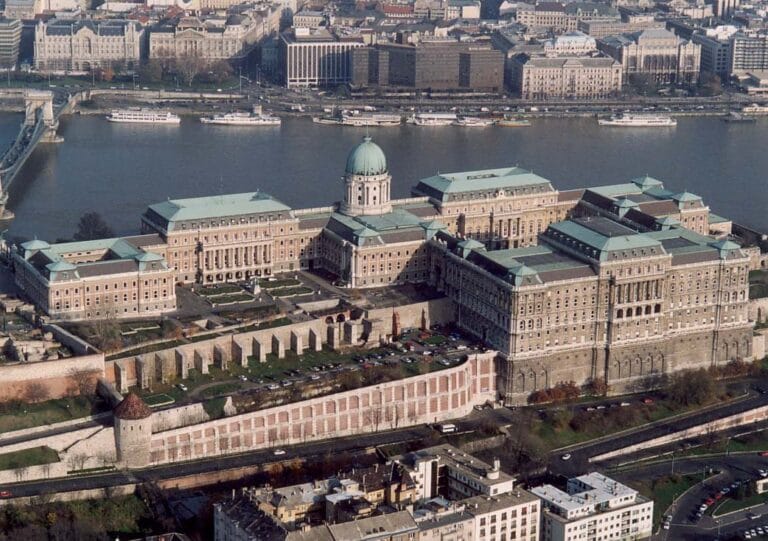
The setting of a military history museum matters greatly because the subject is so closely tied to state power, memory, and public representation. In Budapest, a museum devoted to military history naturally gains strength from being located within a city full of political and historical symbolism. The urban context helps support the collection. Visitors are not seeing military objects in isolation, but in a capital city where questions of nationhood, empire, and conflict have long been visible in architecture and public space.
Architecturally, a museum of this kind benefits from spaces that can handle both large and small materials. Military collections often need room for artillery, larger objects, or strong display cases, while also requiring enough intimacy for visitors to study insignia, documents, and portraits closely. The museum is strongest when these two scales are balanced well.
The atmosphere of such a museum is also important. Military museums work best when they present force and conflict seriously without turning them into entertainment. A good setting supports reflection as well as display. It should allow visitors to feel the weight of history while still seeing clearly how objects fit into larger narratives of war, service, and memory.
Its Budapest location also gives the museum added importance for travelers who want a broader understanding of the city. The museum can help connect political and national history to more material and personal forms of evidence, which deepens the wider experience of Budapest itself.
Practical Information
The Military History Museum in Budapest is best visited with enough time to move beyond the most visually obvious displays. Weapons and uniforms may draw the eye first, but the museum is usually more rewarding when visitors also spend time with the documents, commemorative objects, and broader historical framing that connect military material to Hungarian history as a whole.
It is especially rewarding for visitors interested in Central European history, empire, revolution, military culture, and the development of the Hungarian state. At the same time, it can also work well for more general travelers because military history often offers a direct and concrete entry into larger political events.
This is the kind of museum that tends to reward slower attention. The longer visitors stay with the material, the more the relationships between army, society, and memory become visible. That makes it better as a focused visit than as a quick stop between larger landmarks.
Why Visit
The Military History Museum in Budapest is worth visiting because it offers a more tangible understanding of Hungarian history through the objects of war, service, and remembrance. It shows that military history is not a narrow specialist field, but one of the ways national and political history becomes visible and material.
It is also worth visiting because Hungary’s past has been shaped by conflicts, border changes, imperial structures, and struggles for sovereignty. A museum devoted to military history can reveal these forces in ways that general history museums sometimes cannot. It provides a sharper sense of how political change was lived, represented, and remembered.
If you want a museum in Budapest that adds depth to the city’s wider historical story and presents state history through objects with real visual and symbolic power, the Military History Museum is a strong choice. It is focused, serious, and an important complement to the broader cultural landscape of the city.