Metropolitan Museum of Art Review
Metropolitan Museum of Art A Museum of Civilisations Under One Roof The Metropolitan Museum of Art does not confine itself to a single period, region.
Metropolitan Museum of Art A Museum of Civilisations Under One Roof The Metropolitan Museum of Art does not confine itself to a single period, region.
Best forMasterpieces, architecture, cultural history
Review focusCollection highlights, building, visitor flow
Historical Context
The Metropolitan Museum of Art, commonly known as The Met, was founded in 1870 with the ambition of bringing art and education to the American public on a scale comparable to Europe’s great cultural institutions. Located along Fifth Avenue in New York City, the museum quickly expanded from a modest collection into one of the largest and most comprehensive art museums in the world.
From its early years, The Met pursued a broad collecting strategy, acquiring works from ancient civilizations, European masters, and non-Western cultures. This approach reflected a vision of presenting global art history within a single institution. Over time, the museum grew through major acquisitions, donations, and expansions, including the development of specialized wings dedicated to different regions and time periods.
The building itself has evolved significantly, with multiple additions reflecting both the growth of the collection and changing approaches to museum design. Today, The Met stands as a central institution in the global art world, known for its scale, diversity, and influence on how art is presented and interpreted.
What You See on Arrival
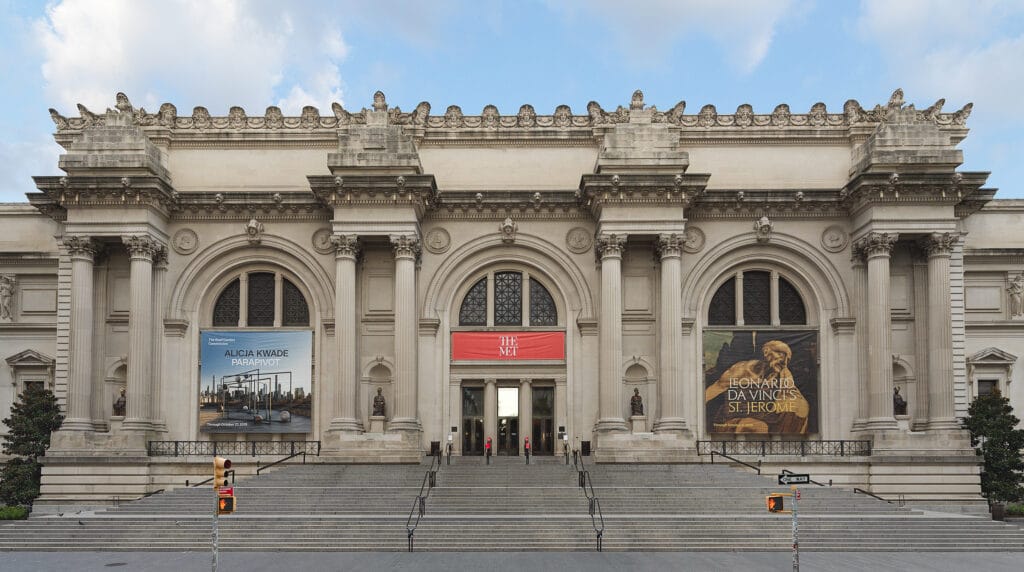
Approaching The Met from Fifth Avenue, visitors are immediately struck by its monumental façade and wide staircase, which has become an iconic feature of New York City. The building conveys a sense of scale and permanence, setting expectations for the experience inside.
Upon entering, the Great Hall provides a spacious and structured introduction to the museum. High ceilings, classical architectural elements, and a steady flow of visitors create an atmosphere that is both formal and dynamic. The central location of the hall makes it a natural orientation point, from which visitors can access different wings of the museum.
The layout is extensive, with galleries branching out in multiple directions across several floors. While the scale can initially feel overwhelming, the organization of collections by geography and time period provides a logical framework for navigation.
The overall mood combines grandeur with accessibility. Despite its size, the museum remains approachable, offering clear pathways and visual cues that help visitors begin their exploration without confusion.
Highlights and Key Exhibitions
The Met’s strength lies in the breadth and depth of its collection. Among the most notable highlights are its European painting galleries, which include works by artists such as Rembrandt, Vermeer, and Van Gogh. These galleries provide a comprehensive overview of European art history, presented in carefully curated spaces.
The Egyptian collection is another major attraction, featuring artifacts that span thousands of years. The Temple of Dendur, housed within a large, light-filled gallery, stands out as one of the museum’s most recognizable installations. Its scale and presentation create a distinct focal point within the museum.
The American Wing offers insight into the development of art in the United States, with period rooms and works that reflect different aspects of American culture. This section provides a contrast to the European galleries, highlighting regional perspectives.
In addition to these areas, The Met’s collections of Asian, African, and Islamic art contribute to a global narrative. Each section is designed to present its material within an appropriate cultural context, allowing visitors to explore a wide range of artistic traditions.
Temporary exhibitions further enhance the museum’s offerings, often focusing on specific artists, movements, or themes. These exhibitions provide opportunities to engage with works that are not part of the permanent collection.
Visitor Experience
Visiting The Met requires careful pacing due to its size and the volume of material on display. Visitors can choose to focus on specific sections or attempt a broader overview, depending on their interests and available time.
Signage throughout the museum is generally clear, helping visitors navigate between galleries. Maps and digital guides provide additional support, particularly for those planning a more structured visit.
Crowds are a consistent feature, especially in popular areas such as the European paintings and the Temple of Dendur. However, quieter galleries can be found in less frequented sections, offering opportunities for a more reflective experience.
The atmosphere varies across the museum. Some galleries are lively and busy, while others are calm and contemplative. This variation contributes to a dynamic visitor experience, allowing for both active exploration and quieter observation.
Facilities within the museum, including seating areas and cafés, support longer visits. The overall design encourages visitors to spend extended periods exploring the collection at their own pace.
Tickets, Access, and Planning
The Metropolitan Museum of Art is located on the eastern edge of Central Park, making it easily accessible by public transportation and on foot. Its central location in Manhattan makes it a key destination for both local and international visitors.
Admission policies vary, with suggested pricing for certain visitors and fixed tickets for others. It is advisable to check current details in advance, as policies may change.
Given the size of the museum, planning is essential. Visitors with limited time may benefit from focusing on specific highlights, while those with more time can explore a wider range of galleries.
Opening hours and peak visiting times should also be considered. Early or late visits may offer a less crowded experience, particularly in popular sections.
Final Verdict
The Metropolitan Museum of Art offers one of the most comprehensive art experiences available anywhere in the world. Its extensive collections, combined with its architectural presence, create an environment that is both impressive and informative.
Who should visit? The museum is suitable for a wide range of visitors, from dedicated art enthusiasts to those seeking an introduction to global art history. Its diversity ensures that there is something of interest for almost every audience.
Why visit? Because it provides an opportunity to engage with art from across cultures and time periods within a single institution. The scale and scope of The Met make it a destination that rewards both first-time visitors and those returning for deeper exploration.
For those willing to navigate its size and complexity, The Met offers a museum experience that is both expansive and rewarding.