Metropolitan Museum of Art (The Met)
About: Pick one ‘big’ department and one ‘small’ — otherwise it’s overwhelming. The American Wing + European Paintings is a solid first visit.What to.
Best forMasterpieces, architecture, cultural history
Setting / nearbyNorth America, United States
Overview
The Metropolitan Museum of Art, usually known simply as The Met, is one of the greatest museums in the world and one of the most overwhelming in the best and most challenging sense. Located on Fifth Avenue beside Central Park, it is not a museum that can be understood through one department, one period, or one national tradition. It is an encyclopedic museum of enormous scale, bringing together ancient civilizations, European painting, American decorative arts, arms and armor, Asian art, Islamic art, African art, photography, sculpture, textiles, and much more. That breadth is one of its greatest strengths. It allows visitors to move across continents and centuries in a single day. Yet it is also what makes the museum so demanding. The Met is powerful precisely because it contains too much to master at once.
What makes The Met especially rewarding is that it can support many different kinds of visit. It works for first-time visitors who want iconic departments, for specialists following one medium or civilization, and for repeat visitors who build their own private routes over years. Few museums are this flexible. The institution does not insist on one official story. Instead, it offers a vast field of possible stories. That openness is one of the reasons it remains so loved. Visitors can shape the museum around their own interests while still feeling the weight of a larger global collection around them.
At the same time, The Met is strongest when approached with discipline. Too many first visits turn into a march through famous rooms with little memory left at the end. The museum is simply too large for that. It rewards a more selective strategy: choosing one major department and one smaller or quieter area often produces a better experience than trying to see everything. This is not a sign of limitation. It is part of what The Met is. The museum is built for return visits, and much of its richness comes from accepting that one visit can only ever be partial.
Another important strength is the way the museum combines monumental departments with quieter spaces of discovery. The American Wing, European Paintings, Egyptian Art, Arms and Armor, and the Temple of Dendur may dominate the public imagination, but some of the museum’s deepest pleasures come from smaller galleries where the crowds thin and the works can be encountered more slowly. This balance between grandeur and intimacy is one of the reasons The Met remains such an extraordinary institution.
Collection Highlights
The Met’s greatest strength is not one single department, but the sheer quality of its major collections across different traditions. European Paintings are naturally among the most famous highlights. These galleries bring together some of the central artists and schools of Western art history in a setting that allows visitors to move across centuries of changing style, technique, and subject matter. The rooms can feel canonical, but they are also genuinely rewarding because the collection has enough depth to make the larger history of European painting visible rather than merely implied.
The American Wing is another defining part of the museum and often one of the best places for a first visit. It is especially strong because it offers more than paintings on walls. Period rooms, decorative arts, furniture, sculpture, stained glass, and architectural elements give the visitor a broader sense of American cultural history. This makes the department feel more immersive and materially rich than a painting-only collection would. It is also one of the clearest examples of how The Met can turn a national tradition into a full spatial experience.
The Egyptian collection is one of the museum’s major landmarks, and the Temple of Dendur is among the most memorable spaces in the entire building. This department works especially well because it combines archaeological material, monumental sculpture, small objects, and architecture in a way that makes ancient Egypt feel both grand and human. Many visitors remember the temple most vividly, but the surrounding galleries are equally important in giving that dramatic centerpiece historical depth.
Arms and Armor is another department that consistently captures attention, even for visitors who do not think of themselves as especially interested in the subject. That is because these galleries are not only about warfare. They are about craftsmanship, prestige, ceremony, identity, and the visual language of power. The armor halls in particular are among the most atmospheric in the museum and provide one of the most distinctive experiences in the building.
The Met’s Asian, Islamic, African, and ancient Near Eastern collections are also essential to its identity as a global museum. These departments are often among the quieter parts of a first visit, but they are crucial because they prevent the museum from being reduced to Europe and America alone. They remind visitors that The Met’s ambition is civilizational and encyclopedic, not narrow or regional. For repeat visitors, these areas often become some of the most rewarding precisely because they offer space, concentration, and a different pace of looking.
Building and Setting
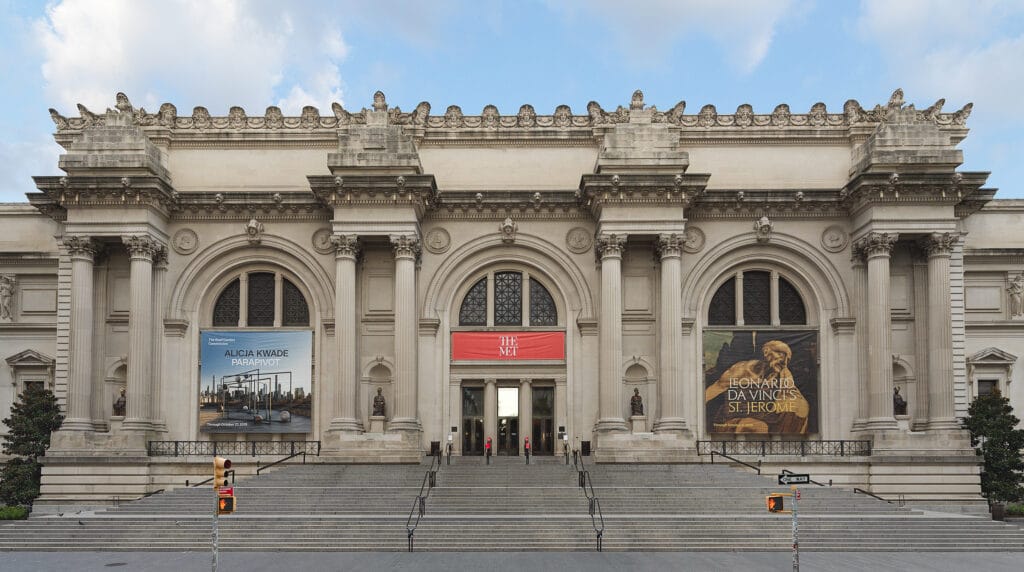
The museum’s building is part of its power. The grand façade on Fifth Avenue establishes immediately that this is one of New York’s defining cultural institutions, but inside the building becomes something more complex: not one museum, but almost a city of museums joined together. Corridors, staircases, transitions, courts, and major halls create a feeling of continuous expansion. This is one reason The Met can feel overwhelming. You are not simply entering a sequence of galleries. You are entering an entire world of collections.
This complexity is also one of the museum’s greatest pleasures. The building constantly offers contrast. Monumental spaces give way to intimate rooms. A crowded masterpiece corridor can open into a nearly silent court of sculpture or a calm gallery of textiles or Asian ceramics. These shifts keep the museum alive and prevent it from becoming monotonous despite its scale.
Its position beside Central Park also matters. The museum is deeply tied to New York, but the park softens the experience. It gives The Met a civic grandeur without surrounding it entirely in urban noise. That setting helps explain why the museum feels both monumental and approachable. It is one of the city’s largest institutions, but it is still part of a larger public landscape.
Practical Information
The best practical advice is to pick one “big” department and one “small” one. This usually creates a much stronger visit than trying to race through six famous sections. For a first visit, the American Wing and European Paintings are often a solid combination because they provide both iconic highlights and a broad introduction to the museum’s strengths. Egyptian Art is another strong anchor if that is your priority.
The Met is not a place to rush. It is a place to absorb. Breaks help, and they are almost essential if you want to remember anything clearly. Short pauses in quieter galleries, courts, or seating areas make a major difference. Without them, the museum’s scale can flatten everything into one long blur of masterpieces.
It is also worth accepting that leaving things unseen is not failure. The Met rewards return visits more than almost any museum. A successful first visit is not complete coverage. It is a visit that leaves you wanting to come back with clearer focus.
Why Visit
The Met is best for art lovers, first-time visitors to New York, and anyone planning a city itinerary around major cultural institutions. Its greatest strength is its scale combined with quality. Few museums in the world can match the depth of its collections across so many civilizations, periods, and media. It gives visitors access not only to famous works, but to whole historical worlds.
What makes it worth prioritising is that it can offer both grandeur and discovery. You can see universally recognized highlights, but you can also find a smaller gallery that feels almost private and leave remembering that just as strongly. That mixture is rare. The museum is vast, but it still allows intimate encounters.
For many visitors, The Met becomes one of the defining museum experiences of a lifetime because it embodies the ideal of the encyclopedic museum at the highest level. It is not a museum you finish. It is a museum you begin, revisit, and gradually learn. That is exactly why it remains one of the great cultural institutions in the world.