Kettle’s Yard Review
Cambridge, United Kingdom. Kettle’s Yard is an art gallery and house museum situated in Cambridge, United Kingdom, rooted in the vision and collection of Jim Ede (1895–1990). Ede was an artist, curator, and collector whose life was…
Cambridge, United Kingdom. Kettle’s Yard is an art gallery and house museum situated in Cambridge, United Kingdom, rooted in the vision and collection of Jim Ede (1895–1990). Ede was an artist, curator, and collector whose life was…
Best forMuseum lovers, culture travelers, first-time visitors
Review focusCollections, visitor experience, and practical planning
Historical Context
Kettle’s Yard is an art gallery and house museum situated in Cambridge, United Kingdom, rooted in the vision and collection of Jim Ede (1895–1990). Ede was an artist, curator, and collector whose life was shaped by early 20th-century modernist movements and who sought to create a space where art and everyday living could coexist. The property itself stems from a modest series of three early 20th-century cottages, which Ede transformed into a cohesive domestic environment filled with carefully arranged artworks and objects.
Opening to the public in 1957, Kettle’s Yard embodies a mid-century approach to art display that moves beyond traditional gallery norms. Instead of isolating objects behind glass or on large white walls, Ede’s concept was to integrate art with simple furnishings, natural light, and plants. This idea intended to provoke a more intimate and contemplative relationship between visitor, art, and environment. Over time, the institution has expanded its mission beyond Ede’s personal collection, now including contemporary art alongside a focus on modern British artists.
In historical terms, Kettle’s Yard is significant both for its embodiment of a particular philosophy about art’s place in everyday life and as a part of Cambridge’s cultural fabric. The museum offers insight into mid-century collecting practices, the evolution of modern art appreciation, and the tensions between private and public modes of displaying works.
What You See on Arrival
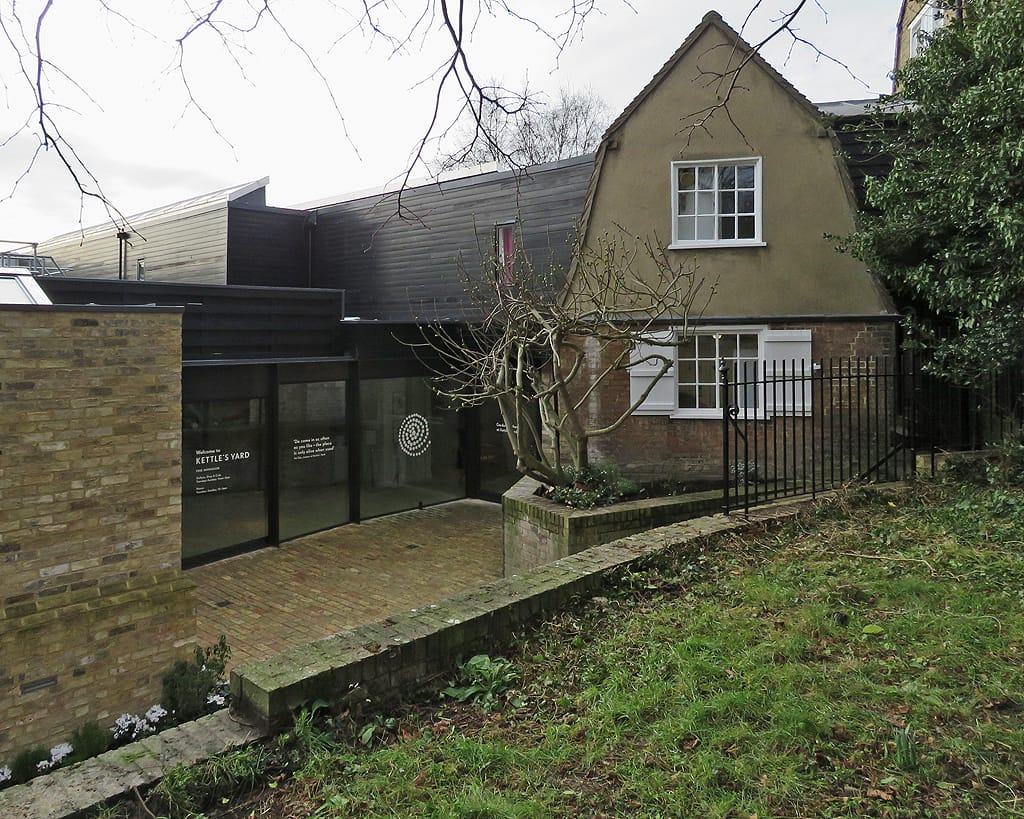
The approach to Kettle’s Yard is unassuming. Located in a residential area of Cambridge, the museum is not immediately discernible as a typical gallery. Its street presence is modest, with a quiet exterior that blends into the neighborhood rather than commands attention. For a new visitor, this setting primes an expectation of something intimate rather than expansive or commercial.
Upon entering, the museum retains the essence of a lived-in home rather than a stark exhibition space. The arrangement of artworks, furniture, and plants reflects a deliberate informality. The visitor is likely to notice the interplay between natural light filtering through windows and the carefully chosen placement of paintings and objects. There is a sense of balance between openness and enclosure, guiding visitors into a slowed-down experience away from the often hectic pace of city life.
The identity of Kettle’s Yard emerges as an intersection of house museum, modern art gallery, and contemplative retreat. This framing is important because it influences expectations about the nature of the collection and the style of presentation visitors will encounter. It is not a large institution; the spatial layout limits the number of works on display at any one time, fostering a selective and intimate visitor experience.
Highlights and Key Exhibitions
Central to Kettle’s Yard’s appeal is its permanent collection, which reflects the original core built by Jim Ede and subsequent enhancements focused on modern and contemporary British art. The works on display include pieces by artists associated with the Bloomsbury Group, the St Ives School, and mid-20th-century modernists.
Among the best-known artists represented are Ben Nicholson and Barbara Hepworth. Their sculptures and abstract paintings embody the museum’s aesthetic of clarity and form. Nicholson’s geometric abstraction and Hepworth’s carved forms complement the domestic setting while demonstrating key developments in British modernism. The emphasis on tactile, material engagement with the artwork reflects Ede’s interest in how art can integrate into lived environments.
Kettle’s Yard also holds works by Derek Jarman, whose contributions bring a slightly more contemporary sensibility to the collection, along with pieces by Alfred Wallis and other British artists whose work explores landscape, memory, and place. The museum’s holdings highlight the evolution of British art from the interwar period through the postwar years and into more recent times.
The permanent exhibition is notable for its setting: the art is integrated with furniture, everyday objects, and plants, preserving the domestic atmosphere Ede created. Visitors encounter paintings on walls that are deliberately off-white, shelves with ceramics, and books contributing to a sense of a personal living space devoted to art.
Alongside the permanent collection, Kettle’s Yard hosts rotating exhibitions that tend to focus on contemporary artists and themes linked to the institution’s vision. While the details of current or forthcoming shows should be checked via their official channels, the gallery is known for a program that carefully selects artists whose work dialogues with the history and spirit of the house, often emphasizing materiality, process, and quiet reflection.
Despite the relatively small scale of the museum, the curatorial choices invest heavily in quality over quantity. Each room offers opportunities for close looking and thoughtful engagement. The layout encourages visitors to consider relationships between works, as well as between the art and its environment.
Visitor Experience
The visitor experience at Kettle’s Yard is shaped by its hybrid identity as a house and museum. The space invites a slow pace, rewarding those willing to spend time observing details rather than rushing through large galleries. The deliberate feeling of domesticity tempers the scale and presentation of works, calling for contemplation rather than spectacle.
Interpretation tends to be subtle. Wall labels and information panels are generally unobtrusive, allowing the artworks and their placement to speak largely for themselves. This minimalist approach suits the museum’s philosophy but may pose challenges for those seeking in-depth historical or contextual explanation on every piece.
The audience most likely to appreciate Kettle’s Yard includes visitors with an interest in modern British art, house museums, and non-traditional display methods. It is well-suited to individuals or small groups who value quiet surroundings and personal reflection. For families or visitors expecting interactive or large-scale exhibitions, the quiet, reserved atmosphere may not fully meet expectations.
The museum is typically less crowded than larger institutions in Cambridge and can offer a peaceful alternative to university-related museums with more academic or archeological focuses. This environment enhances the focus on individual artworks and the holistic experience of the house as a whole.
Potential limitations for visitors include the relatively small scope of the collection on view at any time, as well as its concentrated emphasis on modern British art. Those hoping for a broad survey of European or global art traditions might find the range narrow. Additionally, the museum’s domestic scale means it cannot display very large works or host sizable temporary exhibitions.
Tickets, Access, and Planning
Visitors planning a trip to Kettle’s Yard should consult the official website for the most current information on opening hours, admission fees, and arrangements for special visits or group bookings. The museum’s central Cambridge location is accessible by public transport, but visitors relying on private vehicles should seek local advice regarding parking options nearby.
Information on visitor accessibility is also best verified directly, as house museums sometimes face architectural challenges that could limit access for those with mobility issues. Similarly, details about guided tours, audio guides, or educational programming should be confirmed in advance through official sources.
The museum’s relatively small size means that visitor flow can be managed comfortably, but it is sensible to check if any special exhibitions or arrangements require advance booking. Seasonal variations in opening times or occasional closures are not uncommon for institutions housed in historic or residential settings.
Given the quiet and contemplative nature of Kettle’s Yard, it benefits from visits planned without the expectation of large crowds or social interaction. The museum may not suit those looking for high-energy experiences or family-oriented activities.
Final Verdict
Kettle’s Yard stands out as a distinctive art institution that foregrounds the relationship between art and domestic space. Its origins as Jim Ede’s home and personal collection remain evident in the atmosphere and curatorial approach, which promote careful looking and quiet reflection rather than spectacle.
The museum holds an important place in the story of mid-20th-century British art, particularly through its display of artists linked to modernist movements. Its integration of sculpture, painting, and everyday objects within a domestic environment offers a unique presentation style. This makes it of particular interest to visitors invested in the history of collecting, modern British art, and alternative modes of display.
However, potential visitors should approach Kettle’s Yard with a clear sense of what it offers and what it does not. It does not present a broad or encyclopedic art collection, nor is it designed to dazzle with large exhibitions or interactive technology. Instead, it excels in communicating a quietly powerful experience based on intimacy, materiality, and the spirit of place.
Those with a specific curiosity about postwar British modernism, the relationship between art and home, or the work of Jim Ede’s circle will find substantive value here. Others may find the limited size and specialized focus a constraint. Planning ahead, including checking details on the official website, will support a visit that aligns expectations with the museum’s distinctive character.
In summary, Kettle’s Yard is an institution that rewards thoughtful engagement and a patient visitor. Its charm and significance lie precisely in its nuanced, modest scale and its commitment to presenting modern art within a lived environment. It remains an important and respected part of Cambridge’s cultural landscape, suited to an audience appreciative of its quiet rigor and historical resonance.