Drachmanns Hus Review
Intro Drachmanns Hus in Skagen, Denmark, is a museum where personality is the main exhibit. Unlike Skagens Museum, which presents the Skagen colony.
Intro Drachmanns Hus in Skagen, Denmark, is a museum where personality is the main exhibit. Unlike Skagens Museum, which presents the Skagen colony.
Best forMasterpieces, architecture, cultural history
Review focusCollection highlights, building, visitor flow
Intro
Drachmanns Hus in Skagen, Denmark, is a museum where personality is the main exhibit. Unlike Skagens Museum, which presents the Skagen colony through art historical concentration, or Anchers Hus, which emphasizes domestic artistic life, Drachmanns Hus revolves around the afterimage of one strongly individual figure: Holger Drachmann. Poet, painter, journalist, traveler, celebrity, and mythmaker, Drachmann is one of those cultural figures whose home cannot be read as merely domestic space. It is part biography, part performance, part artistic residue.
That makes the museum particularly interesting. It is not the largest site in Skagen, nor the most visually famous, but it offers a crucial expansion of what the Skagen story actually was. It shows that the colony was not only about painters and northern light. It was also about literary culture, public persona, and the charisma of artistic lives lived in view of others.
How the Site Works
The museum works because it does not try to universalize its subject. It embraces the specific, even idiosyncratic, character of Drachmann’s life and surroundings. Visitors move through a preserved house that still carries a strong sense of individual presence, and that presence becomes the organizing principle of the visit.
This method is effective because Drachmann himself was not a neutral figure. He cultivated an identity and moved through cultural life with unusual force. A conventional gallery treatment might flatten him into a timeline or a set of selected objects. The house preserves enough atmosphere to resist that flattening.
The museum also works especially well when understood as part of the wider Skagen network. Seen on its own, it is a compelling biographical site. Seen alongside Skagens Museum and Anchers Hus, it becomes a vital corrective to any overly tidy understanding of the colony. It reminds visitors that Skagen’s cultural identity included literary bravado, public image, and multiple forms of artistic production.
Exhibitions and Collection
Drachmanns Hus depends less on a conventional museum collection than on the integrity of an environment. Furnishings, books, decorative objects, personal possessions, and artworks all help construct the image of Drachmann as a living cultural personality rather than simply a name in literary history.
What makes the museum compelling is the way these elements support a portrait of layered identity. Drachmann was not only a writer and not only a painter. He was a figure whose life crossed media, places, and social roles. The house makes that complexity visible. You sense a cultivated world, a theatrical self-awareness, and a restless imagination embedded in the rooms.
The museum’s collection is therefore strongest when understood as biographical texture. This is not a place of isolated masterpieces. It is a place where objects accumulate into character. That approach works because Drachmann’s significance is inseparable from the force of his persona.
Visitors interested in artist and writer homes will recognize a particular quality here: the sense that the house is not neutral shelter but an extension of the person who lived in it. Drachmanns Hus captures that condition well.
Architecture / Space
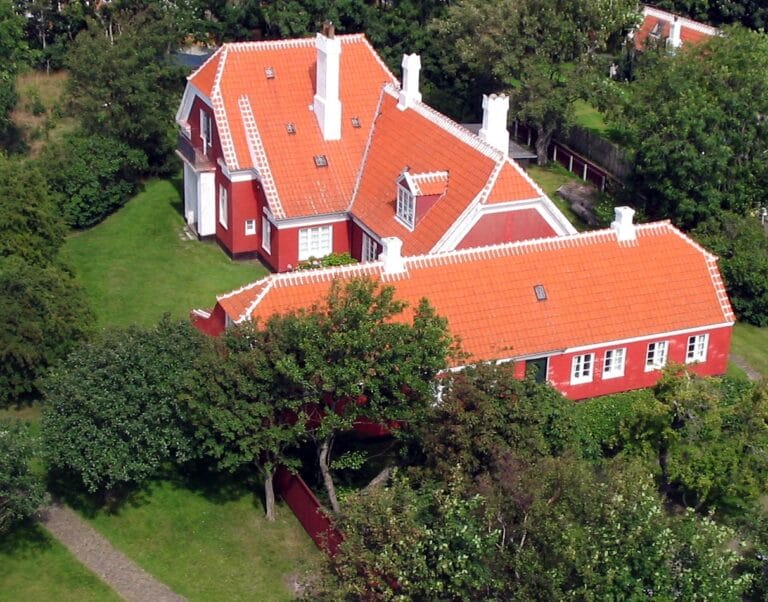
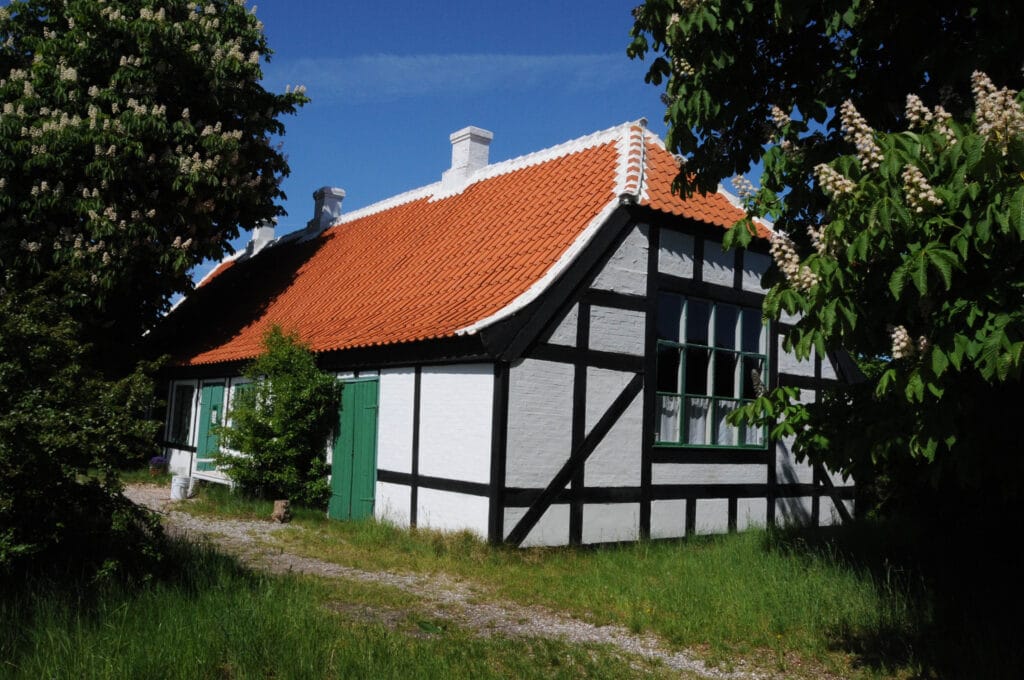
Architecturally, the house is modest, and that modesty creates useful tension with the large personality it represents. The whitewashed structure and domestic proportions suggest privacy and retreat, yet within that quiet shell the preserved interior speaks to a figure of high public visibility. That contrast gives the museum much of its atmosphere.
The house does not need grand architectural drama. Its power lies in scale, containment, and the gradual realization that ordinary rooms can carry complicated cultural memory. Visitors move through an environment that remains intimate enough to feel personal while still functioning as a museum.
The location in Skagen strengthens the experience further. Drachmann’s presence in the town was part of its cultural transformation, and the house reminds visitors that the artistic identity of Skagen was distributed across real dwellings and real social spaces, not only across canvases.
Visitor Experience
The visitor experience is quieter and more introspective than at Skagens Museum. It is especially rewarding for those who enjoy museums built around biography and atmosphere. Because the site is small, it encourages attention to nuance rather than broad scanning. This makes the visit slower, but in a productive way.
Even visitors who know little about Drachmann can feel the contours of a strong individuality through the preserved setting. That is one of the museum’s achievements. It does not require extensive prior knowledge to communicate personality. At the same time, those with background in Danish cultural history will find the site much richer because the house is so intertwined with Drachmann’s public image and cultural role.
The museum also benefits from contrast. After the more formally art-historical setting of Skagens Museum, Drachmanns Hus feels looser, more personal, and more eccentric. That variation adds to the overall Skagen experience.
Historical Context
Holger Drachmann occupies a distinctive place in Danish cultural history because he was not simply a contributor to the Skagen milieu. He helped shape its mythology. His role shows how art colonies are built not only by paintings and places, but by stories, personalities, and the cultural publicity surrounding them.
Drachmanns Hus therefore matters beyond biography. It helps explain how Skagen became a symbol and how artistic communities depend on more than artistic production alone. The house is evidence of cultural self-fashioning as much as of domestic life, and that makes it historically valuable in a different register from the other Skagen sites.
Practical Information
The house is open seasonally and should be checked against the current Skagens Kunstmuseer schedule before a visit. Admission is paid and often integrated with broader Skagen museum ticketing. It works particularly well as part of a fuller art-and-culture route through the town.
Because the visit is relatively compact, many travelers may be tempted to pass through quickly. That would be a mistake. The museum reveals itself most fully when visitors allow time for the atmosphere and biographical details to accumulate.
Final Verdict
Drachmanns Hus is a highly rewarding museum because it captures the character of a cultural figure whose significance cannot be reduced to a single discipline. It broadens the story of Skagen, deepens the historical texture of the colony, and offers one of the most personal museum experiences in the town.
It may be smaller and less immediately famous than Skagens Museum, but it is an essential complement. Without it, the cultural world of Skagen feels less complete.
Plan your visit
Plan Drachmanns Hus as part of a broader Skagen itinerary that includes both Skagens Museum and Anchers Hus. The house is most powerful when seen as one facet of the larger colony, though it also stands well on its own as a biographical museum. Give yourself enough time to move slowly and notice the details that shape the sense of presence within the rooms.