Acropolis Museum Review
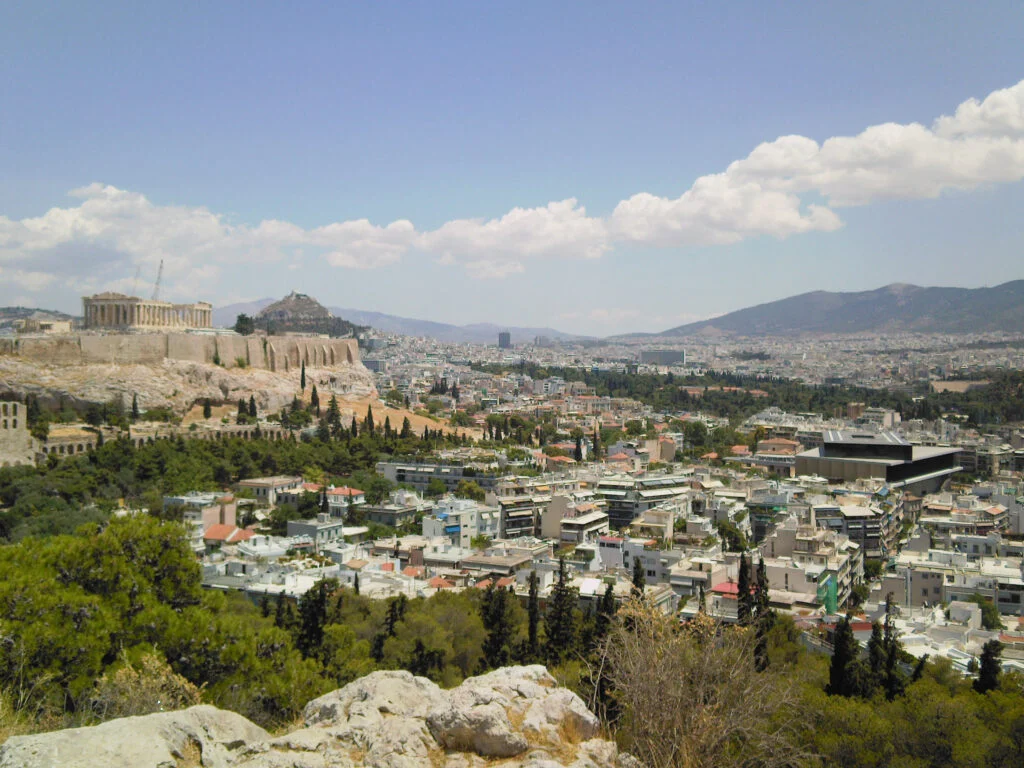
Acropolis Museum Modern Clarity Beneath an Ancient Hill The Acropolis Museum stands at the foot of the Acropolis itself, deliberately positioned in.
Acropolis Museum Modern Clarity Beneath an Ancient Hill The Acropolis Museum stands at the foot of the Acropolis itself, deliberately positioned in.
Best forMasterpieces, architecture, cultural history
Review focusCollection highlights, building, visitor flow
Historical Context
The Acropolis Museum in Athens is one of the most important archaeological museums in Europe because it was created not simply to house ancient artifacts, but to reunite the material culture of the Acropolis in a setting closely tied to its original context. Opened in 2009, the museum replaced earlier display arrangements that could no longer meet the needs of conservation, interpretation, and international scholarship. Its creation was driven by several overlapping goals: to protect fragile ancient works, to present them with greater clarity, and to place them in direct visual relationship to the Acropolis itself.
That relationship matters. The museum is not an isolated treasury of Greek antiquities gathered from many different places. It is focused on the monuments of a single sacred hill that became one of the defining cultural sites of the ancient world. The collections reflect the religious, political, and artistic history of Athens, especially during the 5th century BCE, when the city rebuilt the Acropolis after Persian destruction and turned it into an enduring symbol of civic ambition and divine patronage. Sculptures, architectural fragments, reliefs, and everyday objects together reveal how the Acropolis functioned not just as a monument, but as a living sacred and political landscape. The museum’s importance also extends into modern cultural debates, especially around the question of dispersed architectural sculpture and the desire to present surviving pieces in as complete and coherent a form as possible.
What You See on Arrival
Arrival at the Acropolis Museum feels very different from entering a traditional neoclassical archaeology museum. The building is modern, transparent, and deliberate in how it prepares the visitor for what comes next. Rather than creating distance between the ancient world and the present, the museum uses glass, open circulation, and sightlines to connect them. Even before entering, visitors become aware that the building is part of a larger archaeological setting. The museum does not hide the fact that it stands in a city layered with historical remains.
Inside, the first impression is one of light and orientation. The interior feels open rather than dense, and the circulation gently leads visitors upward through the museum in a way that echoes the ascent toward the Acropolis itself. This is one of the building’s most effective qualities. It turns the visit into a progression rather than a set of disconnected rooms. The mood is calm, spacious, and highly controlled, but not cold. There is a sense that every major architectural decision was made to support the display of stone sculpture and architectural fragments.
The visibility of the Acropolis from within the museum has a strong effect on the experience. At multiple points, visitors can look outward and re-establish the relationship between object and site. This prevents the museum from becoming abstract. It reminds you that the sculptures, reliefs, and fragments in the galleries once belonged to buildings still standing above the city. The result is a first impression shaped by clarity, modernity, and a strong sense of place.
Highlights and Key Exhibitions
The strength of the Acropolis Museum lies in the coherence of its collection. This is not a museum dependent on isolated masterpieces alone, although it has many memorable works. Its real achievement is that it allows visitors to understand how sculpture, architecture, ritual, and urban identity came together on the Acropolis.
The Archaic galleries are among the first major highlights. These sculptures, many of them originally brightly painted, show the development of form and religious dedication before the classical period reached its best-known expression. Standing figures, votive offerings, and sculptural fragments reveal a world that is often overshadowed by the Parthenon but is essential for understanding the artistic evolution of Athens. These rooms are especially rewarding because the works are displayed in ways that allow close, full viewing from multiple angles, rather than being flattened against walls.
The Caryatids from the Erechtheion are another major moment in the visit. Their presence is both sculptural and architectural, and the display makes clear that they were not merely decorative statues, but structural figures integrated into one of the Acropolis’s most complex buildings. Their elegance, balance, and quiet monumentality make them one of the museum’s most memorable ensembles.
The Parthenon Gallery is the defining centerpiece. Located at the top of the museum and aligned with the Parthenon itself, this space is designed to present the surviving sculptural program of the temple in direct relationship to the monument outside. This is one of the museum’s great curatorial and architectural achievements. The frieze, metopes, and pedimental sculptures are arranged in a form that reflects their original placement, allowing visitors to grasp the scale and conceptual unity of the decoration. Even where original elements are absent, the display communicates the structure of the sculptural scheme clearly. This makes the gallery more than a room of fragments. It becomes a powerful exercise in reconstruction, memory, and site-specific interpretation.
Other sections of the museum deepen the experience by showing smaller objects, architectural elements, and finds from the slopes of the Acropolis. These may be less famous, but they are crucial for understanding the site as a lived environment rather than just a summit of classical art.
Visitor Experience
The visitor experience at the Acropolis Museum is one of its greatest strengths. Unlike many archaeology museums, which can feel crowded with cases and label-heavy displays, this museum gives sculpture and stone the space they need. The galleries are readable, the progression is logical, and the atmosphere supports concentration.
Pacing is generally comfortable because the building encourages a clear sequence without forcing visitors into an overly rigid route. The gradual upward movement creates a rhythm that helps visitors understand the historical and visual development of the site. This is particularly effective for first-time visitors, who may know the Parthenon by reputation but not yet understand its sculptural and religious context.
Signage is generally clear and restrained. It provides enough information to support interpretation without overwhelming the works themselves. This matters in a museum where visual and spatial understanding are central. The balance between object and explanation is well judged.
Crowds can be significant, especially during high season and around the most famous sections, but the scale and openness of the building usually prevent the experience from becoming too compressed. Even when busy, the museum often feels more manageable than many other major archaeological institutions because its design distributes attention and movement effectively.
Atmospherically, the museum is quieter and more focused than its popularity might suggest. The presence of natural light, the clean architectural language, and the recurring visual relationship to the Acropolis give the visit a sense of calm seriousness. It feels like a museum designed not simply to display artifacts, but to restore intelligibility to a site that has been fragmented by time.
Tickets, Access, and Planning
Planning a visit to the Acropolis Museum is relatively straightforward, but a little preparation improves the experience. Because it is one of Athens’ major cultural destinations, visiting earlier in the day or outside the most crowded periods can make the galleries easier to enjoy. It also works especially well when paired with a visit to the Acropolis itself, since the relationship between site and museum is central to understanding both.
Most visitors should allow at least two hours, though three is more realistic for anyone who wants to move slowly and take in the Parthenon Gallery properly. The museum rewards concentration, and rushing through it weakens one of its main virtues: the careful reconstruction of context.
Access is generally good, and the building’s modern design supports clear movement between floors. Practical facilities are integrated without intruding on the exhibitions. A useful visitor strategy is to treat the museum not as an optional supplement to the Acropolis, but as an essential part of the same experience. Seeing the monuments first can be powerful, but seeing the museum first can also sharpen what you understand once you climb the hill.
Final Verdict
The Acropolis Museum is one of the finest archaeological museums in Europe because it does something more than preserve beautiful objects. It restores relationships: between sculpture and architecture, between artifact and site, between ancient Athens and the modern city around it. Its strength lies in clarity, restraint, and the intelligence of its design. Rather than overwhelming visitors with quantity, it focuses on one of the most important sacred and artistic complexes in world history and explains it with unusual precision.
Who should visit? Anyone interested in ancient Greece, classical sculpture, archaeology, or museum design will find it essential. It is especially rewarding for first-time visitors to Athens because it provides the context needed to understand why the Acropolis matters beyond postcard familiarity.
Why visit? Because the museum offers one of the clearest and most compelling ways to encounter the material culture of the Acropolis as a coherent whole. It is elegant without being theatrical, informative without becoming heavy, and memorable because it reconnects fragments to meaning. For Athens, it is not a secondary attraction after the Acropolis. It is one half of the same cultural experience, and one of the most successful site museums in the world.