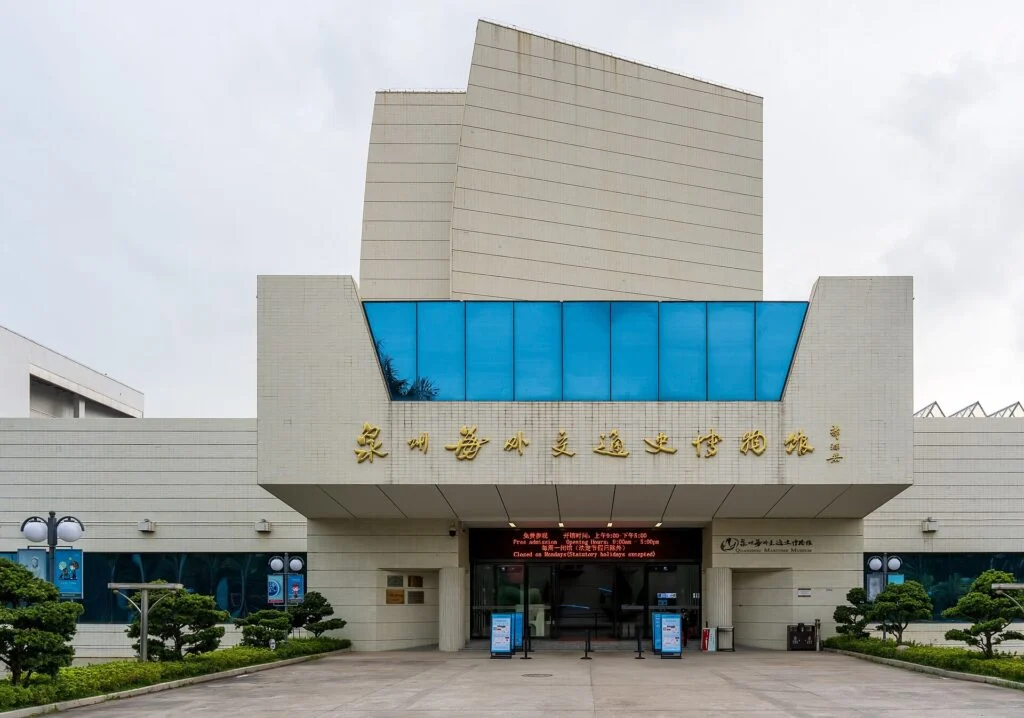
Quanzhou Maritime Museum
Maritime Museums · Quanzhou, China. The Quanzhou Maritime Museum is a specialized maritime museum located in Quanzhou, a city in Fujian Province on China’s southeastern coast. The museum documents and interprets the rich maritime history of Quanzhou, an important…
Best forMaritime history, ship lovers, port culture
Setting / nearbyQuanzhou, China
Overview
The Quanzhou Maritime Museum is a specialized maritime museum located in Quanzhou, a city in Fujian Province on China’s southeastern coast. The museum documents and interprets the rich maritime history of Quanzhou, an important port city with a long tradition of sea trade and cultural exchange dating back centuries. Quanzhou played a significant role during the Song and Yuan dynasties as a major hub in the Maritime Silk Road, making this museum a focused institution for understanding China’s ancient and medieval maritime connections. The museum’s collections and displays explore not only shipbuilding and navigation techniques but also the cultural interactions that arose from maritime commerce.
Visitors to the Quanzhou Maritime Museum can expect a detailed look at the tools, artifacts, and stories linked to this port city’s seafaring heritage. It stands as a place where the local maritime past is preserved and made accessible, emphasizing the historical economic and cultural importance of the sea to Quanzhou’s development. While it might appeal most strongly to those with an interest in maritime history, trade networks, and Chinese history, the museum’s exhibits are designed to inform a general audience about how this coastal city was a vital point of contact between China and regions as diverse as Southeast Asia, the Middle East, and beyond.
Collection Highlights
The museum’s main attraction centers on its maritime collection, which documents several aspects of the seafaring tradition here. Exhibits typically include tools and equipment used in ancient shipbuilding, models of ships, navigation instruments, and cargo items recovered from shipwrecks or associated with trade through the harbor. The collection reflects Quanzhou’s historical role as a bustling international port, demonstrating the variety of goods and cultural influences that passed through this gateway.
One notable feature is the presentation of ancient nautical technology, showing how shipbuilders adapted to the challenges of ocean travel. In addition to physical artifacts, the museum often contextualizes objects through maps, paintings, and texts reflecting Quanzhou’s place in maritime trade routes. The diversity of the collection illustrates the city’s cosmopolitan character in past centuries, as merchants and sailors from different countries and cultures interacted here.
The museum may include displays on maritime archaeology, connected to underwater finds near Quanzhou. Such exhibits emphasize the efforts to research and preserve shipwrecks and artifacts on the sea floor, contributing to knowledge about the region’s oceanic connections. While the exact scope and detail of the collection can vary as new research develops, the museum’s focus remains clearly on maritime history and cultural interchange.
Visitors interested in the wider maritime history of China, as well as the specifics of Quanzhou’s historical role, will find substantial material on display. The object labels and associated information tend to be accessible, though some exhibits may rely on specialized terminology that benefits from prior knowledge or interest in maritime affairs. The presentation combines the technical side of seafaring with the cultural and economic impact of Quanzhou’s maritime trade.
Building and Setting
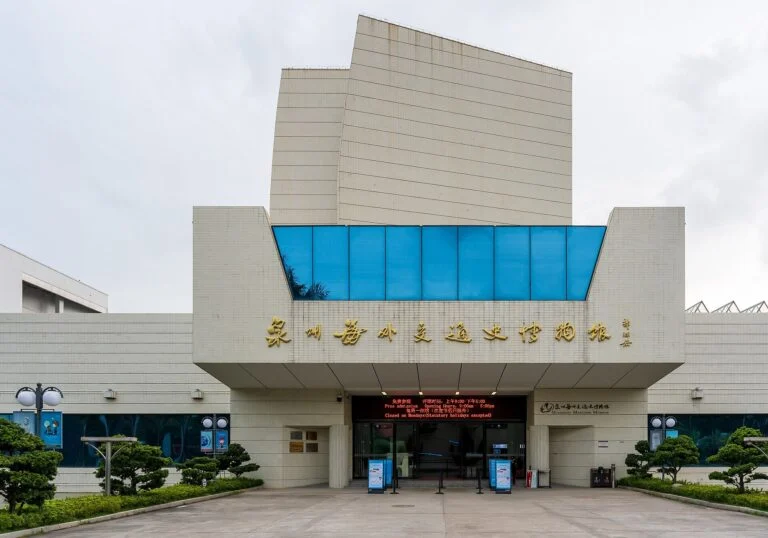
The Quanzhou Maritime Museum is situated within the urban environment of Quanzhou city. Given Quanzhou’s position as a historically significant port, the museum’s location provides a certain geographical resonance with the subject matter, although it is not located directly on the waterfront itself. Its architecture aligns with functional purposes, geared towards the exhibition and preservation demands of maritime artifacts, which can be delicate and require controlled conditions.
Exhibition spaces are arranged to guide visitors through different aspects of maritime history, often including multimedia or illustrative panels to enhance understanding. The environment is intended primarily as a place for learning rather than a lavish display environment; it typically reflects practical museum design with a focus on clarity and information provision.
The museum is embedded in a city that has other historic sites and contexts related to maritime history, allowing visitors with time and interest to explore beyond the museum itself. The surrounding area may not be a heavily tourist-centric zone but does reflect the everyday urban life of Quanzhou, offering a grounded setting to visit an institution dealing with significant aspects of China’s maritime heritage.
Practical Information
Potential visitors should consult the museum’s official website or local sources for the most accurate and current details about visiting. This includes hours of operation, ticketing arrangements, any requirements for advance booking, and the availability of guided tours or audio guides. Since the museum is in China, announcements or information might often be presented primarily in Chinese, though some signage or materials may be available in other languages.
There is no broad information to confirm about entry fees or accessibility features, so checking the museum’s own communications is advisable. The museum’s location in the city means it can usually be reached via public transportation or taxis, though details for parking or specific access may not be well documented outside local guidance.
Visitors should also consider language and interpretive support if they do not read Chinese, as translation services or multilingual explanations may be limited or vary. Planning ahead for these factors will enhance the visit.
Why Visit
The Quanzhou Maritime Museum represents a focused thematic institution for anyone curious about maritime history in a Chinese context. It sheds light on a port city that seldom features prominently in general global maritime histories but played an important role in historical trade and cultural contact. This concentration makes the museum a useful site for understanding how maritime routes shaped regional economies and cross-cultural connections over centuries.
Visitors with an interest in maritime archaeology, traditional navigation, or the historical exchanges along China’s southeast coast will find detailed exhibits that go beyond typical maritime museum fare concentrated in capital cities or larger ports. The museum’s local focus contributes to filling in less represented aspects of maritime history, especially in relation to the Maritime Silk Road.
At the same time, the museum’s specialization means it is primarily suited to visitors prepared to engage with maritime subjects at some level, rather than those seeking broad or general Chinese history presented in a sweeping manner. While the presentation style is generally clear and educational, some familiarity or curiosity about nautical themes enhances appreciation.
Limitations of the museum could include a lack of extensive interpretive materials in non-Chinese languages and the possibility that certain exhibits may assume some prior knowledge about maritime trade or regional history. Nevertheless, the museum stands as a significant cultural institution for understanding the historic maritime activities that helped shape Quanzhou’s identity and its connections to the wider world.
In sum, the Quanzhou Maritime Museum offers a valuable window into the seafaring past of an important Chinese port. It serves those interested in maritime heritage, archaeology, and intercultural exchanges facilitated by the sea. For any visitor planning to explore the maritime history of this region specifically, it provides well-curated material and a considered presentation tailored to the topic. Careful planning to verify practical details before visiting will help ensure a smooth experience.