Museo Reina Sofía
About: Go straight to Guernica, then explore the surrealists. Elevators are your friend — the layout is bigger than it looks.What to see: Start with the.
Best forMasterpieces, architecture, cultural history
Setting / nearbyEurope
Overview
Museo Reina Sofía is one of the most important modern art museums in Europe and one of Madrid’s essential cultural institutions for anyone interested in the development of twentieth-century art in Spain and beyond. Unlike the Prado, which is anchored in older painting traditions and the historical weight of European masters, Reina Sofía belongs to a different artistic and emotional world. It is a museum of rupture, experiment, politics, modernity, and new visual languages. For many visitors, it is the museum in Madrid that feels closest to the instability and urgency of the modern era.
What makes Reina Sofía especially distinctive is that it is not simply a museum of “modern art” in the broadest possible sense. It has a particularly strong identity rooted in Spain’s twentieth-century artistic history, especially the period shaped by civil war, exile, dictatorship, avant-garde experimentation, and the cultural aftermath of political conflict. This gives the museum unusual coherence. Even though the collection includes works by many international figures and movements, the institution’s core strength lies in how it frames Spanish modernism within a larger European context. That makes the visit feel more grounded and historically charged than some modern art museums that rely mainly on style and chronology.
For first-time visitors, the museum is often defined by one overwhelming magnet: Picasso’s *Guernica*. That is understandable, because the painting is one of the most important modern works in Europe and one of the clearest reasons the museum is internationally known. Yet Reina Sofía is much stronger when treated as more than a pilgrimage to a single masterpiece. Its galleries open outward into surrealism, abstraction, postwar experimentation, conceptual art, and broader discussions of visual culture in twentieth-century Spain. The museum becomes much richer once visitors move beyond *Guernica* and allow the wider collection to shape the experience.
The museum is also notable for the way its layout works on the visitor. It can feel larger than expected, and the movement between floors, wings, and sequences of galleries gives the visit a more expansive and sometimes more demanding character than one might initially assume. That is not a weakness. It suits the collection’s complexity. The museum is not trying to offer a simple, easy story of modern art. It presents a field of ideas, crises, and artistic responses that often require some patience. For that reason, Reina Sofía rewards visitors who come prepared to look selectively and slowly rather than rush from object to object.
Collection Highlights
The most obvious highlight is *Guernica*, and it remains the emotional and historical centre of the museum for many visitors. The painting’s scale, moral force, and political significance make it one of the defining artworks of the twentieth century. In person, it carries more authority than reproduction can convey. It is not simply an image everyone knows; it is a painting that changes the atmosphere of the room around it. This is one of the reasons it should be seen with time rather than treated as a quick photo stop or checklist item. The painting’s power comes not only from recognition, but from how long it can hold attention.
What strengthens the *Guernica* experience is the surrounding context. Reina Sofía does not leave the painting suspended in isolation. Related materials, associated works, and the broader historical framing help visitors understand the conditions from which it emerged. This matters because *Guernica* is not only a masterpiece of form. It is also a work bound to violence, memory, and political witness. The museum handles this well by refusing to let the painting drift into empty celebrity.
Beyond Picasso, the surrealist and associated modernist galleries are among the museum’s strongest sections. These rooms give the museum much of its imaginative and intellectual range. They often include works that feel more inward, unstable, dreamlike, or psychologically fractured than the heroic narratives associated with earlier modernism. This broadens the visit significantly. Reina Sofía becomes not just a museum of politically serious modern art, but a museum of strange, searching, and formally adventurous art as well.
The collection’s treatment of Spanish modernism more broadly is another major strength. Rather than presenting the international history of modern art as something external into which Spanish artists are inserted, the museum allows Spanish artists and movements to occupy a central role. This makes the collection feel more specific and more historically grounded. The result is especially rewarding for visitors who want to understand the relationship between modern art and Spanish history rather than simply see isolated famous names.
The museum’s later twentieth-century and conceptual sections can be more challenging, but they are important to its identity. These galleries help show that modern art did not end with the first generation of avant-garde breakthroughs. They widen the visit into questions of form, politics, memory, media, and institutional critique. Not every visitor will respond equally to these later sections, but they are part of what gives Reina Sofía real intellectual breadth.
Building and Setting
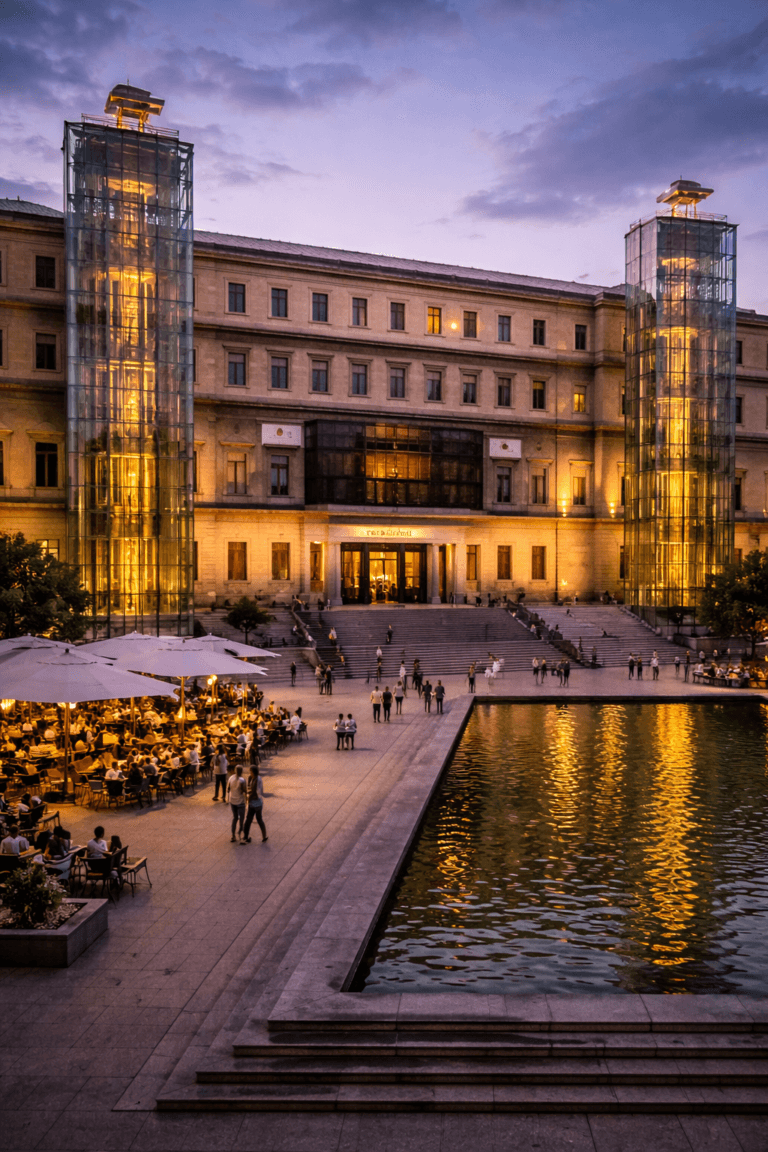
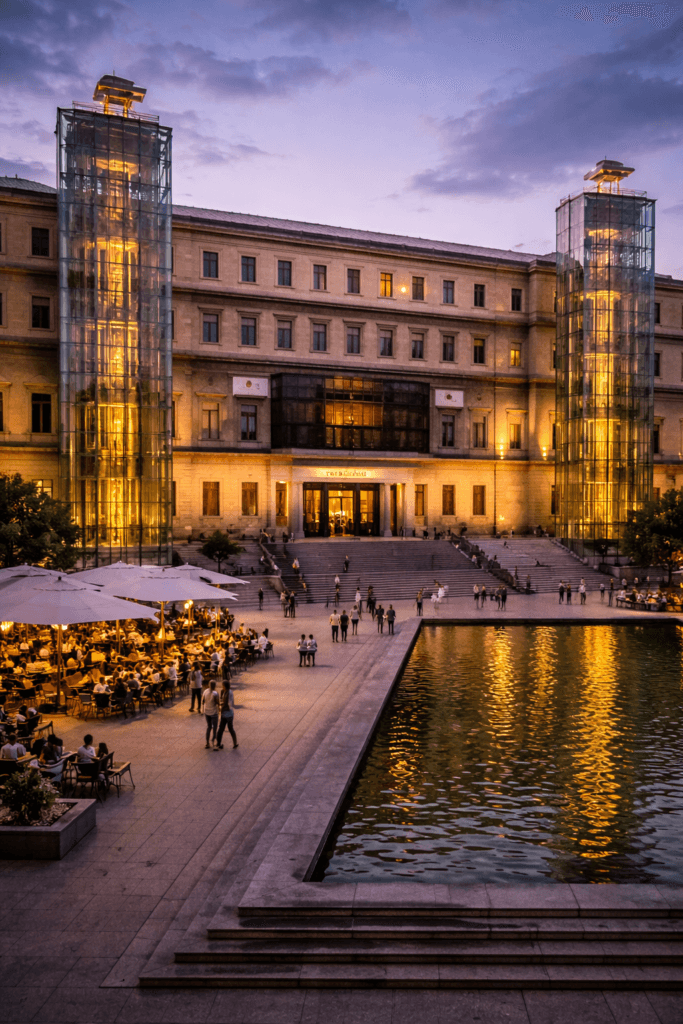
The museum’s building contributes strongly to the experience. Housed in a former hospital complex, Reina Sofía combines historical architecture with later interventions in a way that suits the collection’s modern identity. The building does not feel like a traditional palace museum, nor does it rely on a single sleek contemporary statement. Instead, it has a layered character that reflects the museum’s own subject matter: continuity, rupture, adaptation, and re-use.
The external glass elevators are one of the building’s most recognisable features, and they are also practically useful. The museum can feel larger than it appears from outside, and vertical movement becomes an important part of navigating the visit. These elevators contribute to the public image of the museum while also helping visitors orient themselves. In a collection spread across multiple levels and sections, that clarity matters.
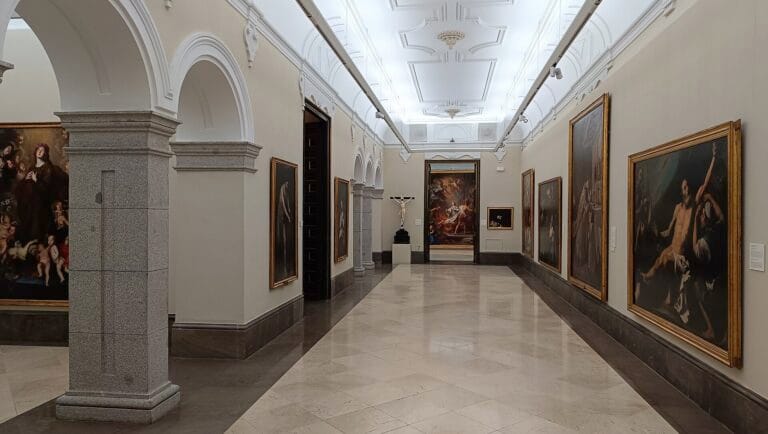
Inside, the museum balances more austere gallery spaces with the architectural memory of the older building. The result is a setting that feels serious and flexible rather than overly decorative. This suits the collection. Reina Sofía is not a museum that depends on opulent interiors or historical grandeur. Its architecture provides enough presence to support the institution without diluting the modern and often politically charged force of the works.
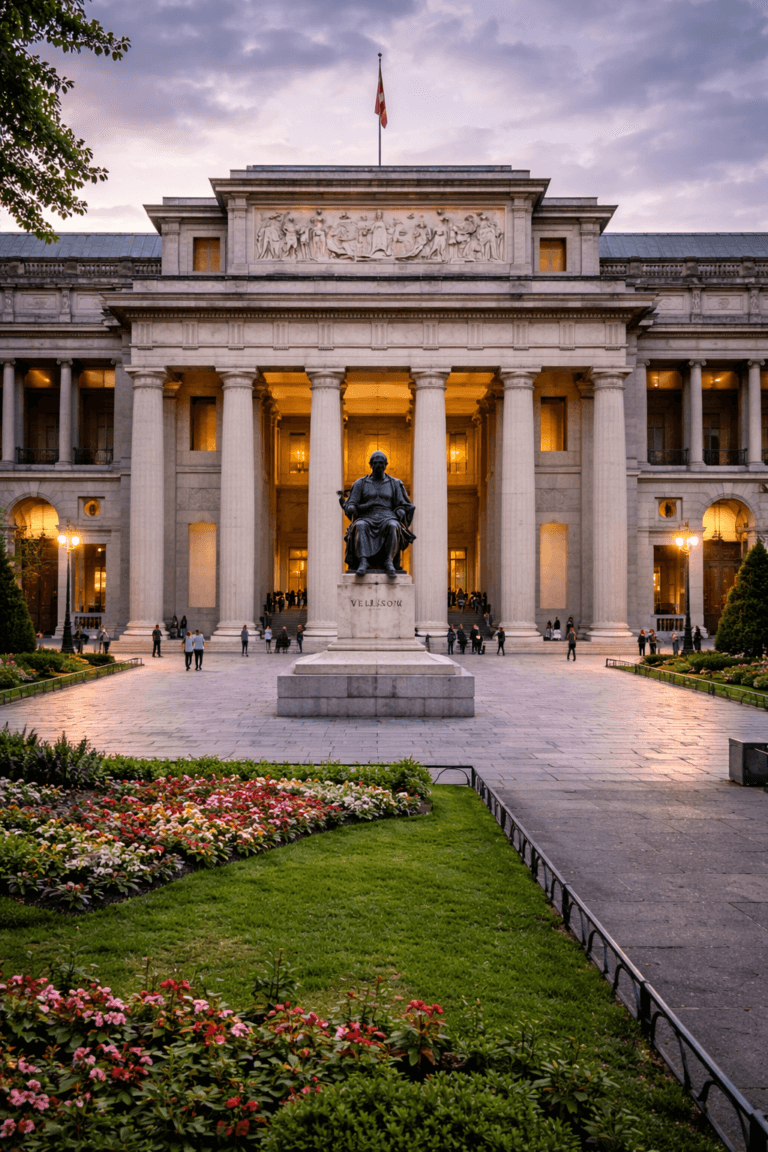
Its location in Madrid also adds to the museum’s significance. Reina Sofía forms part of the city’s broader museum and cultural landscape, but it stands apart from the Prado in a way that is intellectually productive. Together, the two museums can feel like different chapters of European visual history. The Prado looks toward older traditions of painting and royal patronage; Reina Sofía turns toward fragmentation, war, experiment, and the pressures of modern life. That contrast strengthens both institutions.
Practical Information
A practical and effective strategy is to go straight to *Guernica* first, especially if it is your main priority, and then explore outward into the surrounding galleries and the museum’s broader surrealist and modernist sections. This helps ensure that the central work is seen with fresh energy before fatigue sets in. After that, the museum rewards visitors who choose one or two areas to explore more deeply rather than trying to force an equal level of attention across every floor.
The museum is bigger than it can initially seem, so pacing matters. Elevators are useful, and there is no reason to treat them as a shortcut or compromise. In a museum like this, energy is often better spent looking than walking unnecessarily. Breaks are also worthwhile. Reina Sofía can be intellectually demanding in a different way from a classical painting museum, and pauses help the visit stay sharp.
This is a place to absorb rather than rush. Even though modern art sometimes invites quicker judgment, the museum improves when visitors allow unfamiliar works or quieter sections more time than they might first seem to deserve.
Why Visit
Museo Reina Sofía is best for modern art lovers, first-time visitors to Madrid building a serious cultural itinerary, and anyone interested in the relationship between art, politics, and twentieth-century history. Its greatest strength is that it offers not only one defining masterpiece in *Guernica*, but a broader and more complex account of Spanish modernism and its wider European context.
What makes it worth prioritising is the museum’s combination of historical seriousness, artistic range, and emotional intensity. Reina Sofía does not present modern art as a sequence of fashionable styles detached from lived reality. It presents modern art as something shaped by crisis, imagination, ideology, and experiment. For visitors willing to approach it with time and concentration, it is one of the strongest museum experiences in Madrid and one of the most important modern art museums in Europe.