Estonian Maritime Museum Review
Intro The Estonian Maritime Museum in Tallinn is one of the most effective places in the Baltic region for understanding how maritime history intersects.
Intro The Estonian Maritime Museum in Tallinn is one of the most effective places in the Baltic region for understanding how maritime history intersects.
Best forMasterpieces, architecture, cultural history
Review focusCollection highlights, building, visitor flow
Intro
The Estonian Maritime Museum in Tallinn is one of the most effective places in the Baltic region for understanding how maritime history intersects with national history, urban development, technology, and everyday work. It succeeds because it does not treat the sea as a background setting. Instead, the museum presents the maritime world as a structure that shaped Estonia’s connections, risks, and opportunities over many centuries. For a country whose geography, trade, and strategic position were all profoundly influenced by the Baltic, this is the correct approach.
What distinguishes the museum is its effort to connect technical objects with broader human and historical questions. Ships, instruments, and naval material are present, but they are used to explain labor, navigation, commerce, defense, and movement. This makes the museum rewarding both for dedicated maritime readers and for visitors who simply want a sharper understanding of Tallinn and Estonia.
How the Site Works
The museum is structured in a way that balances spectacle and interpretation. Large maritime objects and visually striking displays establish immediate interest, but the galleries also provide a coherent route through themes such as navigation, shipping, coastal life, maritime trade, and naval development. This sequencing matters because maritime museums can easily become collections of attractive but disconnected objects. Here, the displays are generally arranged so that vessels, tools, and documents belong to broader historical narratives.
Orientation through the museum is usually straightforward. The subject naturally moves between scales, from individual sailors and instruments to ports, trade systems, and international conflict, and the museum handles those transitions with reasonable clarity. Readers can move from the practical realities of life at sea to the wider political significance of control over Baltic routes. The result is a site that works for multiple levels of prior knowledge.
The museum also makes good use of contrast. Technical displays are followed by more social or documentary sections, preventing fatigue and helping the visit retain momentum. That alternation is a practical strength because maritime collections can become repetitive when too many models or mechanical devices are presented without interpretive variation.
Exhibitions and Collection
The collection is broad enough to support a genuine account of Estonian maritime history rather than a decorative survey of ships. Models, navigational instruments, communications equipment, diving-related material, uniforms, and port artifacts all contribute to the display. These objects are useful not simply because they are rare or visually appealing, but because they demonstrate systems of movement and control. A chart, a signal device, or a navigational instrument can reveal as much about maritime life as a large vessel if it is properly interpreted, and the museum generally understands that.
Particularly effective are the displays that connect shipping and naval material to Baltic trade and coastal work. The museum does not isolate maritime life from the shore. Fishing communities, harbor infrastructure, and the rhythms of commercial exchange are used to explain why ships mattered and who depended on them. This gives the museum social range and stops the subject from collapsing into military or technical history alone.
Twentieth-century material is also important. Estonia’s maritime world was affected by war, occupation, changing regimes, and shifting infrastructures, and the museum’s treatment of these themes gives the collection historical depth. It is not simply a celebration of seafaring; it is also a record of vulnerability, adaptation, and continuity in a region repeatedly shaped by larger powers. That complexity strengthens the museum and gives it more substance than many maritime institutions built primarily around nostalgia.
Architecture / Space
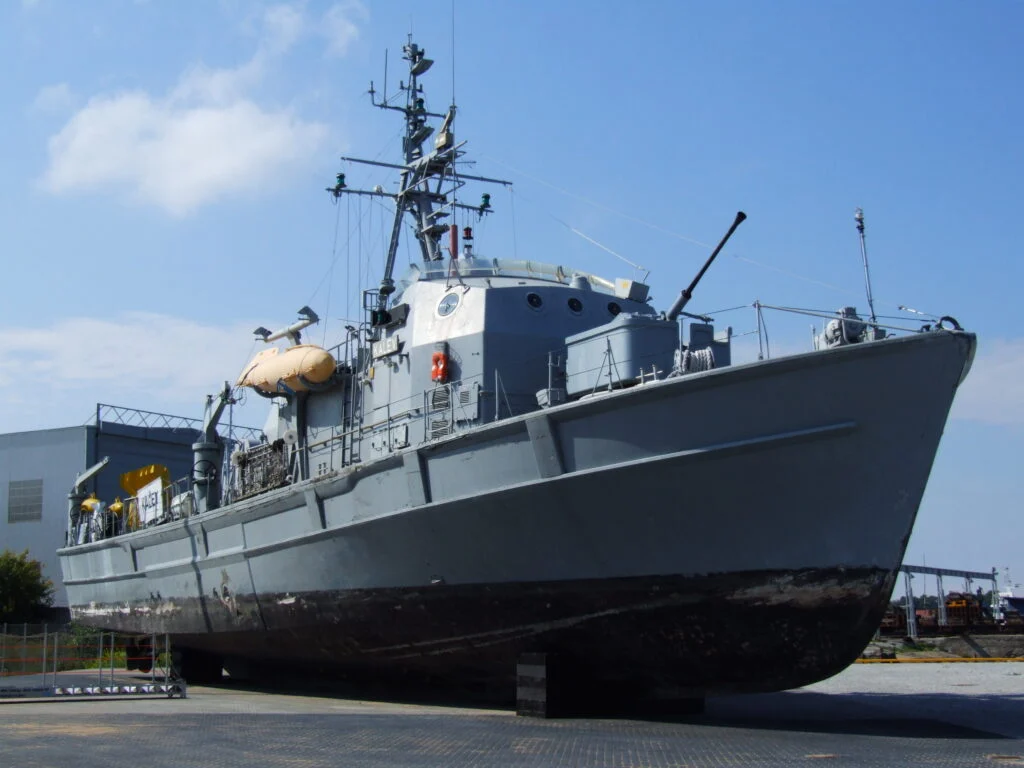
The museum benefits from being situated within Tallinn’s maritime environment. The wider setting already carries evidence of fortification, trade, and waterfront activity, and the museum builds on that context effectively. Display spaces associated with ship- and port-related material are naturally advantageous because they allow larger objects to be shown without forcing them into inappropriate gallery conditions. The architecture supports scale, and scale matters in maritime history.
Inside, the museum tends to work best when it uses space to reinforce function. Large objects are given enough room to communicate physical reality rather than appearing as compressed exhibits. Smaller tools and documents are grouped in ways that support explanation and comparison. The overall impression is practical rather than theatrical, which suits the subject. Maritime history often becomes overly sentimental in museum settings, but here the use of space usually keeps the tone disciplined.
The connection to Tallinn itself is a substantial advantage. After leaving the museum, visitors can still read the city through what they have learned inside. The old town, port areas, and wider coastal setting all extend the exhibition beyond the building. That continuity between museum and place adds value to the visit.
Visitor Experience
The visitor experience is strong because the museum accommodates different kinds of interest without losing coherence. A family or casual traveler can engage with the large-scale displays and the visual appeal of maritime objects. A more focused reader can study the technical and historical interpretation in greater detail. This balance is not always easy to achieve in specialized museums, yet it is important if the institution is to function both as a public museum and as a serious historical site.
Pacing is generally good. The museum avoids the monotony that sometimes affects technical collections by moving between vessels, instruments, narratives of work, and themes of conflict or trade. This means the visit can sustain concentration over a useful length of time. It also helps that maritime material has inherent variety, from mechanical design to weather, commerce, and social life. When interpreted carefully, as it is here, that variety becomes one of the museum’s principal strengths.
Another positive feature is that the museum rarely assumes that maritime history speaks for itself. It explains why routes mattered, how technologies changed, and what coastal life required. That interpretive effort makes the museum more than a place of preserved objects. It becomes a readable account of a society formed by the sea.
Historical Context
Estonia’s maritime history cannot be separated from the Baltic as a zone of exchange, rivalry, and strategic exposure. Tallinn’s links to Hanseatic commerce, regional shipping, naval pressure, and later political transformations all depended on the sea. The museum helps visitors understand that maritime history here is not an optional branch of national history. It is one of its foundations.
This context is especially important because maritime museums can sometimes present ships as timeless symbols rather than historical tools embedded in change. The Estonian Maritime Museum is stronger when it shows the sea as a field of labor, risk, administration, and geopolitics. Fishing, merchant movement, fortification, and naval preparedness are all connected to broader developments in state formation and economic life. That makes the institution useful even for visitors who do not usually seek out naval or maritime subjects.
The museum also benefits from regional perspective. The Baltic is not interpreted here as a marginal sea but as a major corridor linking northern Europe. Estonia’s maritime history is shown as part of that wider world. This gives the museum a wider historical horizon and prevents it from becoming narrowly local.
Practical Information
The museum is located in Tallinn and can be fitted into most city itineraries without difficulty. Visitors should check current operating hours, admission information, and any special exhibition arrangements before arrival. Depending on the pace of reading and interest in technical material, a visit may take from ninety minutes to several hours. The museum works especially well when combined with time around Tallinn’s harbor, old town, and coastal viewpoints, since the city itself reinforces many of the themes introduced inside.
Because maritime collections often reward slower looking, it is worth allowing enough time to move beyond the most obvious displays. Readers primarily interested in Baltic history should not treat this as a secondary attraction. It can provide some of the clearest context for understanding Tallinn.
Final Verdict
The Estonian Maritime Museum is a strong museum because it uses maritime history to explain a country rather than using a country merely to decorate maritime objects. It is informative, visually effective, and historically grounded. Its best sections connect technology and vessels to labor, trade, defense, and coastal society, and that broader frame gives the institution real substance.
For readers interested in the Baltic, Tallinn, naval history, commerce, or the social history of seafaring, it is one of the most worthwhile museum visits in Estonia. Even visitors without a specialized maritime background will find that it sharpens their understanding of why the city and region developed as they did.
Plan your visit
Allow at least two hours if you want more than a surface-level visit. The museum works best as part of a wider day exploring Tallinn’s old town and waterfront, since the city outside provides direct historical context for the displays. Visitors with a strong interest in maritime technology or Baltic trade should allow longer, especially if they want to study the smaller interpretive sections rather than only the most visible objects. A deliberate pace improves the visit considerably.