Winter War Museum Finland Review
War History · Finland A Museum of Cold, Pressure, and National Endurance The Winter War Museum in Finland offers one of the more distinctive war-history.
War History · Finland A Museum of Cold, Pressure, and National Endurance The Winter War Museum in Finland offers one of the more distinctive war-history.
Best forScience, technology, hands-on learning
Review focusExhibits, interpretation, visitor flow
War History · Finland
A Museum of Cold, Pressure, and National Endurance
The Winter War Museum in Finland offers one of the more distinctive war-history experiences in Europe because the conflict it interprets cannot be understood through military hardware alone. The Winter War is remembered not only for strategy and battlefield movement, but for climate, improvisation, psychological strain, and national resolve under extreme pressure. A strong museum on this subject must therefore do more than display weapons and dates. It must show how war changes when cold becomes an active force and when a small country’s defense becomes central to its historical memory. This museum succeeds because it understands that clearly.
From the outset, the institution feels more focused and morally concentrated than a broad military collection. It is not trying to overwhelm visitors with endless rows of machinery. Instead, it creates depth through carefully chosen objects, documentary material, maps, uniforms, winter equipment, photographs, and personal testimony. The result is a museum that often feels larger in memory than in physical scale.
Architecture & Spatial Experience
The museum’s spatial character suits its subject. Rather than relying on monumental halls, it works through concentration. Displays are close enough to encourage reading and comparison, and the movement through the galleries tends to feel chronological and purposeful. This helps because the Winter War is a conflict that depends on context. Visitors need to understand the pressures surrounding the war, the imbalance of forces, the tactical use of terrain, and the reality of life in freezing conditions.
That kind of understanding is better served by a measured layout than by spectacle. The museum’s atmosphere is serious and reflective. It encourages visitors to move carefully, taking in not only military developments but also the emotional and social consequences of the conflict. The physical structure of the museum supports this by keeping attention close to the evidence.
The Collection: Warfare Under Extreme Conditions
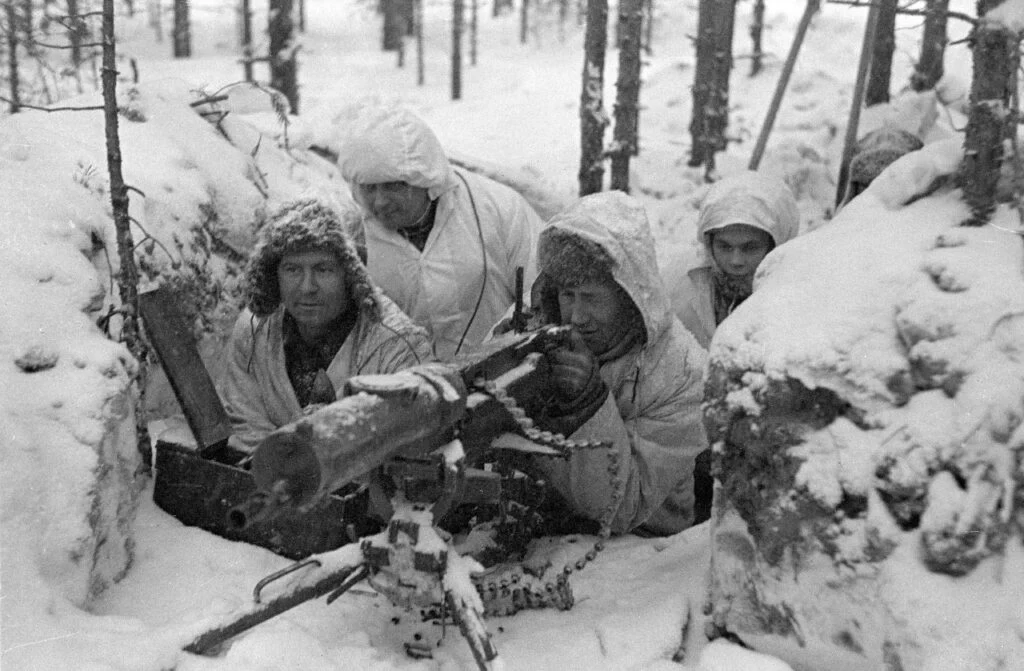
The museum’s strongest contribution lies in how it frames winter as a historical actor rather than a background setting. Clothing, camouflage, field equipment, supply material, and environmental context all reveal that the Winter War was shaped by more than weapons and command decisions. Cold affected mobility, visibility, endurance, morale, and survival itself. By making that clear, the museum distinguishes itself from more generic military institutions.
Maps and operational displays help explain the strategic side of the war, but they are most effective when balanced with personal material. Letters, photographs, testimony, and everyday objects bring the conflict down to human scale. This is crucial because the Winter War occupies such a strong symbolic place in Finnish memory that it can easily harden into myth. The museum avoids that trap when it emphasizes hardship, loss, fear, and uncertainty alongside courage and adaptation.
The equipment displays are also valuable because they show how military effectiveness often depended on practical improvisation. In a conflict so shaped by climate, the relationship between human bodies and material survival becomes especially visible. Uniforms, skis, field gear, and transport solutions do not feel secondary here. They are central to the story.
National Memory and Historical Tone
One of the most difficult tasks for a museum of this kind is balancing national pride with historical seriousness. The Winter War has an obvious place in Finnish identity, and any museum devoted to it has to navigate that legacy carefully. What makes this museum strong is that it presents endurance and resistance without turning them into empty patriotic theater. The tone remains grounded in evidence and consequence.
This matters because visitors need to understand both the symbolic and the material dimensions of the war. The museum succeeds when it shows how the conflict shaped Finnish memory while still preserving the full cost of what that memory contains. Commemoration here is tied to hardship, not celebration. That gives the institution credibility and emotional weight.
Visitor Experience & Rhythm
The Winter War Museum rewards slower visitors. It is not particularly effective as a quick photo stop or checklist museum. Much of its power comes from patient reading and reflection. A short visit can still be meaningful because the institution is focused, but visitors who linger with the personal and documentary material will leave with a much fuller sense of the conflict.
The museum is also approachable for visitors who may not arrive with detailed knowledge of Finnish wartime history. Because the subject is defined so strongly by environment, human endurance, and national context, the museum can build understanding quite effectively from the ground up. More experienced visitors, meanwhile, will appreciate the way equipment, terrain, and operational detail are integrated into the broader historical narrative.
The atmosphere is generally quiet and serious, which suits the subject. Even when not physically large, the museum carries emotional density. Visitors tend to move more carefully, speak more softly, and spend longer with individual displays than they might in broader war museums.
Who Will Appreciate It Most
The Winter War Museum is ideal for:
• Visitors interested in twentieth-century European military history
• Travelers who want to understand Finnish national memory through one defining conflict
• Visitors who appreciate focused museums built on documents, context, and human experience
• Anyone interested in how terrain and climate shape warfare
Visitors looking mainly for large-scale vehicle displays or expansive general military collections may find it narrower than expected. But for those willing to engage with the subject on its own terms, the museum is highly rewarding.
Practical Considerations
A visit of one to two hours is usually enough for a strong overview, though the museum benefits from slower attention. It works especially well as part of a broader Finnish history itinerary because it provides a key lens on the country’s twentieth-century identity and geopolitical memory.
Final Verdict
The Winter War Museum succeeds because it does not reduce conflict to machinery or myth. It presents war as pressure—physical, emotional, political, and climatic—and in doing so it gives visitors a fuller understanding of what the Winter War meant for Finland and why it still matters.
Handled thoughtfully, the visit becomes more than a lesson in wartime chronology. It becomes an encounter with endurance, vulnerability, adaptation, and the long afterlife of conflict in national memory.
It is a museum built on cold history and human resilience.