Museum of Islamic Art (Doha) Review
Historical Context
The Museum of Islamic Art in Doha represents a significant cultural investment in preserving and presenting the artistic achievements of the Islamic world. Opened in 2008, the museum was established as part of Qatar’s broader effort to position itself as a global cultural hub. Its creation reflects a recognition of the importance of Islamic art as a diverse and historically rich tradition that spans continents, centuries, and cultures.
The collection itself draws from regions across the Middle East, North Africa, Central Asia, and beyond, covering a period of more than 1,400 years. This wide scope is essential to understanding Islamic art, which is not confined to a single style or geography, but is instead defined by shared cultural and religious influences expressed through local variations.
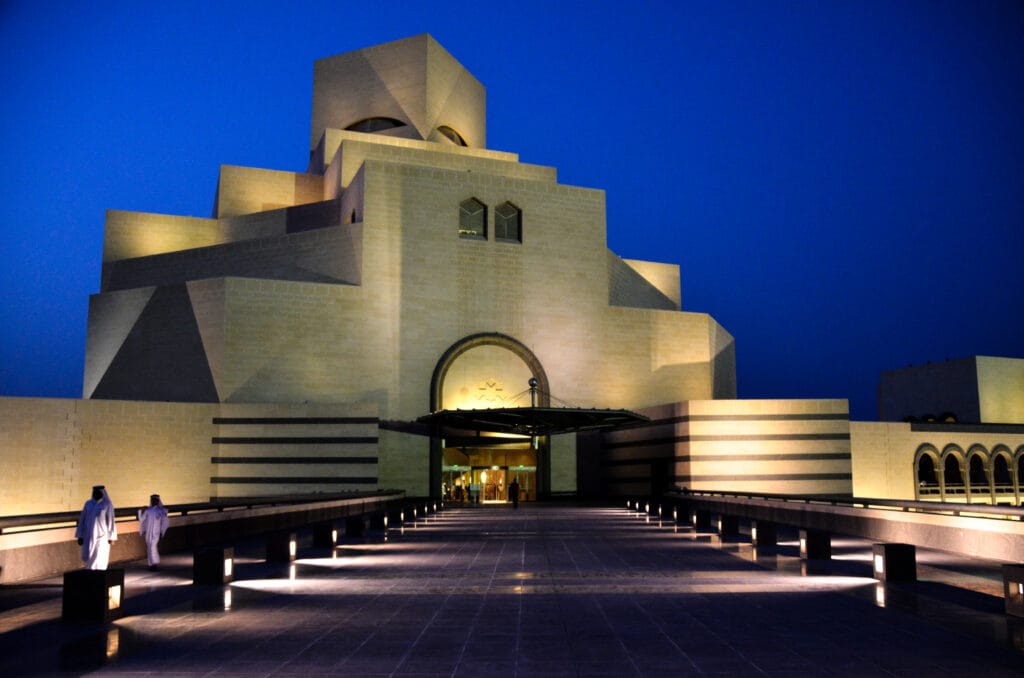
The building, designed by architect I. M. Pei, adds another layer of meaning. Inspired by traditional Islamic architecture, yet interpreted through a modern lens, the structure reflects the museum’s mission to bridge past and present. Located on an artificial island, it stands slightly apart from the city, reinforcing its role as a dedicated space for reflection and cultural engagement.
What You See on Arrival
Arrival at the Museum of Islamic Art is carefully staged. As visitors approach, the building rises from the water with a strong geometric presence. Its pale stone surfaces and clean lines create a sense of calm and order, contrasting with the surrounding urban environment. The approach itself feels deliberate, guiding visitors from the city into a more focused cultural space.
The entrance sequence emphasizes scale and symmetry. Large open areas lead into the interior, where the architecture becomes more intricate. Light plays a central role, filtering through windows and openings to create shifting patterns that echo traditional Islamic design principles.
Inside, the first impression is one of balance and clarity. The central atrium rises vertically, drawing the eye upward and establishing a sense of structure. From here, galleries extend outward in a logical arrangement, making navigation intuitive despite the building’s complexity.
The mood is composed and contemplative. Unlike more crowded museums, the space feels controlled and measured. The architecture encourages visitors to slow down, creating an environment where both the building and the objects within it can be appreciated fully.
Highlights and Key Exhibitions
The museum’s collection is one of its strongest features, offering a comprehensive overview of Islamic art across different periods and regions. Rather than focusing on a single type of object, it includes ceramics, textiles, manuscripts, metalwork, and glass, among other materials. This diversity reflects the richness of Islamic artistic traditions.
Calligraphy and manuscript art are particularly significant. These works highlight the importance of written language within Islamic culture, where script is often elevated to an art form. The precision and beauty of these pieces demonstrate both technical skill and cultural meaning.
Ceramics and decorative arts provide another key area of interest. These objects often combine functionality with intricate design, showing how artistic expression was integrated into everyday life. Patterns, colors, and forms vary across regions, illustrating the wide geographical spread of Islamic culture.
Metalwork and jewelry add further depth, showcasing craftsmanship and attention to detail. These pieces often reveal connections between different cultures, as techniques and styles moved across trade routes and historical networks.
The exhibitions are organized in a way that balances chronological and thematic approaches. This allows visitors to understand both the development of styles over time and the relationships between different types of objects. Temporary exhibitions occasionally introduce new perspectives, adding variety and keeping the museum’s program dynamic.
Visitor Experience
The visitor experience at the Museum of Islamic Art is shaped by its architecture and layout. The building’s design creates a natural flow, guiding visitors through the galleries without imposing a rigid route. This balance between structure and freedom allows for both orientation and exploration.
Pacing is generally comfortable, as the galleries are spacious and well organized. Visitors can move at their own speed, taking time to engage with specific objects or moving more quickly through sections of less interest. The museum’s scale is substantial, but not overwhelming.
Signage is clear and informative, providing context without dominating the visual experience. This supports both casual visitors and those seeking deeper understanding. The information complements the objects, helping to explain their significance without reducing their visual impact.
Crowds are usually manageable, particularly compared to major international museums. The spacious design helps distribute visitors, preventing congestion in most areas. This contributes to a calm and focused atmosphere.
The overall tone is one of quiet engagement. The museum does not rely on spectacle, but on the quality of its collection and the strength of its presentation. This makes it particularly rewarding for visitors interested in art, history, and cultural context.
Tickets, Access, and Planning
Planning a visit to the Museum of Islamic Art is relatively straightforward. Its location on a dedicated site makes it easy to identify and access, whether by car or public transport. Visitors should check opening hours and any temporary closures in advance, as schedules may vary.
The museum’s layout does not require a strict plan, but given the breadth of the collection, it is helpful to allocate sufficient time. A rushed visit may not fully capture the depth of the material on display. Taking time to explore multiple sections enhances the overall experience.
Comfort is supported by the building’s design, which includes areas for rest and reflection. The environment encourages a measured pace, allowing visitors to absorb both the architecture and the collection.
The museum can also be combined with other nearby cultural sites, making it part of a broader cultural itinerary in Doha.
Final Verdict
The Museum of Islamic Art in Doha is a landmark institution that successfully combines architectural vision with a strong and diverse collection. It offers a comprehensive introduction to Islamic art while maintaining a clear and accessible presentation.
Who should visit? The museum is ideal for visitors interested in art, history, and cultural heritage, as well as those seeking a deeper understanding of the Islamic world’s artistic traditions.
Why visit? Because the museum provides both a visual and intellectual experience that is grounded in quality and clarity. Its combination of architecture, collection, and atmosphere makes it one of the most important cultural destinations in the region, offering a visit that is both informative and memorable.