National Museum of Qatar Review
Some museums impress you the moment you arrive. Others earn it slowly, room by room, as the curatorial choices start to make sense. National Museum of.
Some museums impress you the moment you arrive. Others earn it slowly, room by room, as the curatorial choices start to make sense. National Museum of.
Best forMasterpieces, architecture, cultural history
Review focusCollection highlights, building, visitor flow
Historical Context
The National Museum of Qatar presents a narrative that is closely tied to the rapid transformation of the country itself. While Qatar has a long history rooted in desert life, trade, and maritime activity, its modern identity has been shaped significantly over the last century. The discovery of oil in the mid-twentieth century initiated a period of economic and social change that continues to define the nation today.
Before this transformation, Qatari life was structured around pearl diving, fishing, and nomadic traditions. Communities were small, and survival depended on deep knowledge of the desert and sea. The museum reflects this earlier period through objects, stories, and reconstructions that emphasize resilience and adaptation in a harsh environment.
The museum is also built around the restored palace of Sheikh Abdullah bin Jassim Al Thani, an important figure in Qatar’s early state formation. This historical structure anchors the museum’s narrative, linking the past directly to the present.
Opened in 2019, the National Museum of Qatar represents a modern approach to storytelling. It combines historical artifacts with immersive multimedia installations, presenting history as a continuous and evolving experience rather than a static display.
What You See on Arrival
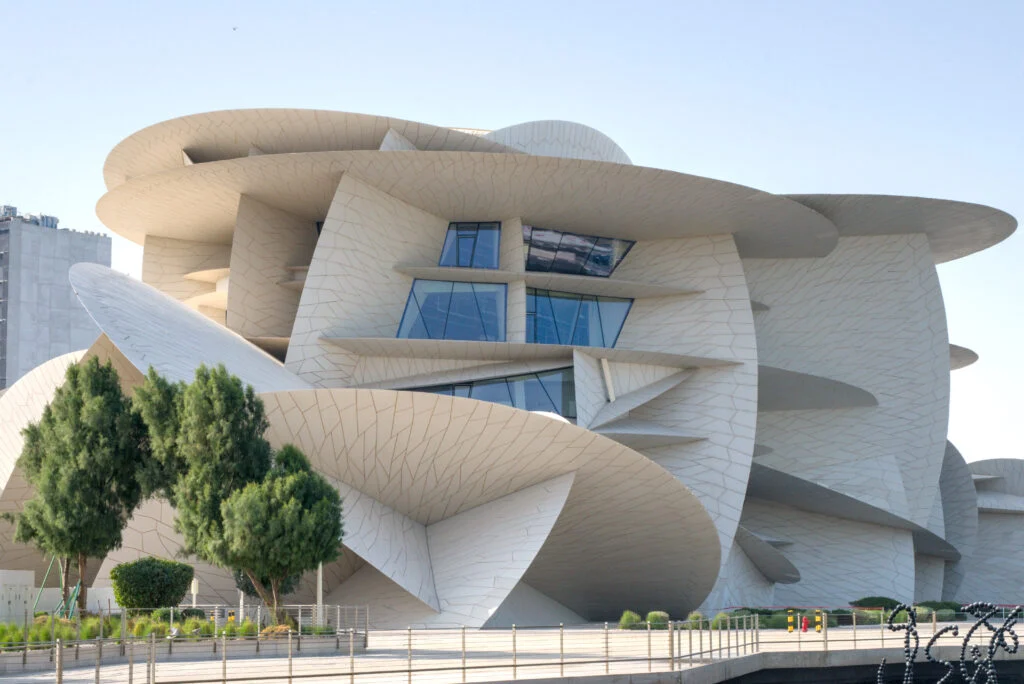
Arrival at the National Museum of Qatar is defined by its striking architecture. Designed to resemble the natural formation of a desert rose, the building immediately sets a tone that is both symbolic and contemporary. Its interlocking discs create a sense of movement and complexity, making the exterior itself a key part of the experience.
As visitors approach the entrance, the scale of the structure becomes more apparent. The building stretches across a large area, creating a transition from the outside world into a carefully curated environment. The surrounding landscape, with its open spaces and desert-inspired design, reinforces the connection between architecture and place.
Inside, the museum unfolds as a sequence of interconnected galleries arranged in a loop. The layout encourages a continuous journey rather than isolated visits to individual rooms. Lighting is carefully controlled, often shifting to match the themes of each section, guiding visitors through different moods and historical periods.
The first impression is immersive. Sound, projection, and spatial design work together to create an environment that engages multiple senses. Rather than focusing immediately on individual objects, the museum introduces visitors to broader themes, setting the stage for a deeper exploration.
Highlights and Key Exhibitions
The strength of the National Museum of Qatar lies in its ability to combine traditional artifacts with immersive storytelling. One of the most impactful sections focuses on Qatar’s natural environment, using large-scale projections and soundscapes to recreate the desert and the sea. These installations provide context for understanding how geography has shaped daily life.
Historical galleries explore the era of pearl diving, which was once the backbone of the Qatari economy. Displays include tools, photographs, and narratives that illustrate the risks and rewards of this industry. The personal stories associated with these objects add depth to the historical narrative.
The transition to the oil era is presented through a combination of archival material and multimedia. This section highlights the rapid changes that followed the discovery of natural resources, showing how infrastructure, urban development, and social structures evolved.
Another key highlight is the integration of the restored palace within the museum complex. Walking through this space offers a more traditional museum experience, contrasting with the surrounding contemporary galleries. It provides a tangible link to the country’s leadership and early governance.
Temporary exhibitions and cultural displays further expand the museum’s scope, often focusing on contemporary art, design, and global connections. These additions ensure that the museum remains dynamic and relevant.
Visitor Experience
The visitor experience at the National Museum of Qatar is highly immersive and carefully structured. The looped layout creates a clear narrative path, allowing visitors to move through the story without needing to decide on a route. This design supports a seamless progression from one theme to the next.
Pacing is generally well managed, with variations in gallery size and intensity providing natural breaks. Some sections are visually and emotionally intense, while others are quieter and more reflective. This balance helps maintain engagement over the course of a longer visit.
Signage is integrated into the design, often appearing alongside multimedia elements. Information is presented in a way that complements the visual experience, rather than interrupting it. This approach makes the museum accessible to a wide audience.
Crowds can vary depending on the time of day, but the scale of the building helps distribute visitors across different areas. The spacious galleries reduce congestion, allowing for a more comfortable experience even during busy periods.
Overall, the atmosphere is one of immersion and discovery. The museum encourages visitors to engage with the material on multiple levels, combining education with sensory experience.
Tickets, Access, and Planning
Planning a visit to the National Museum of Qatar is relatively straightforward, but the scale of the museum means that time management is important. Visitors should allow several hours to fully experience the galleries.
The museum is located in Doha and is easily accessible by car and public transport. Its prominent location makes it a key destination within the city. Facilities are modern and well integrated, supporting both short visits and extended stays.
Tickets can be purchased in advance or on arrival, depending on availability. Checking current information before visiting is recommended, as exhibitions and opening hours may vary.
Inside the museum, the looped layout simplifies navigation, but visitors may still benefit from reviewing the overall structure at the beginning of their visit. This can help in identifying areas of particular interest.
Amenities such as rest areas and cafés provide opportunities to pause during the visit, which can enhance the overall experience.
Final Verdict
The National Museum of Qatar is a powerful example of how museums can combine history, architecture, and technology to create a cohesive narrative. It offers more than a traditional display of objects, presenting instead an immersive exploration of a nation’s identity.
Who should visit? The museum is ideal for visitors interested in cultural history, architecture, and contemporary museum design. It is particularly suited to those who appreciate immersive and multimedia experiences.
Why visit? Because the National Museum of Qatar provides a comprehensive and engaging introduction to the country’s past, present, and future. Its combination of storytelling, design, and content makes it one of the most distinctive museum experiences in the region.