Museum aan de Stroom
Overview
Museum aan de Stroom, usually known as MAS, is one of Antwerp’s most distinctive museums and one of the clearest places to understand the city as a port shaped by trade, migration, power, collecting, and global exchange. Rather than functioning as a narrow specialist museum, it brings together many strands of history and culture in order to explain how Antwerp became what it is. That broad civic ambition is one of its greatest strengths. A visit here is not simply about seeing objects. It is about understanding a city through the people, goods, ideas, and histories that moved through it.
What makes MAS especially compelling is the way it treats Antwerp as both a local place and an international crossroads. The museum does not present the city in isolation. Instead, it shows how Antwerp has always been connected to wider worlds through shipping, commerce, colonial entanglements, art, and migration. This gives the museum a wider intellectual horizon than many city museums. Visitors are not only learning about Antwerp itself, but about the networks that shaped it and the global histories in which it participated.
The museum is also especially effective because it feels public in the broadest sense. It is not a hidden scholarly institution for specialists alone. It is a place that welcomes general visitors into large questions about identity, memory, and the movement of culture. That means it works well for several audiences at once: travelers wanting a strong introduction to Antwerp, museum visitors interested in urban history, and people drawn by architecture and public views over the city.
For visitors, MAS often becomes one of the most memorable stops in Antwerp because it combines idea, object, and setting so well. The museum gives context to the docks, the old city, the river, and the city’s long commercial identity. After a visit, Antwerp usually feels easier to read. Streets, warehouses, port infrastructure, and cultural diversity all seem to belong to a clearer story.
Collection Highlights
One of the strongest aspects of MAS is the range of subjects it covers. A museum about a port city must be able to move between local life and global exchange, and MAS does this especially well. Collections and displays linked to shipping, trade, migration, faith, urban culture, and world connections help make Antwerp’s history feel broad rather than provincial. This is important because Antwerp’s past has never been only local. It has been shaped by movement, and the museum reflects that.
The museum is particularly effective when it brings together objects that show how goods and ideas circulated. Items linked to trade, craft, travel, collecting, and daily life become more meaningful here because they are presented as part of a larger urban and global system. Instead of being isolated artifacts, they become evidence of how a city built on exchange developed its identity over time.
Another major strength lies in the way MAS treats cultural diversity and human movement. Port cities are shaped by arrivals as much as departures, and the museum is at its best when it reflects that. Stories of migration, adaptation, and urban change help prevent the museum from becoming only a triumphal story of wealth and commerce. They make the city’s history feel more human, more complicated, and more contemporary.
The museum also benefits from the balance between historical material and thematic storytelling. This gives the visit rhythm. Visitors are not only moving through a sequence of dates, but through larger ideas about city life, world trade, identity, and power. That approach makes MAS feel modern in the best sense: not because it ignores history, but because it knows how to organize history around meaningful questions.
Building and Setting
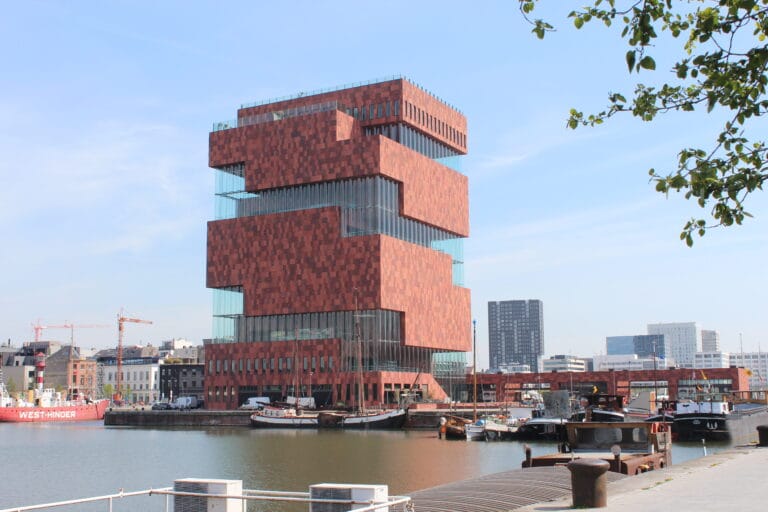
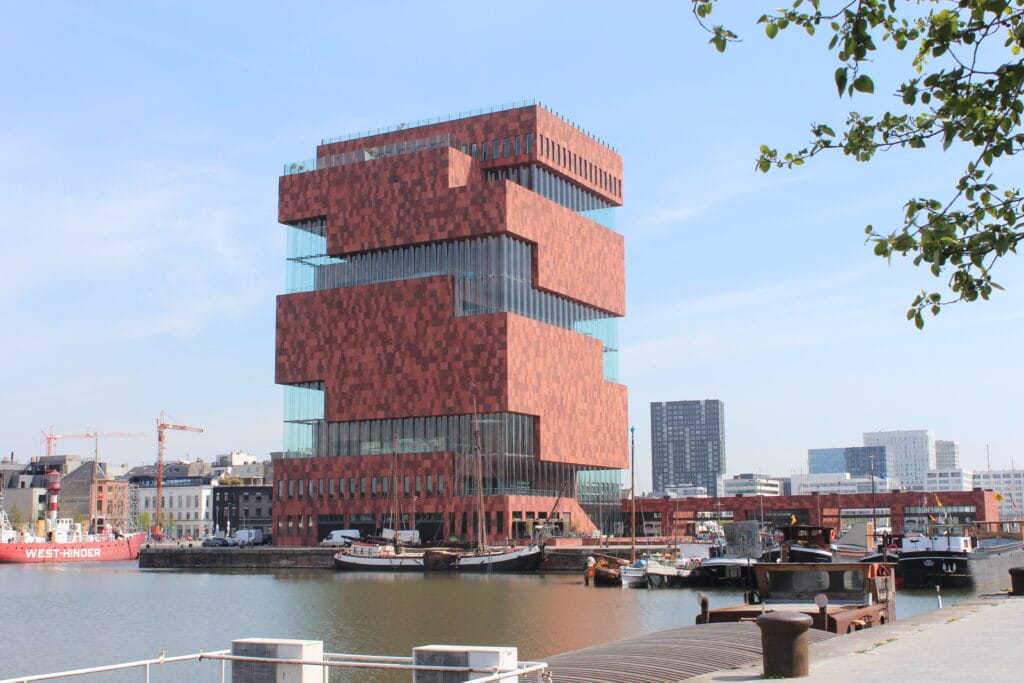
The building is one of MAS’s greatest attractions. It is one of the most recognizable pieces of contemporary architecture in Antwerp, and its strong physical presence helps define the experience from the beginning. A museum about a port city needs a building with public visibility, and MAS has exactly that. It does not disappear into the urban background. It announces itself clearly and turns the museum into part of the city’s visual identity.
Its location also matters enormously. Set in the old docklands area, the museum feels connected to the maritime and commercial history it interprets. This gives the visit a stronger sense of place than many museums can offer. Visitors are not only reading about Antwerp’s relationship to shipping and exchange; they are standing in a part of the city where those histories still feel physically present.
The building’s vertical organization is also part of its appeal. Moving upward through the museum creates a sense of progression, and the views across Antwerp add another dimension to the visit. This is especially valuable in a city museum, because it links exhibitions back to the real city outside. The museum does not trap its subject indoors. It continually returns visitors to Antwerp itself.
Architecturally, MAS succeeds because the building and the museum idea support one another. The structure feels civic, visible, and outward-looking, which suits a museum devoted to movement, exchange, and urban identity. That is one reason the museum tends to stay in the memory so strongly.
Practical Information
MAS is best visited with enough time to experience both the exhibitions and the building itself. This is not a museum where the displays alone tell the whole story. The architecture, circulation, and views are part of the overall experience, and rushing through would reduce much of what makes the visit distinctive.
It works especially well for travelers early in a stay in Antwerp, since it helps provide context for the city as a whole. But it is also rewarding later in a visit, when the themes of trade, migration, and urban identity may connect more directly with places already seen around the city. In either case, it is best approached as a major museum stop rather than a quick extra.
The museum also suits a wide public. Visitors interested in architecture, city history, global trade, and museum storytelling are all likely to find something substantial here. That wide appeal is one of the reasons MAS has become such an important institution for Antwerp.
Why Visit
Museum aan de Stroom is worth visiting because it offers one of the clearest ways to understand Antwerp as a city shaped by exchange. It brings together port history, migration, collecting, and urban identity in a way that feels broad, thoughtful, and visually strong. That makes it much more than a standard city museum.
It is also worth visiting because few museums combine architecture, location, and subject so effectively. The building is memorable, the setting is meaningful, and the themes are strong enough to deepen the rest of a visit to Antwerp. That combination gives MAS unusual force.
If you want one museum in Antwerp that explains the city’s local character and its global connections at the same time, Museum aan de Stroom is one of the clearest choices. It is one of the city’s most rewarding cultural visits and one of its most distinctive public buildings.