Egyptian Museum Review
Ancient Egyptian Art & Antiquities · Cairo, Egypt A Museum Suspended in Time The Egyptian Museum in Cairo does not present itself with modern polish.
Ancient Egyptian Art & Antiquities · Cairo, Egypt A Museum Suspended in Time The Egyptian Museum in Cairo does not present itself with modern polish.
Best forMasterpieces, architecture, cultural history
Review focusCollection highlights, building, visitor flow
Historical Context
The Egyptian Museum in Cairo, officially known as the Museum of Egyptian Antiquities, opened in 1902 and has long served as the central institution for the preservation and display of Egypt’s ancient heritage. Established during a period of increasing archaeological discovery, the museum was designed to house the growing number of artifacts uncovered across the country. Its foundation reflects both the global fascination with ancient Egypt and the national importance of safeguarding its cultural legacy.
The collection spans more than five millennia, covering periods from the Predynastic era through the Greco-Roman period. Many of the objects on display were recovered during major excavations in sites such as Thebes, Saqqara, and the Valley of the Kings. Over time, the museum became internationally recognized for its depth and authenticity, holding some of the most significant artifacts ever discovered. Although newer institutions have emerged in recent years, the Egyptian Museum remains a key reference point for understanding the development of ancient Egyptian civilization.
What You See on Arrival
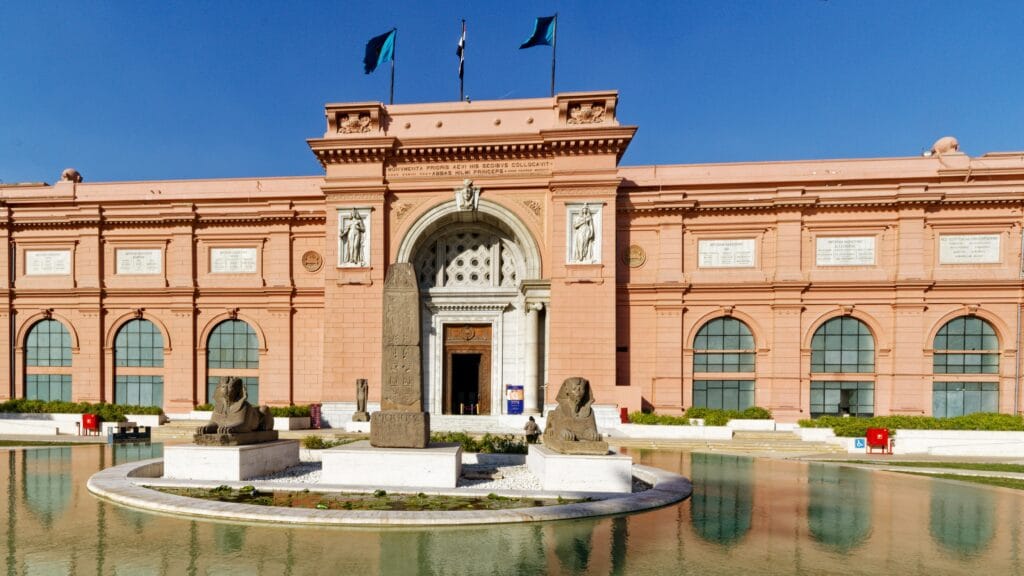
Arrival at the Egyptian Museum is defined by its distinctive pink neoclassical building, located in Tahrir Square. The structure itself immediately signals its historical importance, standing as both a landmark and an entry point into one of the world’s most influential collections. The approach is often busy, reflecting the museum’s central location and its status as a major attraction.
Inside, the first impression is one of density rather than minimalism. Unlike many modern museums, the Egyptian Museum presents its collections in a more traditional format, with closely arranged displays and large numbers of objects visible at once. This creates a strong sense of immersion, as visitors are surrounded by artifacts rather than guided through highly curated, sparse environments.
The layout can feel complex at first, with multiple floors and galleries that are not strictly linear. However, this structure also allows for exploration, encouraging visitors to move between rooms and discover different aspects of the collection at their own pace. The atmosphere is active, with a mix of guided groups and independent visitors, contributing to a lively but focused environment.
Highlights and Key Exhibitions
The Egyptian Museum is best known for its unparalleled collection of artifacts from ancient Egypt, with several sections standing out as particularly significant. Among the most famous is the Tutankhamun gallery, which contains treasures from the young pharaoh’s tomb. These objects, including the iconic gold funerary mask, provide direct insight into royal burial practices and craftsmanship at the highest level.
Another major highlight is the collection of mummies, offering a rare and direct connection to ancient individuals. The Royal Mummy Room, where accessible, presents some of Egypt’s most important rulers, including Ramses II and Seti I. These displays combine scientific interest with historical significance, illustrating both preservation techniques and the individuals behind the monuments.
The museum also features extensive collections of statues, reliefs, and everyday objects. Large stone sculptures from temples and tombs demonstrate the scale and artistic consistency of ancient Egyptian art, while smaller items such as jewelry, tools, and papyri provide insight into daily life. Together, these objects create a comprehensive picture of the civilization.
Less prominent but equally valuable sections include artifacts from lesser-known periods and regions, allowing visitors to explore the diversity of ancient Egypt beyond its most famous dynasties. This breadth is one of the museum’s defining strengths, offering both iconic highlights and deeper contextual material.
Visitor Experience
The visitor experience at the Egyptian Museum is shaped by its traditional presentation style and the sheer volume of objects on display. Unlike more contemporary museums, where interpretation is often streamlined, this museum requires a more active approach from visitors. Taking time to focus on specific sections rather than attempting to see everything is generally the most effective strategy.
Pacing can be challenging, particularly during peak hours when the galleries are crowded. However, the large number of rooms allows visitors to find quieter areas, especially if they move beyond the most popular sections. The atmosphere is energetic, reflecting both local and international interest in the collection.
Signage is present but can vary in detail, and some displays offer limited contextual information. As a result, visitors often benefit from additional preparation or guided tours. Despite this, the objects themselves remain the central focus, and their visual impact is often sufficient to engage even without extensive explanation.
Overall, the experience is less about structured storytelling and more about direct exposure to one of the world’s richest archaeological collections. This approach can feel demanding, but it also allows for a more personal and exploratory visit.
Tickets, Access, and Planning
The Egyptian Museum is centrally located in Cairo, making it accessible by various forms of transportation. Its position in Tahrir Square places it within reach of many other key sites, although the surrounding area can be busy.
Planning is important, particularly for first-time visitors. The museum’s size and density mean that a clear idea of priorities can significantly improve the visit. Allocating several hours is recommended, especially for those interested in exploring beyond the main highlights.
Visitor conditions can vary depending on the time of day and season. Early visits often provide a more manageable experience, while peak periods can result in crowded galleries. Comfortable pacing and occasional breaks are advisable, as the visual intensity of the collection can be demanding.
Final Verdict
The Egyptian Museum in Cairo remains one of the most important institutions for the study and appreciation of ancient Egypt. Its strength lies in the depth and authenticity of its collections, offering direct access to artifacts that define one of the world’s most influential civilizations.
Who should visit? This museum is essential for anyone with an interest in ancient history, archaeology, or cultural heritage. It is particularly suited to visitors who value comprehensive collections over highly curated presentation.
Why visit? Because it provides an unmatched concentration of original artifacts, including some of the most famous objects in the world. Despite its traditional layout, the museum delivers a powerful and authentic experience that continues to make it a key destination for understanding ancient Egypt.