National Museum of Egyptian Civilization Review
Archaeology Museums · Cairo, Egypt. The National Museum of Egyptian Civilization (NMEC) in Cairo represents a pivotal development in the preservation and interpretation of Egypt’s extensive historical and cultural legacy. Established to provide a comprehensive narrative of Egypt…

Archaeology Museums · Cairo, Egypt. The National Museum of Egyptian Civilization (NMEC) in Cairo represents a pivotal development in the preservation and interpretation of Egypt’s extensive historical and cultural legacy. Established to provide a comprehensive narrative of Egypt…
Best forArchitecture, royal history, heritage
Review focusArchitecture, history, visitor experience
Historical Context
The National Museum of Egyptian Civilization (NMEC) in Cairo represents a pivotal development in the preservation and interpretation of Egypt’s extensive historical and cultural legacy. Established to provide a comprehensive narrative of Egyptian civilization spanning prehistoric times to the modern day, the museum's conception reflects Egypt’s ongoing efforts to consolidate its scattered archaeological treasures into a coherent and accessible institution. This ambitious project also aligns with Egypt’s objectives to boost cultural tourism by offering a centralized experience that highlights the country’s continuous human development, rather than focusing solely on Pharaonic antiquities. The museum’s location in the Fustat area further situates it within the historical heart of Cairo, underscoring a symbolic connection to Egypt’s evolution through millennia. With national pride and scholarly rigor driving its mission, the NMEC seeks to balance archaeological grandeur with educational engagement, presenting Egypt as a living civilization with a rich and diverse heritage that transcends ancient artifacts to include Islamic, Coptic, and contemporary cultural elements.
What You See on Arrival
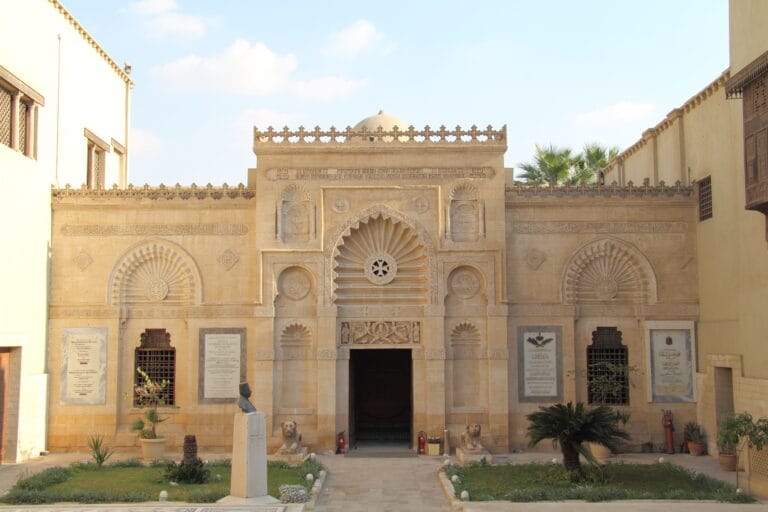
Approaching the National Museum of Egyptian Civilization, visitors are immediately struck by the museum’s imposing architectural presence. The building's contemporary design incorporates elements reminiscent of ancient Egyptian motifs, blending a modern civic landmark with cultural symbolism. The exterior is adorned with sandstone hues and decorative patterns that echo traditional Egyptian aesthetics, intertwining the past with the present. Upon entering, visitors encounter a vast open plaza that sets a ceremonial tone, complete with landscaped areas and interpretative panels that introduce the thematic scope of the collections within. The museum’s scale and thoughtful layout signal the breadth of material on display, priming visitors for a journey through the multiple epochs of Egyptian history. The entrance hall doubles as an informational hub, featuring digital kiosks and introductory displays that offer context before guests diverge into the permanent galleries.
Highlights and Key Exhibitions
The museum’s core strength lies in its chronological presentation of Egyptian civilization’s development. The exhibits are systematically organized to follow the country’s trajectory from prehistoric and ancient times through to Coptic, Islamic eras and the modern era. Among the most remarkable display segments is the prehistoric collection, which showcases rare tools, ceramics, and artifacts that provide insight into the earliest human settlements along the Nile. The Pharaonic section is a centerpiece, featuring an array of statues, reliefs, jewelry, and funerary objects that narrate the political, religious, and artistic achievements of ancient Egypt’s dynasties. Notably, the museum is home to the royal mummies hall, which stands out for its respectful and advanced presentation of some of Egypt’s most venerated monarchs. This hall emphasizes both scientific and historical perspectives, offering interpretive content backed by recent research.
Beyond ancient Egypt, the NMEC excels in illustrating the transformative phases of the country’s cultural identity through the Coptic and Islamic galleries. These spaces reveal the artistic and societal changes during the early Christian and Islamic periods with striking examples of textiles, manuscripts, and architecture fragments. The inclusion of modern Egyptian civilization aims to bridge the gap between antiquity and the present, focusing on contemporary cultural expressions and achievements that continue Egypt’s historical narrative.
Visitor Experience
The National Museum of Egyptian Civilization succeeds in blending a scholarly approach with engaging visitor amenities. The layout facilitates a logical progression through Egyptian history, supported by clear signage and multilingual explanatory panels that enhance comprehension for an international audience. Interactive multimedia stations are thoughtfully integrated to provide immersive experiences, such as virtual reconstructions and thematic videos that enrich the static displays. The lighting and spatial design within galleries are generally effective in balancing artifact visibility with environmental preservation needs.
However, the sheer volume of material can be overwhelming, potentially diluting the impact of individual objects. Some visitors may find the museum’s scale challenging to navigate within a single visit, and the density of information requires a deliberate, paced approach to fully assimilate. On the other hand, those seeking a deep dive into Egyptology and cultural history will appreciate the thoroughness and variety of the collections.
Additional visitor services contribute positively to the overall experience. The museum bookstore includes a well-curated selection of publications catering to different levels of interest, while café facilities offer resting points amidst the extensive galleries. Staff are generally reported to be knowledgeable and courteous, providing helpful assistance when required.
Tickets, Access, and Planning
Entry to the National Museum of Egyptian Civilization is structured to accommodate a broad demographic of visitors, including scholars, tourists, and families. Ticket pricing is aligned with comparable national institutions, with concessions available for students, seniors, and Egyptian citizens. The museum’s official website serves as a key resource for up-to-date information on opening hours, ticketing policies, and any visitor guidelines in place. Online ticket purchase options are increasingly promoted to streamline visitor flow, which is particularly advised during peak tourist seasons.
Accessibility has been prioritized, with the museum offering ramps, elevators, and designated facilities for those with mobility impairments. Clear pathways and seating areas also contribute to a comfortable visit for guests with special needs. The museum’s location in Fustat is accessible by private vehicle and public transport, though visitors should account for Cairo’s traffic conditions in their travel plans. Nearby parking and taxi services provide reasonable convenience, but the museum’s relatively new position in the urban landscape requires prior logistical consideration.
Planning to allow at least two to three hours is recommended to explore the main galleries without feeling rushed. Group tours and guided visits can enhance understanding, especially for those less familiar with Egyptian history.
Final Verdict
The National Museum of Egyptian Civilization stands as an authoritative and ambitious cultural institution that significantly enriches Cairo’s museum landscape. Its comprehensive chronological approach effectively broadens the narrative beyond Egypt’s ancient past to embrace the full spectrum of its multifaceted history. The museum’s modern facilities and thoughtful curatorial framework offer an informative and visually impressive journey, though the extensive scope may be demanding for casual visitors with limited time.
Strengths include the quality and diversity of the collections, particularly the royal mummies hall and the integrated representation of later historical periods. Visitor amenities and accessibility features support a positive overall impression, though practical considerations such as traffic and the museum’s scale should be factored into visit planning.
In sum, the National Museum of Egyptian Civilization merits recognition as a landmark institution that both honors Egypt’s illustrious heritage and showcases its ongoing cultural vitality. It is recommended for those with a genuine interest in Egyptian history and culture, as well as anyone seeking a deeper, more structured engagement with the country’s enduring civilization. More casual tourists may find focused tours or selective gallery visits preferable to a comprehensive walkthrough, but all visitors can expect to leave with a richer understanding of Egypt’s complex and dynamic cultural story.