Museum of Marrakech Review
Marrakesh, Morocco. The Museum of Marrakech defines itself through its location and concentrated cultural focus. Situated in Morocco’s ancient imperial city of Marrakesh, the museum resides in a former 19th-century palace that is both a historical…
Marrakesh, Morocco. The Museum of Marrakech defines itself through its location and concentrated cultural focus. Situated in Morocco’s ancient imperial city of Marrakesh, the museum resides in a former 19th-century palace that is both a historical…
Best forMuseum lovers, culture travelers, first-time visitors
Review focusCollections, visitor experience, and practical planning
Context and Identity
The Museum of Marrakech defines itself through its location and concentrated cultural focus. Situated in Morocco’s ancient imperial city of Marrakesh, the museum resides in a former 19th-century palace that is both a historical artifact and a frame for the displays within. Unlike larger institutions that spread across many cities or time periods, this museum concentrates on the local artistic and cultural heritage of Marrakesh and its immediate surroundings. The museum’s identity is bound to the intersection of traditional Moroccan craftsmanship, Islamic art, and the city’s distinct historical narrative.
This narrow geographic and cultural focus means the institution offers depth in a way a more general national museum might not. Its collections and exhibitions consider how Marrakesh’s artisans and culture evolved, how the city absorbed influences from across North Africa and the wider Islamic world, and how it developed its particular character. This grounded approach makes the museum more of a deep dive into a specific place and its arts than an encyclopaedic survey, which can suit visitors seeking to understand Marrakesh as a cultural entity rather than Morocco as a whole.
The use of the palace itself as a container for the collection adds another layer to the museum’s identity. The building preserves a slice of elite Moroccan architectural and social history, complementing the decorative objects inside by placing them within a genuine period environment. This physical and thematic congruence defines the museum’s appeal and shapes its overall character.
Inside the Collection
The collection centres largely on Moroccan decorative arts from the 19th and early 20th centuries, emphasizing ceramics, wood carvings, textiles, metalwork, and traditional jewelry. These objects reflect both daily life and elevated craftsmanship, illustrating the technical skill of Marrakshi artisans and the aesthetic traditions of the region. The ceramics display stands out for the quality and variety of glazes and patterns, many made locally and representing typical motifs of the area.
Textiles exhibit detailed embroidery and regional weaving techniques, while the metalwork section covers elaborate brass and bronze pieces ranging from household items to ritual objects. Jewelry offers insight into traditional Berber designs, materials usage, and social symbolism. Together these categories document a rich artisan heritage, shedding light on both functional objects and luxury craftsmanship.
The museum also holds a smaller collection of modern Moroccan art, which injects a contemporary perspective, although this is not the primary focus. There is no substantial representation of archaeology or pre-Islamic history here, so the scope remains firmly on the artistic and craft heritage as shaped by Islamic and Moroccan urban culture.
This tight thematic focus allows the museum to present objects with detailed contextualisation regarding technique, usage, and social meaning within Marrakshian history. It becomes a resource for those interested in traditional crafts as well as in the ethnographic and aesthetic identity of the city through material culture. However, it means visitors expecting broad historical coverage or sweeping national surveys will find the collection specialized and relatively limited in scope.
Architecture and Display
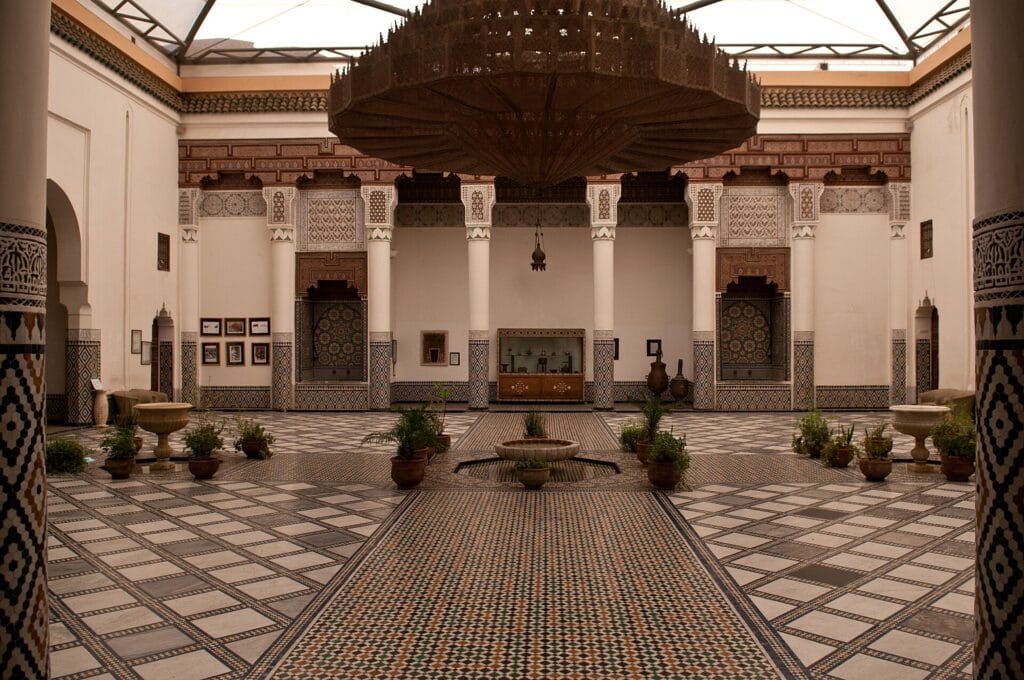
Housed in the Dar Menebhi Palace, the museum benefits from the authentic setting of a restored riad. The palace dates to the late 19th century and exhibits characteristic architectural elements such as ornate plasterwork, carved cedar wood, zellij tile mosaics, and lush interior gardens. This backdrop complements the collection’s emphasis on traditional craftsmanship by situating objects in a space that shares the cultural and historical context.
The rooms are arranged to resemble domestic and reception spaces, which helps visitors imagine the objects in use within the period lifestyle of Marrakshi elites. This architectural spatial narrative adds an experiential layer to the museum’s material focus. At the same time, the building’s layout can restrict circulation and exhibition space, meaning galleries feel intimate but potentially cramped depending on visitor numbers.
Displays use a combination of glass cases, mounts, and wall hangings to arrange objects thematically or by craft category. Labels provide clear descriptions, often including production techniques and cultural background, which enhances understanding of the practical and aesthetic aspects. The museum rarely experiments with multimedia or digital interpretation, keeping the presentation straightforward and traditional.
This restrained approach suits visitors willing to engage with the artifacts themselves rather than multimedia frameworks. The integration of building and collection is a clear strength, creating a coherent setting that reflects the overlapped history of residence and craft. However, visitors seeking lively or interactive exhibitions may find the environment more muted and contemplative.
For Families, Specialists, and First-Time Visitors
For families, particularly those with children accustomed to interactive and varied museum experiences, the Museum of Marrakech may present challenges. The collection’s focus on small decorative objects in cases, combined with the historic palace’s labyrinthine layout, offers limited hands-on or child-oriented activities. There is no widely reported educational programming specifically tailored for children or family groups, nor interpretive features designed to engage younger audiences actively.
Specialists in Moroccan and Islamic art, as well as ethnographers of North African craft traditions, will value the museum for its concentrated selection of high-quality material and detailed contextualisation. The focus on Marrakshi production offers more depth than broad surveys typical of larger institutions, making it a useful point of reference for researchers and connoisseurs. The relatively small scale allows for close study of individual pieces, although access to additional archival or research materials is unclear.
First-time visitors to Morocco and Marrakesh may find the museum a reasonable introduction to the city’s local traditions that lie beneath the tourist surface of souks and palaces. The museum offers a calm, structured complement to the bustling urban experience by presenting art and craft with historical anchoring. However, those expecting a sweeping overview of Moroccan history and culture should not expect a comprehensive narrative as the museum deliberately narrows its scope to a particular period and art form.
What Works Best
The museum’s most effective aspect lies in the harmony between its collection and the palace setting. This alignment of place, period, and craft focuses visitor attention on the material culture of elite Marrakesh at a time when local artisanship had distinct styles and social roles. The vivid ceramics and detailed woodwork displayed in their original architectural context deepen understanding of how such objects decorated and defined domestic spaces.
Equally, concentrating on one city allows the museum to explore specific artistic traditions and social histories that are often overlooked in larger national or regional institutions. This gives the museum authority in its niche—one feels immersed in the particularities of Marrakshi craft rather than encountering a diluted pan-Moroccan presentation.
The quality and variety of objects, from intricate jewelry to tilework and painted surfaces, provide tangible evidence of craftsmanship that is both technically skilled and culturally expressive. This precision of focus makes the museum a resource for cultural historians, art historians, and anyone interested in North African decorative arts.
Practical Considerations
Visitors interested in going should check the official website or local listings before planning a visit to confirm opening hours, entry requirements, or possible tour availability. Information about ticket prices, discounts, accessibility, and facilities is not well documented publicly, so advance research is advisable.
As a palace-turned-museum, the building may offer limited access options for mobility-impaired visitors, although specifics are not clearly available. The location within the medina requires some navigation skills in Marraksh’s winding streets but places the museum close to other cultural attractions.
Given the specialized nature of the collection, tours or additional interpretive guides could enhance comprehension, especially for non-specialist visitors unfamiliar with Moroccan arts and crafts. Whether such provisions exist or are routinely offered is not confirmed, but inquiries can be made before arrival.
Verdict
The Museum of Marrakech succeeds through its concentrated theme and historic setting rather than breadth or modern museological innovation. By anchoring its collection firmly in the context of a restored 19th-century palace and focusing on the city’s artisan heritage, it offers a carefully circumscribed cultural experience that yields detailed insights into Marrakshi craft traditions.
Its limitations are precisely the consequence of this choice: the scope is narrow, the scale modest, and the interpretation largely conventional. It is not a museum for those seeking comprehensive historical narratives of Morocco or for visitors who expect interactive and wide-ranging displays. Instead, it rewards those looking to explore Moroccan material culture through the lens of a single city’s history and artistic production, presented within an architecturally significant and authentic environment.
In this way, the Museum of Marrakech marks itself as a destination for serious admirers of decorative arts and scholars of North African urban culture, rather than as a general tourist attraction. Its value lies in the close dialogue between place and collection, which advances a more intimate understanding of Marrakshi artistic identity.