Museum of Marrakech
Marrakesh, Morocco. The Museum of Marrakech distinguishes itself by focusing directly on the artistic and cultural heritage of the city, set within a historic palace once owned by a prominent noble family of the late 19th…
Best forMuseum lovers, culture travelers, first-time visitors
Setting / nearbyMarrakesh, Morocco
Overview
The Museum of Marrakech distinguishes itself by focusing directly on the artistic and cultural heritage of the city, set within a historic palace once owned by a prominent noble family of the late 19th century. Unlike large national museums presenting broad surveys or contemporary institutions centering on modern art, this museum is embedded in the architectural and social fabric of Marrakech itself. It collects and displays objects connected to the city's traditions, crafts, and the Moroccan way of life, integrating the historic setting with its purpose. Located a short walk from the Medina’s main square, Jemaa el-Fnaa, the museum offers a window into the material culture of Marrakech and its position as a crossroads in Moroccan history.
Collection Highlights
The collections concentrate on Moroccan arts and crafts, particularly from the Marrakech region. Visitors encounter a range of ceramics, textiles, jewelry, and wood and metalwork that exhibit traditional techniques and designs. The ceramics, for example, often feature vivid glazes and intricate motifs rooted in local artisan practices. Textiles include examples of woven and embroidered pieces demonstrating regional patterns and textile arts that have been part of North African culture for centuries.
The Museum of Marrakech also holds collections related to Moroccan Amazigh (Berber) culture, offering artifacts such as tribal jewelry and rugs characterized by symbolic patterns and craftsmanship techniques passed down through generations. These works provide insight into the coexistence of Arab and Amazigh heritage within the city.
Fine arts are represented as well, with a selection of paintings and contemporary Moroccan art reflecting changes in Moroccan society, although this is a smaller component compared to the emphasis on craft objects. Some objects illustrate the Ottoman and Andalusian influences that have shaped Morocco’s artistic landscape. The museum’s collection of religious and historical manuscripts, albeit limited, adds another dimension to the understanding of Marrakech’s cultural evolution.
Building and Setting
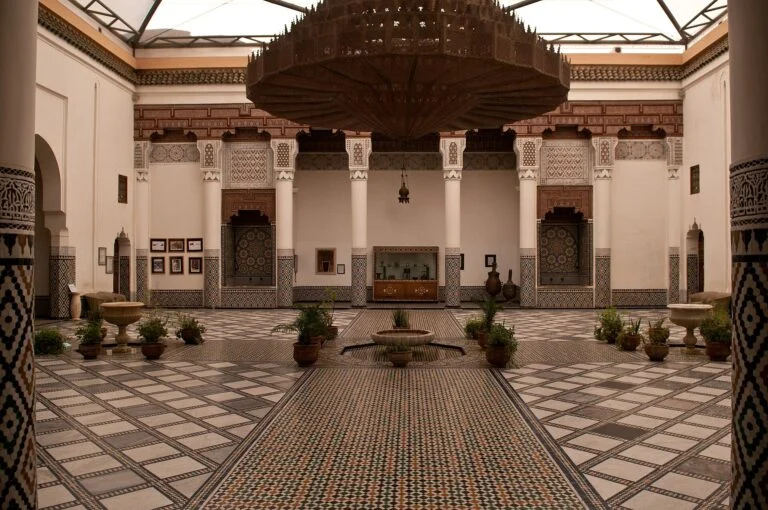
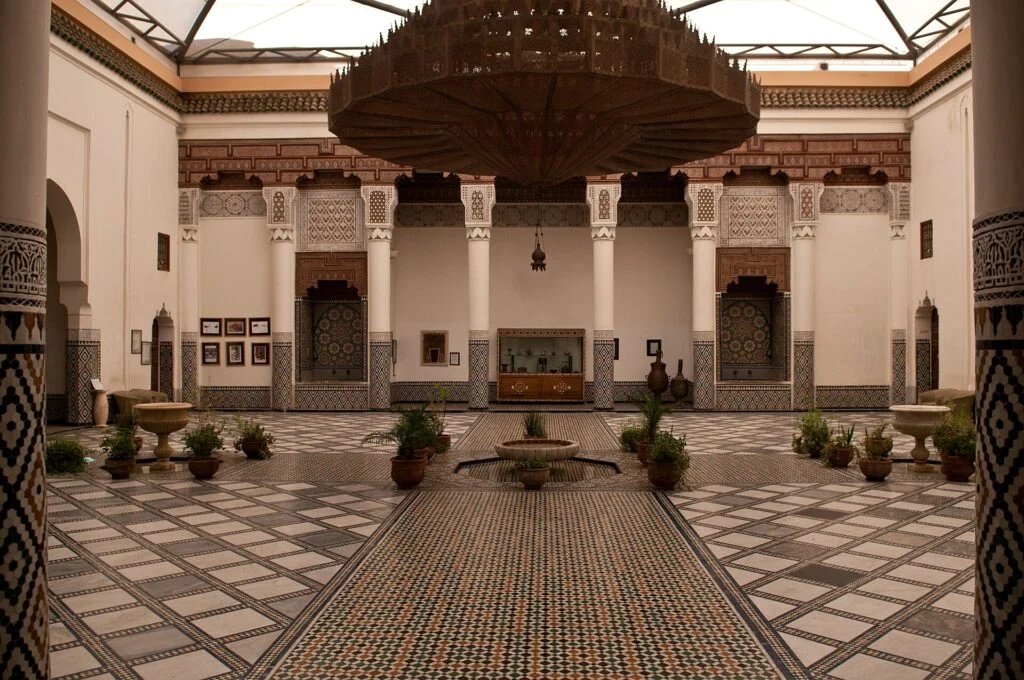
The Museum of Marrakech occupies the Dar Mnebhi, a palace built around 1878 by Mehdi Mnebhi, a former vizier. The construction survives as a strong example of late 19th-century Moroccan residential architecture, with traditional riad-style layout including an interior courtyard centered on a fountain, surrounded by stucco-decorated rooms and zellij tilework along walls and floors. The palace’s original functions and architecture set a rich, authentic scene for the collection, as visitors move through spaces once used for domestic and political purposes by some of Marrakech’s influential families.
Positioned towards the edge of the Medina district, the building’s urban location links it to the historic heart of the city without being buried within the busiest thoroughfares. This gives some sense of relief from the densely packed markets and streets, though the museum remains well connected to key tourist routes. The surrounding neighborhood consists mostly of traditional houses and small shops, further anchoring the museum in the lived experience of the city.
Practical Information
Visitors planning a trip to the Museum of Marrakech should consult the official museum website for current information, including opening times, ticket costs, and any visitor services. Facilities such as guided tours or audio guides may be available but vary with the season and museum staffing.
The entrance is through a modest doorway from a quiet street near the Jemaa el-Fnaa square. Because the museum is housed in a historic building, it may present some challenges to visitors with mobility issues; those concerned about accessibility should check in advance. Photography policies can differ between galleries, so it’s advisable to confirm rules upon arrival.
Why Visit
This museum offers a focused exploration of Marrakech’s heritage through its well-preserved palace setting. Its main strength lies in the way the building and collections complement one another, allowing you to engage with traditional Moroccan crafts in a space that once belonged to the city's elite. For anyone interested in North African decorative arts or the architectural styles of Moroccan urban residences, the Museum of Marrakech provides a concentrated experience that invites further appreciation of local history.
On the other hand, people expecting a broad national survey or a contemporary art center might find the scope narrower than anticipated. The displays tend to emphasize craftsmanship and historical objects rather than comprehensive narratives or recent cultural developments. Another consideration is the relative modesty of the museum’s scale, which means visits do not require extended time but could feel quickly covered.
In sum, the Museum of Marrakech is best approached as a place to deepen knowledge of the city's artisanal and architectural heritage, presented within one of Marrakech’s preserved historic houses. It is a clear resource for those looking to explore Moroccan visual culture from a tangible, place-based perspective. Checking practical details before visiting will help set expectations and plan a visit suited to available time and interests.