National Museum of Bangladesh
Dhaka, Bangladesh. The National Museum of Bangladesh in Dhaka serves as a central repository for the country’s diverse cultural and historical artifacts. This museum functions principally as a national history and art museum, collecting and exhibiting…
Best forMuseum lovers, culture travelers, first-time visitors
Setting / nearbyDhaka, Bangladesh
Overview
The National Museum of Bangladesh in Dhaka serves as a central repository for the country’s diverse cultural and historical artifacts. This museum functions principally as a national history and art museum, collecting and exhibiting materials that span the gamut from ancient to contemporary times. It’s notable not for grand architectural statements or a single celebrated exhibit, but for the breadth of its holdings that reflect the complex history and traditions of Bangladesh. The museum occupies a key position in the city’s cultural landscape, anchoring numerous stories about the nation’s archaeology, ethnography, and fine arts within one institution.
Collection Highlights
The museum assembles a large and varied collection that touches on many aspects of Bangladeshi heritage. One of the prominent sections is dedicated to archaeology. This part includes artifacts excavated from sites across the country, with objects dating back to the Neolithic period. Items such as stone tools, pottery fragments, and terracotta figures give a tangible connection to earlier eras of settlement and craftsmanship.
Another significant area is the collection of historical manuscripts and Islamic art. The museum holds Qur’anic manuscripts, finely decorated with calligraphy and traditional motifs, reflecting the rich Islamic heritage of the region. Alongside these, there are examples of decorative arts, including metalwork and textiles that illustrate the intricate skills developed over centuries.
Ethnographic displays represent Bangladesh’s many ethnic groups, offering insight into traditional costumes, household objects, and ritual paraphernalia. These collections document the country’s cultural diversity and evolving social practices.
The modern and contemporary art galleries contain works by Bangladeshi painters and sculptors from the 20th century onward. These pieces track changes in artistic style and subject matter, showing how local artists responded to social and political changes. Paintings, prints, and sculptures by key figures provide an overview of the national art scene’s progression.
The museum also includes sections devoted to natural history and folk culture, but it is the assemblage of archaeological, historical, and fine arts objects that dominates and defines the institution’s character.
Building and Setting
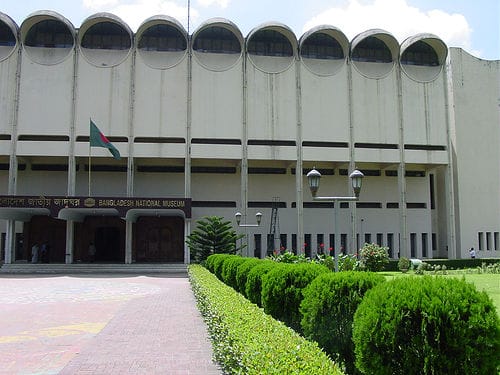
The National Museum is housed in a purpose-built structure located in Shahbagh, an area within Dhaka recognized for institutions and green spaces. The building was designed for museum use, allowing for diverse exhibition spaces suitable to both permanent and temporary displays. Although the architecture does not stand out as a notable landmark in itself, it provides the functional backdrop needed for the museum’s various collections. Its position within Shahbagh places it near other cultural venues and parks, situating the museum amid a cluster of public institutions rather than in a commercial or tourist hub.
Practical Information
For visitors considering a trip to the National Museum of Bangladesh, it is advisable to check the official website before planning the visit. Current information about opening hours, ticket prices, guided tours, and accessibility options may vary and are best confirmed directly. The museum is found in central Dhaka, so access by local transport should be reasonably straightforward, though specifics can depend on traffic and time of day. At the time of writing, public details about on-site amenities and visitor services were limited, so potential visitors should prepare accordingly.
Why Visit
The National Museum of Bangladesh appeals most directly to those interested in the historical and cultural development of Bangladesh from prehistoric times to the present. Its strength lies in the sheer variety of its collections, which collectively tell many parts of the country’s complex story. Visitors keen on archaeology will find the ancient objects compelling, while those interested in Islamic art will appreciate the quality and detail of the manuscript and metalwork collections. The ethnographic sections further set the museum apart by capturing the diverse dimensions of Bangladesh’s society beyond mainstream narratives.
The modern art galleries offer a complementary perspective, mapping artistic trends alongside political and social shifts. This range lets visitors see connections across disciplines and eras.
On the other hand, those expecting a more focused or dazzling experience might find the museum’s presentation somewhat conventional. The displays tend to prioritize straightforward exhibition of objects over innovative interpretation or multimedia engagement. The building, while functional, does not make an architectural statement. Exhibition labels and information might be straightforward rather than extensive or deeply interpretive. For visitors outside Bangladesh, some prior knowledge of the country's history and cultural contours can enhance the experience.
The museum balances its multiple roles as a historical record, art repository, and ethnographic archive reasonably well. It functions as a key resource for learning about Bangladesh’s past and present through physical artifacts rather than immersive or experiential elements.
In sum, the National Museum of Bangladesh is a place where the country’s layered history is laid out with clarity. Its collections provide a concrete foundation for understanding many cultural narratives, even if the visit is more about content than spectacle. Visitors prepared to engage with the material on its own terms will find it a solid and informative destination.