National Museum of Azerbaijan History
History Museums · Baku, Azerbaijan. The National Museum of Azerbaijan History in Baku casts light on the country’s deep and varied past. Unlike museums that focus narrowly on modern national history or single themes, this institution spans a wide…
Best forHistory lovers, cultural travelers, local heritage
Setting / nearbyBaku, Azerbaijan
Overview
The National Museum of Azerbaijan History in Baku casts light on the country’s deep and varied past. Unlike museums that focus narrowly on modern national history or single themes, this institution spans a wide timeframe, tracing developments across millennia. Its story embraces prehistoric settlement, ancient empires, medieval states, and Azerbaijan’s role in larger regional histories. The museum’s range aims to provide context for Azerbaijan’s place at the crossroads of Europe and Asia, within the Caucasus region where multiple cultures have intersected. It is a local history museum with elements of archaeology, ethnography, and numismatics woven into its framework.
Collection Highlights
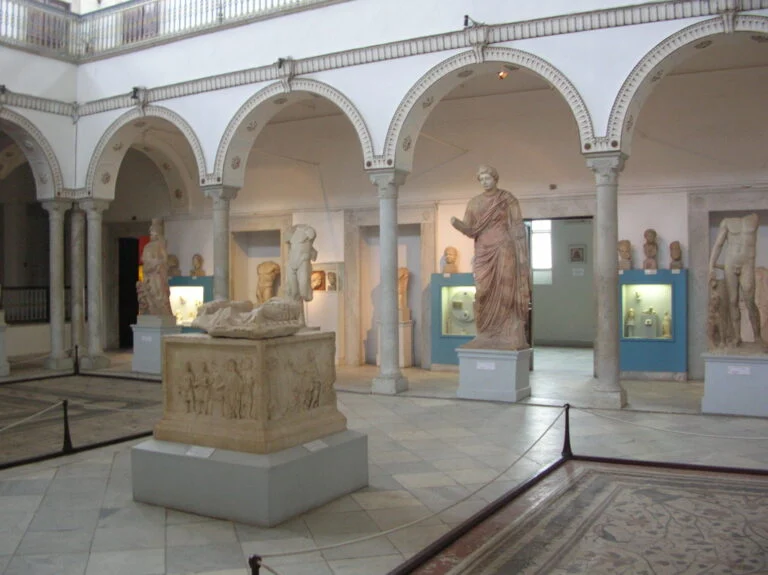
Visitors interested in archaeology will find a number of intriguing objects from early human habitation. The museum has artifacts linked to settlements dating back to the Stone Age, though these tend to be fragments like tools and pottery shards rather than large, intact finds. Some sections document material culture from the Bronze and Iron Ages. The museum catalogues information on ancient Caucasian Albania, an early kingdom corresponding roughly to modern Azerbaijan territory, providing a grounding in local pre-Islamic history.
There is a substantial collection of coins and currency from various eras. These span Persian, Ottoman, Russian Imperial, and Soviet periods, reflecting the shifting political control of the region. Coins often serve as tangible markers of the many rulers and empires that have influenced Azerbaijan’s course.
The museum holds medieval manuscripts and religious artifacts that echo the spread of Islam across the area, alongside earlier Christian materials relating to Caucasian Albania’s early church history. This mix offers a glance into Azerbaijan’s religious transformations.
Artifacts from the 19th and 20th centuries reveal life under the Russian Empire and later the Soviet Union. Photos, documents, military uniforms, and other memorabilia narrate the turbulent modern history, including momentous events such as the brief Azerbaijan Democratic Republic period after World War I.
One distinct collection addresses Azerbaijan’s ethnographic traditions. Folk costumes, traditional tools, and household items capture everyday life in various Azerbaijani regions before industrialization. These often show the diversity of material culture within the country.
Building and Setting
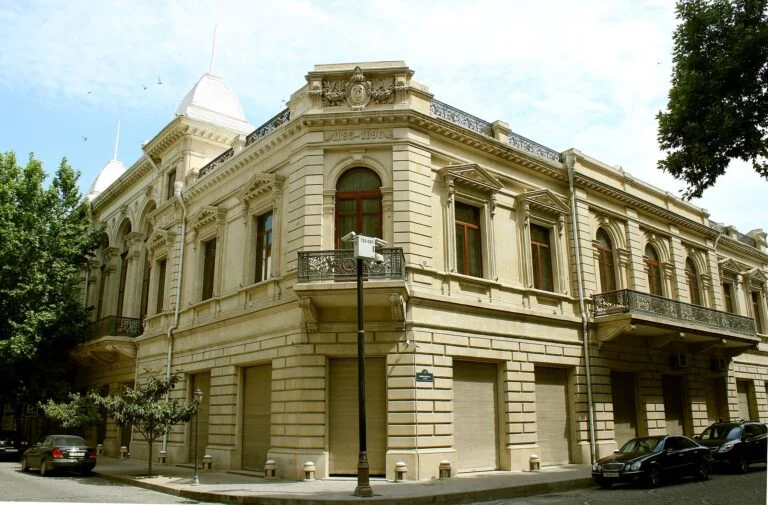
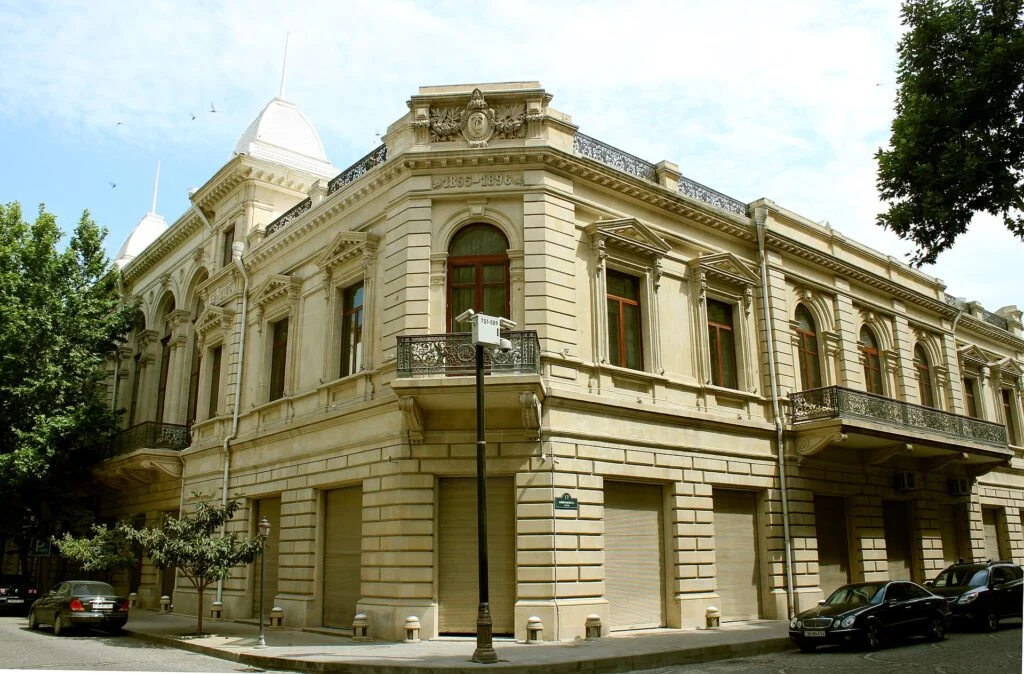
The museum occupies a notable building in central Baku, which was originally constructed in the early 20th century. It was designed in a style that blends European architectural influences with regional Central Asian motifs, reflecting Baku’s role as an economic and cultural hub during the oil boom years. The building’s detailing includes sculptural accents and patterned facades, offering an architectural narrative parallel to the artifacts inside.
Located in downtown Baku, the museum stands near other historic landmarks and cultural institutions, providing options for those wishing to combine visits. The urban setting means access generally revolves around walking or city transit, with the museum forming part of the fabric of Baku’s city centre.
Practical Information
The National Museum of Azerbaijan History’s official website is the best source for accurate information on current opening hours, ticket prices, discounts, group booking policies, and any scheduled temporary exhibitions. Practical details such as accessibility services or guided tours should also be confirmed there. This can be especially important if travel plans coincide with national holidays or special events.
Visitors should check the site for any changes in operations or planned renovations before arranging their visit. The museum’s central location in Baku makes it straightforward to include in a city itinerary.
Why Visit
The museum presents a broad and detailed picture of Azerbaijan’s past without fragmenting its narrative into overly specialized sections. This comprehensive approach can be valuable for visitors wanting to understand the historical layers beneath the modern country. Its collection depth is strongest in the archaeological, numismatic, and ethnographic areas, providing evidence of cultural continuity and change. The range of artifacts, from ancient to modern, allows for connections across time.
It may offer less emphasis on contemporary art or the newest historical interpretations than museums dedicated solely to those topics, which means its appeal is more for those looking for a traditional historical overview grounded in physical objects. For anyone interested in how one nation reflects centuries of multicultural influence and shifting borders, the collection makes that story accessible.
The museum’s architecture and location complement its contents, placing the visitor within Baku’s historic centre and connecting the country’s urban evolution to its historical roots. While not a large museum by international standards, it avoids feeling overly segmented or fragmented by its longer chronological span. This can help with following the broad historical narrative without losing the tangible sense of individual periods and cultures.
Those who value seeing original objects rather than reproductions or relying solely on text may appreciate the variety of items on display. The museum’s numismatic section, for example, offers a clear way to observe changes over time through everyday objects. Ethnographic materials ground the story in the lived experiences of the people who formed Azerbaijan’s diverse cultural fabric.
In summary, the National Museum of Azerbaijan History provides a solid foundation for understanding Azerbaijan’s historical geography and cultural continuity. Its emphasis on material culture from multiple epochs illustrates a story shaped by many forces, making it a useful stop for those wanting to place Azerbaijan in a wider historical context.