Museo Nacional de Arte Romano
Art Museums · Mérida, Spain. The Museo Nacional de Arte Romano, located in Mérida, Spain, is a specialized archaeological museum focused on Roman art and artifacts. Mérida itself has a rich Roman legacy, originally founded as Augusta Emerita in…
Best forArt lovers, visual culture, architecture
Setting / nearbyMérida, Spain
Overview
The Museo Nacional de Arte Romano, located in Mérida, Spain, is a specialized archaeological museum focused on Roman art and artifacts. Mérida itself has a rich Roman legacy, originally founded as Augusta Emerita in 25 BCE as a Roman colony. This museum brings together many objects that illustrate the daily life, religious beliefs, artistic achievements, and civil infrastructure of the city and its surroundings during Roman times. Far from a general history museum, it concentrates specifically on Roman-era material culture, helping visitors deepen their understanding of Roman provincial life on the Iberian Peninsula.
The museum’s mission centers on preserving and interpreting a significant portion of Spain’s Roman heritage. It presents a detailed material record of Roman influence in the region, situating Mérida’s ancient past within the broader context of Roman civilization but with a clear local focus. Its collection is largely drawn from excavation and research conducted in Mérida and neighboring archaeological sites, making it particularly relevant for those interested in the archaeology and art of Roman Hispania. The museum’s exhibits are curated to appeal to both specialists and an interested general audience, maintaining scholarly rigor while aiming to communicate clear stories about the objects on display.
Collection Highlights
The core of the Museo Nacional de Arte Romano's collection lies in its extensive range of Roman sculptures, architectural elements, mosaics, and everyday objects. Visitors can expect to see finely crafted statues and busts that once adorned public spaces and private villas, showcasing the artistic standards and cultural ideals of Roman society.
Mosaics form a particularly strong component of the collection. These vibrantly colored floor and wall mosaics give insight into aesthetic preferences and technical skills in late Republican and Imperial times. Some mosaics depict mythological scenes, while others illustrate hunting or pastoral life, capturing motifs that were popular throughout the Roman Empire but with regional variations. These artworks also provide clues about the social status and wealth of their original owners.
In addition to sculpture and mosaics, the museum includes a number of well-preserved utilitarian objects such as ceramics, tools, and glassware. These pieces enrich the understanding of domestic life in Roman Mérida and the surrounding province. They reveal how residents hunted, prepared food, conducted trade, and managed personal grooming.
Religious artifacts are also part of the holdings, including altars and inscriptions connected to Roman gods worshipped locally. These objects illustrate the variety of cult practices that coexisted, along with the integration of Roman religious traditions with indigenous beliefs. Epigraphic material, like engraved stone slabs and tablets, offers valuable historical data in the form of dedications, funerary inscriptions, and official decrees.
Overall, the collection is detailed and focused, emphasizing quality and regional significance over quantity or general Roman art history. It gives a nuanced picture of Roman society, economy, religion, and art as they developed in this part of ancient Hispania.
Building and Setting
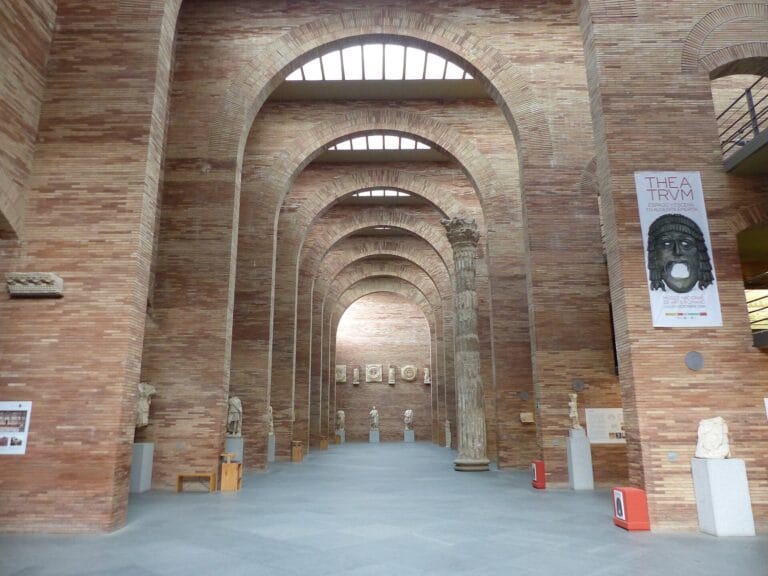
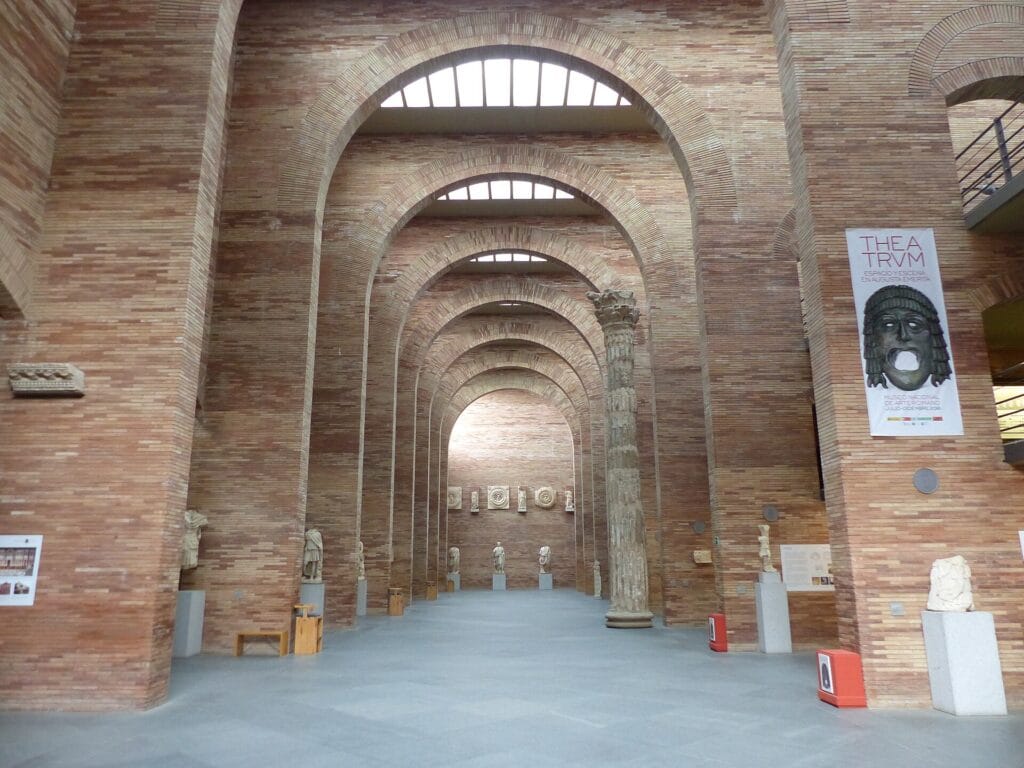
The Museo Nacional de Arte Romano occupies a purpose-built structure designed specifically to house and display its archaeological holdings. The architectural approach prioritizes natural light and spatial clarity to showcase the Roman art pieces effectively. Exhibition galleries are spacious and laid out to guide visitors through different thematic and chronological sections, facilitating a coherent narrative flow.
Its location in Mérida is meaningful, as the city itself is an archaeological site of remarkable importance. Nearby are extensive Roman ruins, including a theatre, amphitheater, and aqueducts, making the museum a natural complement to site visits for those exploring Roman urbanism and architecture first-hand.
The surroundings combine modern urban elements with historical layers, providing context for the museum’s collection. Although the building is modern, it strives to create a fitting environment for the antiquities it contains, reinforcing the bridge between past and present.
Practical Information
For potential visitors, checking the museum’s official website before planning a trip is strongly advised. Up-to-date information on opening hours, ticketing, accessibility, guided tours, and other visitor services can change, so consulting the source directly ensures accurate preparation.
The museum’s layout generally supports straightforward navigation, but visitors with mobility needs may want to verify accessibility options in advance. Those interested in deeper understanding should inquire about available resources such as explanatory panels, catalogues, or educational materials. Audio guides or guided tours may be offered periodically, but these services should not be assumed without confirmation.
Because the museum is focused on archaeological material, it may not be suitable for very young children or casual visitors who prefer a broader or more varied art or history experience. However, for those specifically interested in Roman archaeology, art, and the historical legacy of Mérida, it offers substantial material arranged for clarity and educational impact.
Why Visit
The Museo Nacional de Arte Romano occupies a distinct place among Spanish museums for its dedication to Roman provincial art and archaeology. It offers an opportunity to engage with an important regional story within the larger Roman Empire, emphasizing local variations and material culture that are sometimes overshadowed in more generalized Roman exhibitions.
Its collection provides tangible connections to the lives of people who lived in and around Mérida nearly two millennia ago. For those with an interest in Roman history, ancient art, archaeology, or Hispania, the museum serves as a concentrated reference point to learn how Roman art and daily life evolved at a significant colonial capital.
While it is not a large or encyclopedic institution, its focus allows for an involved and detailed experience. Visitors can appreciate technical achievements in sculpture and mosaic, and gain insight into Roman religion, social customs, and urban development. The museum also complements the rich archaeological landscape of Mérida itself, enabling a fuller appreciation by putting artifacts in dialogue with the ruins visible throughout the city.
On the other hand, visitors seeking a broad overview of Spanish history or a multi-period archaeological collection may find the scope narrower than expected. The museum’s emphasis is specialized, so some familiarity with or strong interest in Roman culture will enhance visitor engagement. The displays favor contextual information, but some objects might benefit from more detailed background to fully connect with general audiences.
In summary, the Museo Nacional de Arte Romano is a focused archaeological museum that brings together important Roman art and artifacts from one of Spain’s key ancient cities. It offers a mix of artistic, historical, and archaeological interest with a solid foundation in local heritage. Anyone planning to explore Mérida’s Roman past in more depth will find it a valuable point of reference and educational resource.