Guggenheim Museum Bilbao
About: Walk around outside first to appreciate the curves and river views. Inside, commit to a few big installations rather than rushing.What to see.
Best forMasterpieces, architecture, cultural history
Setting / nearbyThe Nervión River in Bilbao, it is not simply a place to see modern and contemporary art
Overview
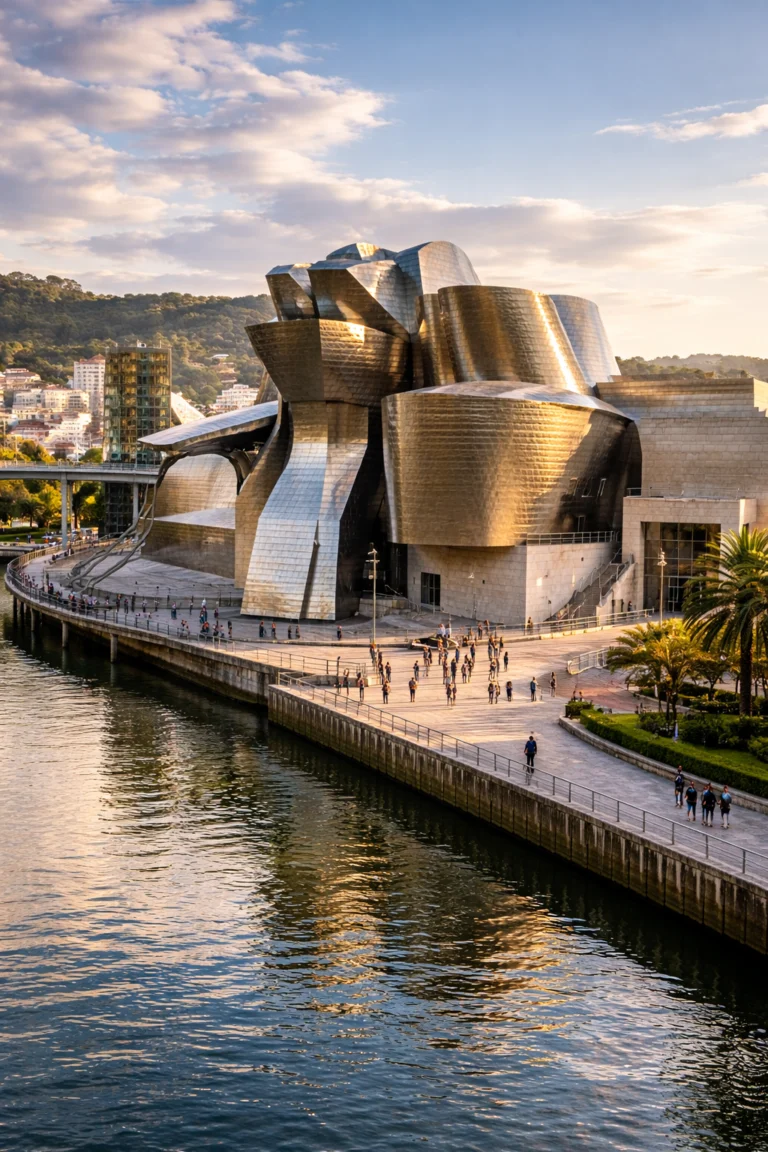
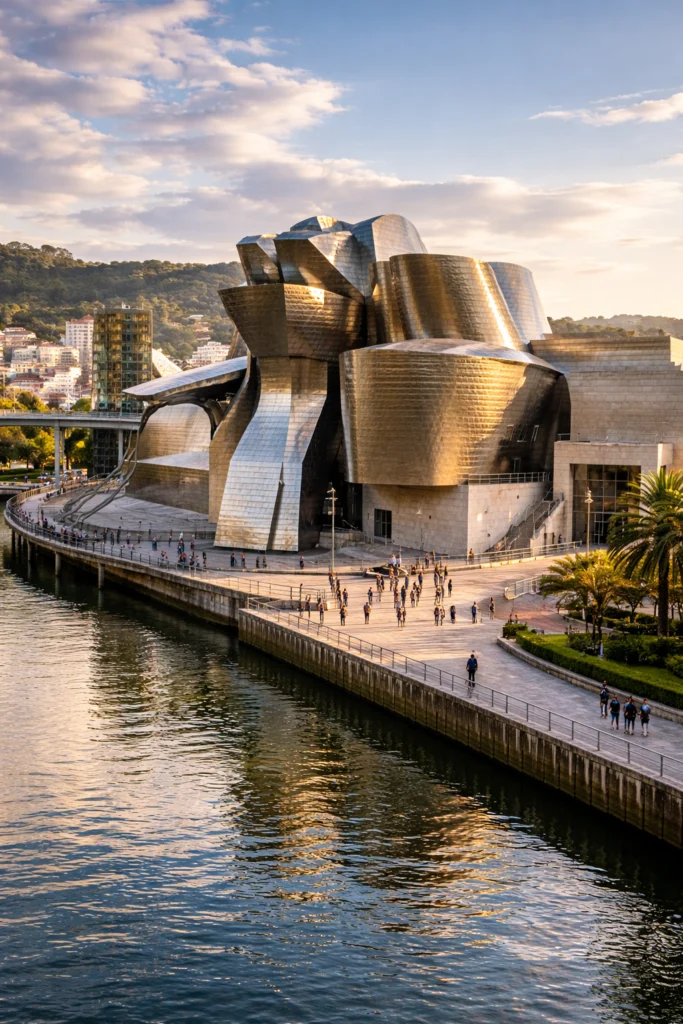
Guggenheim Museum Bilbao is one of the most famous contemporary art museums in the world and one of the clearest examples of a museum whose building transformed the identity of a city. Located beside the Nervión River in Bilbao, it is not simply a place to see modern and contemporary art. It is also a landmark of late twentieth-century architecture, urban ambition, and cultural reinvention. For many visitors, the first encounter with the museum happens before they enter. The titanium curves, shifting surfaces, river setting, and unusual forms create an experience of arrival that is already part of the museum visit. This matters because the Guggenheim Bilbao is one of those rare institutions where architecture, setting, and collection are inseparable.
What makes the museum especially distinctive is that it does not work like a traditional painting museum or even like many large contemporary museums built around neutral white rooms. The Guggenheim Bilbao is shaped by scale, movement, and spatial drama. It often feels as though the building prepares you to think differently about art before you have seen a single work. That is one reason it remains so important. It is not only a container for art. It actively changes how the visitor experiences art.
The museum is also especially strong for visitors who are open to contemporary art but do not necessarily want a purely academic experience. Because the building itself is so memorable and because many of the museum’s best works involve scale, installation, and physical encounter, the visit can be rewarding even for people who are not usually drawn to more traditional gallery looking. At the same time, serious museum visitors can appreciate how the institution balances iconic architecture with changing exhibitions and large-scale works that suit the spaces unusually well.
Another reason Guggenheim Bilbao matters is that it is tied so closely to Bilbao itself. The museum cannot really be separated from the story of the city’s post-industrial renewal and international cultural image. This gives the visit an added layer of meaning. You are not just visiting a famous museum; you are visiting a place that became part of a broader urban transformation. That historical role does not overshadow the art, but it does make the institution feel larger than a single collection. It becomes a museum about contemporary art, architecture, and the power of culture to reshape civic identity.
Collection Highlights
The museum is strongest when approached through its large-scale and site-responsive works. This is not usually a museum where the greatest pleasure comes from moving quickly through many small rooms. It works best when visitors commit to a few major installations and give them real time. Scale matters here, and some of the museum’s most memorable encounters depend on walking, circling, re-entering, and adjusting your position within the space.
Richard Serra’s installation is one of the defining experiences of the museum and, for many visitors, one of the most powerful reasons to come. It demonstrates perfectly what Guggenheim Bilbao does well: using large architectural space to create an artwork that is not only seen but physically navigated. The work changes with movement, and the visitor becomes part of the experience through time, orientation, and bodily awareness. This is one of the clearest examples in the museum of contemporary art gaining force from the scale of the building.
The outdoor works are also central to the museum’s identity. Sculpture around the building and along the surrounding spaces helps extend the experience beyond the galleries. This matters because the museum does not begin and end at the ticket barrier. It already starts outside, where visitors encounter the building’s surfaces, the river, and major works in conversation with the architecture. These exterior pieces help blur the boundary between museum object and urban environment, which suits the institution perfectly.
Inside, temporary exhibitions often play a major role. Guggenheim Bilbao is not a museum whose identity depends only on a fixed permanent collection. Its changing exhibitions are a significant part of what keeps it active and worth revisiting. Depending on the programme, these shows may range from large retrospectives to more focused contemporary installations, and they often benefit from the museum’s unusually dramatic rooms. This means the museum can feel different from one visit to the next, which is one of its long-term strengths.
Painting, sculpture, and installation all appear, but the museum is usually at its most convincing when the work has enough scale, ambition, or spatial complexity to meet the building on equal terms. Smaller works can still be rewarding, but Guggenheim Bilbao is at its most memorable when art and architecture genuinely reinforce one another.
Building and Setting
The building is one of the museum’s defining achievements and one of the main reasons it became world famous. Its flowing titanium forms, changing surfaces, and shifting perspectives make it one of the most recognisable museums ever built. Yet what makes the architecture so strong is not only visual spectacle. It is the way the building keeps changing as you move around it. From one angle it feels almost like a sculpture beside the river; from another it becomes a series of unfolding volumes and metallic planes. This means that walking around the exterior is not optional background activity. It is part of the museum experience.
The river setting is equally important. Guggenheim Bilbao does not sit in isolation. It responds to water, bridge, city, and sky, and that gives the whole visit a broader urban dimension. The museum feels embedded in Bilbao’s renewed public landscape, and that connection to the city helps explain why it became such a cultural symbol.
Inside, the central atrium is one of the most effective museum spaces in Europe. It provides orientation, drama, and a sense of scale that sets the tone for everything that follows. From there, the galleries branch into spaces of different shapes and proportions, some more conventional, others far more unusual. This variation is one of the museum’s great strengths. It gives artists room to work at multiple scales while keeping the visitor aware that the architecture is always shaping perception.
Practical Information
A very good way to approach the museum is to walk around the exterior first. Doing this helps you understand the building as a whole and makes the interior experience more meaningful. The museum works best when the architecture has already been absorbed before you start moving through the galleries.
Inside, it is wise to commit to a few big works or sections rather than trying to rush everything. Guggenheim Bilbao rewards depth more than coverage. A slower visit focused on several major installations or exhibitions is usually more satisfying than trying to treat the museum like a checklist.
Breaks also help. The building and the riverside setting provide natural pauses, and these make the overall experience stronger. Contemporary art at this scale can be demanding, so giving yourself time to reset improves attention.
Why Visit
Guggenheim Museum Bilbao is best for contemporary art lovers, first-time visitors to Bilbao, architecture enthusiasts, and anyone interested in museums that function as cultural landmarks as much as art institutions. Its greatest strength is that it offers a full experience: building, city, river, sculpture, installation, and gallery all working together.
What makes it worth prioritising is that very few museums achieve this level of unity between architecture and art. The building is iconic, but it is not empty spectacle. It creates conditions in which contemporary art can be encountered with unusual force. For many visitors, the museum becomes memorable not because of one single object, but because the whole place feels like a single carefully composed event.
That is why Guggenheim Bilbao remains one of the most rewarding museum visits in Spain and one of the defining cultural destinations in Europe for contemporary art and museum architecture.