Tower of David Museum
Jerusalem, Israel. The Tower of David Museum is a local history museum situated within the ancient citadel known as the Tower of David, located near the Jaffa Gate entrance to the Old City of Jerusalem. This…
Best forMuseum lovers, culture travelers, first-time visitors
Setting / nearbyJerusalem, Israel
Overview
The Tower of David Museum is a local history museum situated within the ancient citadel known as the Tower of David, located near the Jaffa Gate entrance to the Old City of Jerusalem. This museum offers a layered historical perspective on Jerusalem itself, exploring the city’s rich and often complex past through archaeological findings, historic architecture, and multimedia exhibits. Rather than focusing narrowly on a single event or period, the museum provides an opportunity to understand Jerusalem as a living city shaped by millennia of occupation, conquest, and cultural interaction.
The museum is housed in a structure that has served as a fortress for various rulers across centuries, including the Hasmoneans, Herod the Great, Crusaders, Mamluks, and Ottomans. This continuity of military and political significance lends the museum both historical authenticity and a palpable sense of place. It is an archaeological museum in many respects, as the displays incorporate ruins and findings uncovered on site, underscoring Jerusalem’s significance from the biblical era to modern times.
Since the Tower of David itself is a landmark—part castle, part archaeological site—the museum blends indoor exhibition spaces with the fortress’s defensive architecture. It attracts a broad spectrum of visitors interested in Jerusalem’s urban history, archaeology, and the heritage that shapes this contested and revered city.
Collection Highlights
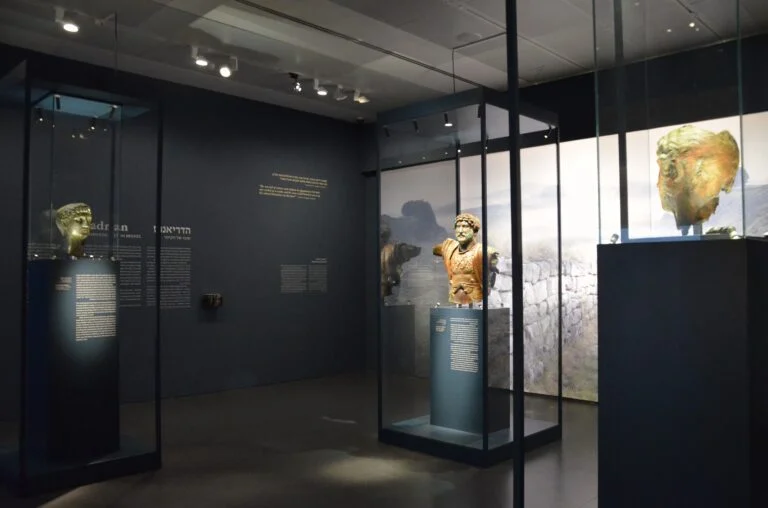
The museum’s collection pivots around artifacts uncovered from the citadel’s excavations and broader Jerusalem archaeology, supplemented by historical documents, maps, and models to contextualize the city’s evolution. Visitors can expect to encounter remnants of fortifications, weaponry, coins, pottery, and inscriptions spanning thousands of years. These tangible pieces link Jerusalem’s ancient past with its medieval and Ottoman eras, offering insight into how successive civilizations adapted the site for their needs.
Key exhibits address the strategic role of the site through various dominations, with special attention to the Crusader towers and Ottoman restorations visible today. Aside from material culture, the museum incorporates visual presentations—projected images, scale models, and renderings—to trace how Jerusalem’s various neighborhoods and sacred sites have formed and changed over time.
There is a clear focus on the city’s importance to Judaism, Christianity, and Islam, reflected in exhibits that deal with the religious and cultural dynamics intertwined with Jerusalem’s history. Visitors interested in archaeology will find displays of excavation techniques and stratigraphy illuminating. The museum also features thematic exhibitions that rotate, sometimes highlighting aspects of local traditions, urban life, or particular historical episodes connected to the city’s narrative.
Building and Setting
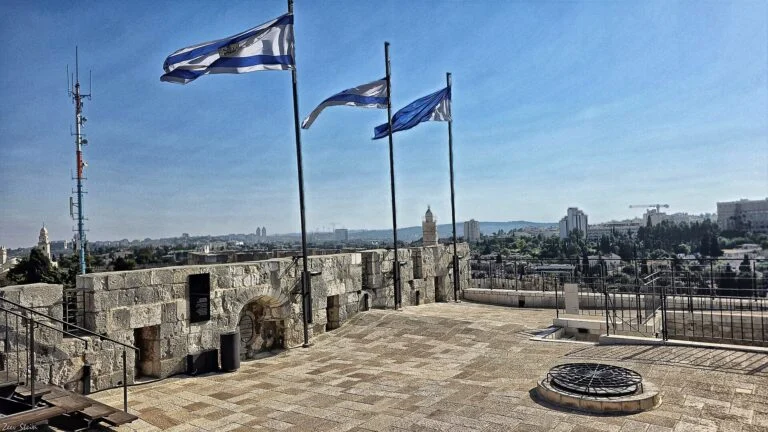
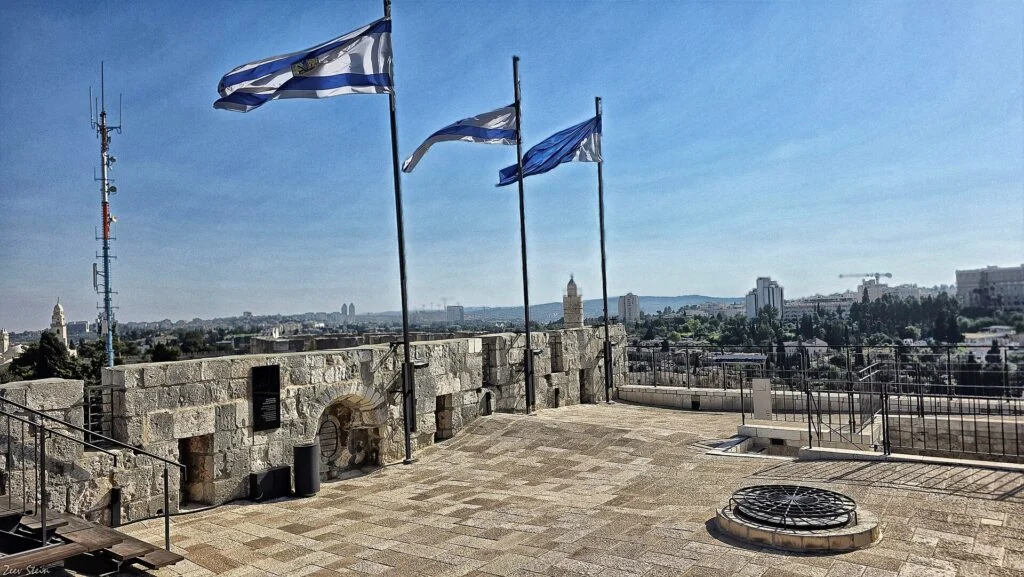
The Tower of David Museum is embedded within the walls of a historic citadel overlooking the Old City of Jerusalem. The fortress itself is the dominant physical element: a massive stone structure incorporating towers, ramparts, and ancient gates. This vertical, fortified environment creates a distinct typology for the museum, where visitors move both horizontally through galleries and vertically via staircases and passageways.
Its position near Jaffa Gate links visitors directly to the Old City’s labyrinthine streets, offering immediate access to Jerusalem’s broader urban fabric and religious sites. The museum’s location affords views over the city walls, including the Armenian, Jewish, and Christian Quarters, which enhances the visitor experience beyond the exhibits alone.
However, this historic setting also introduces some limitations. The medieval design and preservation requirements mean some areas can be physically challenging for those with mobility concerns. The site’s architecture may restrict the display format or scale for certain exhibits but nonetheless provides a powerful atmosphere that connects the collections to their original context.
Practical Information
For visitors planning a trip, it is advisable to consult the Tower of David Museum’s official website or contact the institution directly for the most up-to-date information on opening hours, ticketing policies, group visits, and any special programs currently offered. Given the site’s historical nature, access routes and available facilities may vary seasonally or due to conservation work.
The museum’s setting near Jaffa Gate places it within easy reach of major Jerusalem landmarks, but public transportation and parking options vary, so advance planning is beneficial. Another consideration is crowding—especially during religious holidays and the tourist high seasons—when the museum and surrounding Old City access points can become congested.
Visitors interested in guided tours or educational materials should verify availability beforehand, as offerings may change without notice. Similarly, accessibility for visitors with impairments should be confirmed since parts of the citadel’s structure are inherently difficult to adapt fully. The museum’s website remains the best source for these practical details.
Why Visit
Visiting the Tower of David Museum offers a unique window onto Jerusalem’s layered history through the lens of a place that has itself been a central actor in the city’s fate. It is particularly appealing for those interested in the archaeological and architectural heritage that underpins one of the world’s oldest continuously inhabited cities.
The museum’s strength lies in its combination of authentic ruins and curated exhibits that together narrate complex stories of conquest, coexistence, and cultural intersection. It is suitable for visitors who appreciate historical context delivered through tangible objects rather than solely narrative panels or digital media.
While the museum does not focus exclusively on any single religious or political narrative, it embraces the multicultural and often contested character of Jerusalem’s past. This can be challenging but also rewarding for those seeking to understand the city from multiple perspectives.
That said, visitors expecting a conventional museum experience in a modern, climate-controlled building will encounter a different reality here. The preservation of the ancient fortress dictates certain restrictions and physical demands. These factors may affect visitor comfort and the ease of navigating the exhibitions, especially for families with small children or those requiring accessibility support.
In sum, the Tower of David Museum represents an important cultural and historical institution in Jerusalem. It enriches understanding of a complex city through a carefully staged experience that bridges archaeology, history, and urban evolution. Its location and the historical fabric it occupies make the museum a distinctive educational resource rather than simply a collection of objects on display. Prospective visitors should weigh their own interests and physical needs when planning a visit but can expect a substantive encounter with Jerusalem’s past at this venue.